


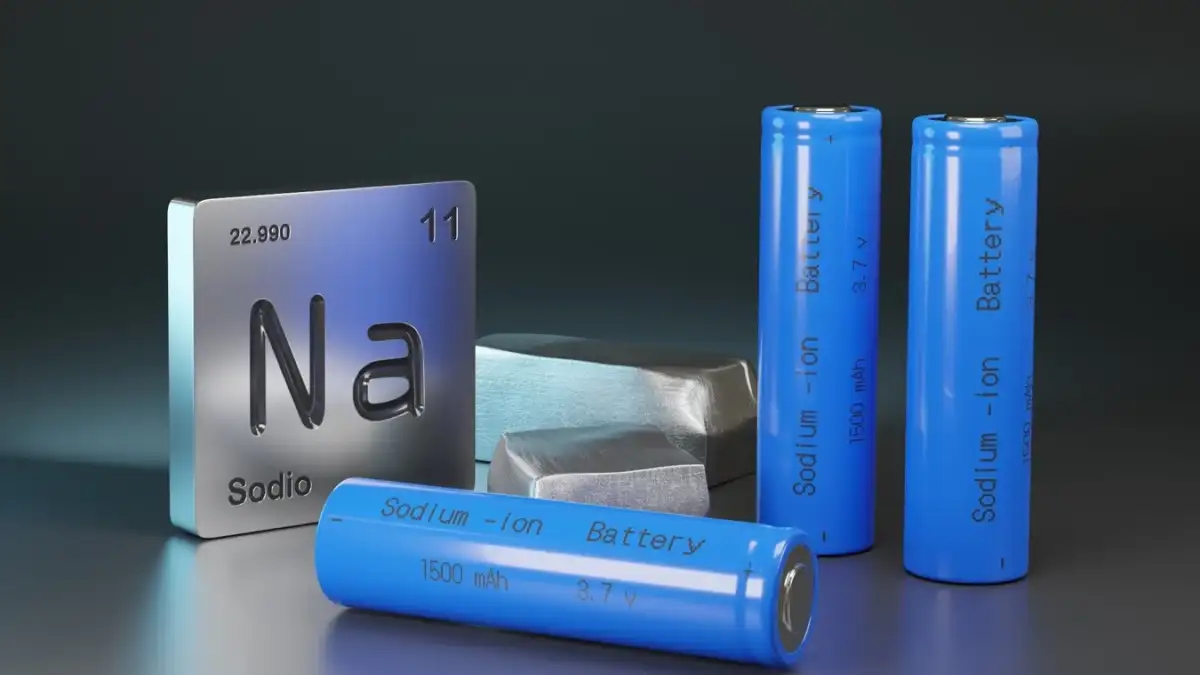
Electric cars have improved significantly over the last few years. Battery capacity has increased, charging infrastructure is expanding, and several modern EVs can now travel hundreds of kilometres on a single charge. Yet three concerns continue to influence electric vehicle buyers: driving range, charging time and battery safety.
This is where solid-state batteries enter the picture.
Often described as the next big breakthrough in electric vehicle technology, solid-state batteries promise higher energy density, potentially faster charging and improved safety compared with conventional lithium-ion batteries. Several major automakers and battery manufacturers are investing heavily in the technology, hoping to bring it into production vehicles over the coming years.
But there is a catch. Not every battery described as solid-state is completely solid, and impressive laboratory results do not automatically translate into affordable production-ready EVs.
So, what exactly is a solid-state battery, how does it work, and when could we see this technology in electric cars in India?
Let’s understand the technology and separate the realistic possibilities from the hype.
When Car Screens Go Blank: The Hidden Safety Problem in Modern Cars
What Is a Solid-State Battery?
A solid-state battery is a rechargeable battery that uses a solid electrolyte instead of the liquid electrolyte commonly found in conventional lithium-ion batteries.
To understand the difference, it helps to know how a regular EV battery works.
A conventional lithium-ion battery contains two electrodes:
- Anode: The negative electrode.
- Cathode: The positive electrode.
An electrolyte allows lithium ions to travel between these electrodes during charging and discharging. A separator helps prevent the electrodes from coming into direct contact.
In a conventional lithium-ion battery, the electrolyte is generally a liquid solution. A solid-state battery replaces this liquid with a solid material, which may be ceramic, glass-based or a specially engineered polymer.
This change could allow battery engineers to use different materials and designs, including lithium-metal anodes, potentially increasing the amount of energy stored within the same space or weight.
The basic principle of storing and releasing electrical energy remains similar. The major difference is the internal chemistry and materials used to move lithium ions.
How Does a Head-Up Display (HUD) Work in Cars? The Technology Behind the Floating Speedometer
Solid-State vs Lithium-Ion Batteries: What Is the Difference?
The biggest difference is the electrolyte, but the change can influence several other aspects of battery design.
| Feature | Conventional Lithium-Ion Battery | Solid-State Battery |
|---|---|---|
| Electrolyte | Liquid or gel-based electrolyte | Solid electrolyte |
| Separator | Generally required as a separate component | Solid electrolyte can also perform the separator function |
| Energy density | Established commercial technology | Potential for higher energy density |
| Charging speed | Depends on chemistry, cell design and charging system | Potential for faster charging |
| Safety | Requires thermal management and protection systems | Potentially lower leakage and certain fire risks |
| Battery weight | Depends on cell chemistry and pack design | Potential to reduce weight for equivalent energy |
| Manufacturing | Mature, large-scale production | Complex manufacturing and scaling challenges |
| Commercial availability | Widely available in EVs | Limited pilot and development-stage applications |
Note: These are general technology comparisons. Not every solid-state design will outperform every conventional lithium-ion battery.
How Does a Solid-State Battery Work?
The working principle is not entirely different from that of a conventional lithium-ion battery.
When an EV is being charged, lithium ions move through the electrolyte towards the anode. When the vehicle is being driven, the ions move back towards the cathode, releasing energy that powers the electric motor.
The solid electrolyte performs the job of allowing these ions to travel between the electrodes without relying on a conventional liquid electrolyte.
However, designing this system is challenging. Unlike a liquid, which can naturally fill small gaps between surfaces, solid materials need to maintain consistent contact with the electrodes.
Repeated charging and discharging can also cause materials to expand and contract. This can create cracks or contact problems that affect battery performance and durability.
Solving these issues is one of the reasons why commercial solid-state battery development has taken longer than many early predictions suggested.
Why Are Solid-State Batteries Considered the Future of EVs?
The excitement around solid-state technology comes from the possibility of improving several limitations of today’s electric vehicle batteries.
Here are the five major advantages manufacturers are trying to achieve.
1. More Driving Range from a Smaller Battery
One of the biggest attractions is higher energy density.
Energy density refers to how much energy a battery can store relative to its weight or volume. If a battery stores more energy without becoming heavier or larger, automakers could use it to improve driving range.
For example, a future EV could potentially deliver a longer driving range without requiring a significantly larger battery pack.
Alternatively, manufacturers could retain a similar driving range while using a smaller and lighter battery.
This could improve vehicle efficiency, packaging and performance.
However, higher energy density does not automatically guarantee a particular driving range. Vehicle weight, aerodynamics, motor efficiency, temperature and driving conditions will continue to influence real-world range.
2. Faster Charging Times
Charging speed is another major reason automakers are interested in solid-state technology.
Nobody wants to spend a significant part of a road trip waiting for an electric vehicle to charge. Even with improvements in DC fast-charging infrastructure, charging an EV generally takes longer than refuelling a petrol or diesel car.
Solid-state battery designs could potentially support faster charging by improving how lithium ions move through the cell and by enabling different electrode materials.
Some manufacturers have discussed charging times that could bring EV charging closer to the convenience of conventional refuelling.
However, the battery itself is only one part of the charging equation. The charging station, vehicle’s electrical architecture, battery temperature and thermal management system will also determine how quickly an EV can charge.
A solid-state battery will not automatically make every charging session take just a few minutes.
3. Improved Battery Safety
Battery safety is particularly important as electric vehicles become more common.
Conventional lithium-ion batteries use liquid electrolytes, and certain battery failures can trigger thermal runaway. This is a chain reaction in which excessive heat can cause further chemical reactions, potentially resulting in smoke or fire.
Solid electrolytes could reduce some of these risks because they do not rely on the same liquid electrolyte system.
They can also reduce the possibility of liquid leakage.
However, it would be incorrect to describe solid-state batteries as completely fireproof. Battery safety depends on the entire cell design, electrode materials, manufacturing quality, battery management system and protection against physical damage.
The technology offers the potential for improved safety, not a guarantee that battery fires will become impossible.
4. Potentially Longer Battery Life
Battery degradation is another concern for EV owners.
Over time, repeated charging and discharging can reduce a battery’s ability to store energy. Temperature, charging habits, chemistry and usage patterns all influence battery health.
Some solid-state battery designs aim to reduce degradation and improve cycle life.
If manufacturers can achieve this consistently, future EVs could retain their usable battery capacity for longer periods.
However, long-term durability needs to be demonstrated through extensive testing. Laboratory performance alone cannot establish how a battery will behave after years of everyday driving.
5. More Flexible Vehicle Design
Higher energy density could also give vehicle designers more freedom.
A lighter battery pack could potentially improve vehicle efficiency, while a more compact design could free up space for passengers, luggage or other vehicle components.
This could be particularly useful in premium electric SUVs, performance cars and vehicles where packaging space is limited.
How to Maintain Leather Car Seats in India: Cleaning, Heat Protection and Tips to Prevent Cracks
Solid-State vs Semi-Solid-State Batteries: Why the Difference Matters
One of the biggest sources of confusion is the use of the terms solid-state and semi-solid-state interchangeably.
They are not identical technologies.
Some battery designs described as semi-solid or hybrid still contain a certain amount of liquid electrolyte. These designs can act as an intermediate step between conventional lithium-ion batteries and fully solid-state technology.
A true all-solid-state battery uses a solid electrolyte throughout its cell design.
| Battery Type | Electrolyte | Technology Position | What It Means |
|---|---|---|---|
| Conventional lithium-ion | Liquid | Mature and widely commercialised | Current mainstream EV battery technology |
| Semi-solid-state | Hybrid design, with some liquid electrolyte | Intermediate development approach | Uses elements of solid-state technology but is not fully solid |
| All-solid-state | Solid electrolyte | Next-generation technology | Aims to deliver higher energy density, safety and charging performance |
This distinction is important when watching viral videos or reading claims about electric vehicles with extremely high battery capacities and driving ranges.
A vehicle using a semi-solid battery should not automatically be described as having a fully solid-state battery.
Which Companies Are Developing Solid-State Batteries?
Several major automotive manufacturers and technology companies are working towards commercialising solid-state batteries.
The race is not simply about developing a battery that works in a laboratory. The real challenge is producing reliable cells in large volumes at a price that makes sense for customers.
Here are some of the important players.
Toyota: Targeting Solid-State Batteries by 2028
Toyota is one of the most prominent automakers working on all-solid-state battery technology.
The company has been developing the technology alongside its broader battery strategy and has announced plans to introduce an all-solid-state battery in a future vehicle by the end of 2028.
Toyota has also been working with Japanese energy company Idemitsu Kosan to develop solid electrolytes and establish a supply chain for future mass production.
The company expects the technology to offer improvements in energy storage and charging performance.
However, the 2028 timeline is a development target, not a guarantee that solid-state batteries will immediately become available across Toyota’s entire EV range.
Volkswagen and QuantumScape: Moving Towards Pilot Production
Volkswagen has been associated with solid-state battery development through its partnership with US-based battery technology company QuantumScape.
In February 2026, QuantumScape inaugurated its Eagle Line pilot production facility in San Jose, California.
The facility is designed to manufacture battery cells for customer sampling, testing, technology demonstrations and product integration.
This is an important step because battery companies need to prove that their technology can be manufactured consistently, not just demonstrate impressive laboratory results.
However, a pilot production line is not the same as large-scale commercial production for mass-market electric vehicles.
BYD: Developing Next-Generation Battery Technology
Chinese manufacturer BYD is another major player investing in advanced battery technologies.
The company already has significant experience in lithium iron phosphate battery development and large-scale EV battery manufacturing.
It is also pursuing solid-state battery research as part of its next-generation battery development plans.
BYD’s manufacturing scale and experience in battery production could become important advantages if solid-state technology reaches commercial maturity.
Samsung SDI: Working on All-Solid-State Batteries
South Korean battery manufacturer Samsung SDI is also developing all-solid-state battery technology.
The company’s work focuses on improving energy density, safety and battery performance.
Battery manufacturers such as Samsung SDI are important to this transition because the future of solid-state EV batteries will depend on reliable cell production, not just the vehicle manufacturers that eventually use them.
When Will Solid-State Batteries Arrive in Production Cars?
This is probably the most important question for potential EV buyers.
Despite several announcements and prototype developments, all-solid-state batteries are not yet ready to replace conventional lithium-ion batteries across the mass-market EV industry.
Some manufacturers have announced commercialisation targets, while battery companies are building pilot facilities to test manufacturing processes.
The following table highlights some of the important developments.
| Company | Technology / Development | Announced Progress or Target |
|---|---|---|
| Toyota | All-solid-state batteries | Targeting introduction in a future vehicle by the end of 2028 |
| QuantumScape | Solid-state lithium-metal battery | Eagle Line pilot facility inaugurated in February 2026 |
| Volkswagen | Solid-state battery development | Working with QuantumScape |
| BYD | Next-generation solid-state battery research | Development and commercialisation efforts ongoing |
| Samsung SDI | All-solid-state battery technology | Development focused on future EV applications |
Note: These are company development announcements and milestones, not confirmed mass-market launch dates. Commercial timelines can change.
The International Energy Agency’s 2026 Global EV Outlook also highlights manufacturing complexity, cost and battery-pack integration as significant barriers to large-scale adoption.
The likely path is gradual adoption, beginning with premium applications before the technology becomes more widely accessible, if manufacturers can overcome the cost and production challenges.
What Is Stopping Solid-State Batteries from Becoming Mainstream?
If the technology offers so many potential benefits, why aren’t we already seeing it in affordable electric cars?
The answer comes down to manufacturing, materials and long-term reliability.
1. High Manufacturing Costs
Producing solid-state battery cells requires specialised materials, manufacturing equipment and strict quality control.
The technology needs to become affordable enough to compete with conventional lithium-ion batteries, which already benefit from years of development and large-scale production.
A battery that performs exceptionally well but costs several times more than existing alternatives will have limited appeal in the mass market.
2. Maintaining Contact Between Materials
Solid-state batteries need consistent contact between the solid electrolyte and the electrodes.
Small gaps or cracks can interrupt ion movement and affect performance.
This becomes particularly difficult as battery materials expand and contract during repeated charging and discharging.
3. Battery Durability
A production EV battery must operate reliably through thousands of charging and discharging cycles.
It must also withstand vibration, temperature changes, road conditions and everyday use.
Manufacturers need to demonstrate that solid-state cells can maintain their performance over an extended period.
4. Scaling Up Production
Developing a few successful battery cells in a laboratory is very different from producing millions of identical cells.
Automakers and battery manufacturers need to establish production processes that deliver consistent quality, reliability and cost efficiency.
This is why pilot production facilities are an important step, but they do not mean that mass production has already begun.
What Does Solid-State Battery Technology Mean for India?
For India, solid-state batteries could become particularly interesting as the electric vehicle market expands.
Indian EV buyers have several practical considerations:
- Long-distance highway driving.
- Availability of fast-charging stations.
- Battery performance in hot weather.
- Replacement costs and long-term battery durability.
- Vehicle affordability.
A technology that can offer higher energy density, improved safety and faster charging could address some of these concerns.
However, India will also need a supporting ecosystem. This includes battery manufacturing, local supply chains, testing facilities, charging infrastructure and skilled engineering capabilities.
The first solid-state-equipped vehicles are more likely to be premium models rather than affordable electric hatchbacks or compact SUVs.
It is also too early to predict when solid-state batteries will arrive in Indian-market vehicles. Global development targets should not be confused with confirmed India launch plans.
For now, buyers should evaluate existing EVs based on their actual range, charging network, battery warranty, service support and ownership costs rather than waiting indefinitely for the next-generation technology.
Will Solid-State Batteries Make Today’s EVs Obsolete?
Not necessarily.
Conventional lithium-ion battery technology is continuing to improve. Battery manufacturers are working on better cell chemistries, lower costs, faster charging and improved thermal management.
Lithium iron phosphate (LFP) batteries, in particular, have become increasingly important in the global EV market because of their cost and durability advantages.
According to the IEA’s 2026 Global EV Outlook, LFP batteries accounted for more than 55% of global EV battery deployment in 2025.
This shows that the electric vehicle industry is not waiting for a single breakthrough technology. Instead, different battery chemistries are developing to serve different price points and vehicle requirements.
Solid-state batteries could eventually become an important part of the market, particularly in premium and performance-focused vehicles. But conventional lithium-ion batteries are likely to remain relevant for years.
Final Verdict: A Major EV Breakthrough, But Not an Overnight Revolution
Solid-state batteries could represent one of the most important developments in electric vehicle technology.
Higher energy density, potentially faster charging, improved safety and better packaging flexibility make them attractive to automakers and battery manufacturers.
However, the technology still faces significant challenges involving cost, manufacturing scale, durability and real-world performance.
Toyota’s development targets and QuantumScape’s pilot production progress show that the industry is moving beyond laboratory research. But there is still a considerable gap between producing prototype cells and supplying millions of affordable batteries for everyday electric cars.
For Indian EV buyers, the message is simple: solid-state batteries are worth watching, but they are not a reason to dismiss today’s electric vehicles.
The real breakthrough will arrive when manufacturers can deliver the promised benefits in reliable, affordable and mass-produced cars.
Frequently Asked Questions (FAQs)
1. What is a solid-state battery in an electric car?
A solid-state battery is a rechargeable battery that uses a solid electrolyte instead of the liquid electrolyte commonly found in conventional lithium-ion batteries. It has the potential to improve energy density, charging performance and safety.
2. Are solid-state batteries better than lithium-ion batteries?
They have the potential to offer higher energy density, faster charging and improved safety. However, conventional lithium-ion batteries are currently more mature, affordable and widely available. Solid-state technology still needs further development and large-scale validation.
3. What is the difference between solid-state and semi-solid-state batteries?
Semi-solid-state batteries use hybrid electrolyte designs that may still contain some liquid electrolyte. All-solid-state batteries use a solid electrolyte throughout the cell design. They should not be treated as the same technology.
4. Will solid-state batteries offer 1,000km of driving range?
Higher energy density could make very long driving ranges possible, but 1,000km is not a guaranteed result of using solid-state technology. Actual range depends on battery capacity, vehicle efficiency, weight, aerodynamics and driving conditions.
5. Are solid-state batteries completely fireproof?
No. Solid electrolytes may reduce certain fire and leakage risks associated with conventional liquid electrolytes, but no battery technology should be considered completely fireproof.
6. When will Toyota launch solid-state batteries?
Toyota is targeting the introduction of all-solid-state batteries in a future vehicle by the end of 2028. This is a company target and does not guarantee mass availability across its vehicle range.
7. Is Volkswagen developing solid-state batteries?
Yes. Volkswagen is associated with solid-state battery development through its partnership with QuantumScape. QuantumScape inaugurated its Eagle Line pilot production facility in February 2026 to support customer sampling, testing and product integration.
8. Will solid-state batteries come to India?
There is no confirmed mass-market India launch timeline yet. The technology is expected to reach selected global applications first, with broader availability depending on production scale, costs and vehicle manufacturer plans.
9. Should I wait for a solid-state battery EV before buying an electric car?
Not necessarily. Current EVs already offer practical solutions for many daily driving requirements. Buyers should consider their usage, charging access, range requirements, warranty and budget rather than waiting for a technology whose mass-market availability remains uncertain.
Image Credit: Juan Roballo/Shutterstock.com
