


When automakers talk about electric vehicles today, the conversation almost always drifts toward massive two-tonne SUVs, sprawling dual-motor flagships, and battery packs big enough to power a small house. Somewhere along the way, the humble, nimble city car—the very type of vehicle that makes the most sense as an electric daily driver—got pushed to the back of the queue.
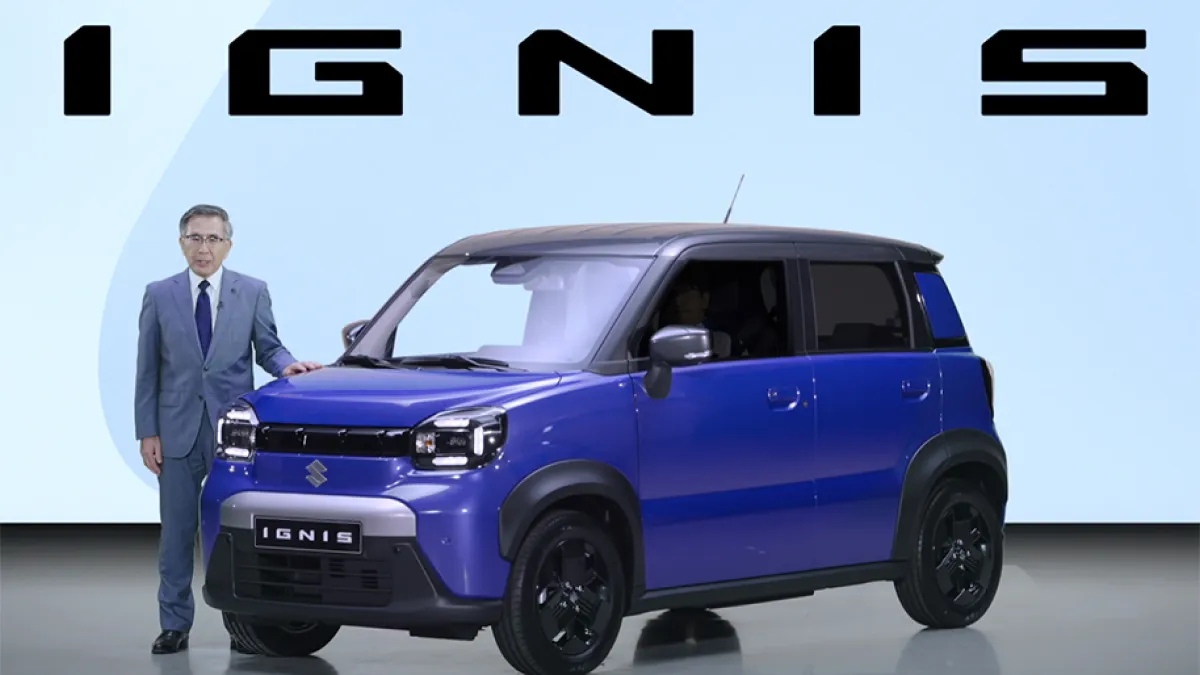
Suzuki has spent decades proving that it understands small cars better than almost anyone else in the industry. Now, the Japanese carmaker is bringing that compact-car expertise into the electric era by reviving one of its most recognisable small-car badges. On November 25, 2026, Suzuki officially unveiled the all-new Suzuki Ignis EV for global markets.
If the silhouette looks familiar to anyone who follows Japanese auto shows, there is a good reason for that. The new Ignis EV is the production version of the eSky concept first displayed at the 2025 Japan Mobility Show, and it was introduced in its home market of Japan under the eSky name earlier this month. For Europe and other international markets, however, Suzuki is bringing back the familiar Ignis nameplate, with global sales scheduled to kick off from summer 2027.
Rather than taking an old petrol hatchback and stuffing a battery into the boot, Suzuki has started with a clean sheet of paper. Built on a dedicated electric architecture and focused squarely on urban manoeuvrability, the new Ignis EV marks a total reinvention of the nameplate. Here is a closer look at its design, its new HEARTECT-e underpinnings, its cosy four-seat cabin, and whether Indian buyers have any chance of seeing it parked in a Nexa showroom.
How Does a Head-Up Display (HUD) Work in Cars? The Technology Behind the Floating Speedometer
Familiar Name, Fresh Identity: Smart, Iconic, and Cozy
The outgoing petrol-powered Ignis built a loyal following because it refused to look like every other budget hatchback on the road. Its quirky, upright stance and compact footprint gave it genuine personality. With the 2027 electric Ignis, Suzuki is keeping that compact urban spirit alive while introducing a completely new visual language built around three guiding ideas: Smart, Iconic, and Cozy.
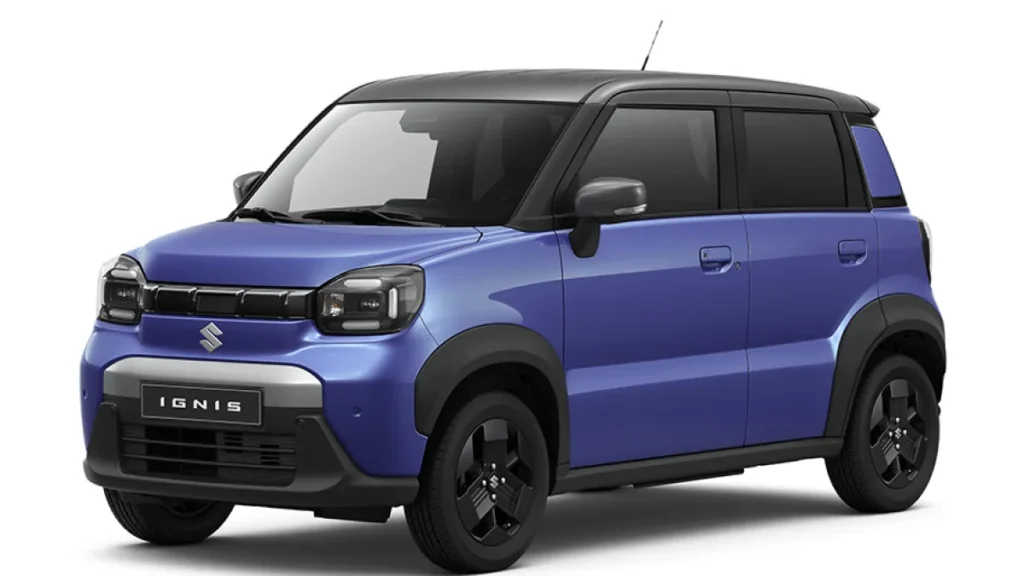
Rather than chasing aggressive sports-car creases or oversized grilles, the Ignis EV goes for clean, approachable styling that looks right at home weaving through tight European old-town alleys or crowded city centres. A flowing shoulder line runs along the flanks, topped by a floating roof design that gives the little car a light, modern profile.
The sharpest visual signature sits at the front and rear. Both the headlamps and tail-lamps feature distinctive LED lighting graphics inspired by digital numbers. It is a playful, memorable touch that ensures you can spot the Ignis EV from a block away at night without relying on heavy chrome trim or complicated body cladding.
Most importantly, Suzuki has resisted the industry-wide habit of letting every new generation grow bloated. The Ignis EV keeps its footprint genuinely compact, designed from the outset for narrow streets, tight parallel parking spots, and stress-free everyday errands.
How Does a Head-Up Display (HUD) Work in Cars? The Technology Behind the Floating Speedometer
Under the Floor: The Dedicated HEARTECT-e Platform
The biggest difference between the old petrol Ignis and this new electric model isn’t the styling—it is what lies underneath the metal. The 2027 Ignis EV rides on Suzuki’s dedicated HEARTECT-e electric vehicle platform, making it Suzuki’s first compact EV engineered specifically for global markets from the ground up.
Developing a dedicated EV architecture for a small city car is no small investment, and the packaging benefits are immediately clear. By housing the battery pack flat beneath the cabin floor, Suzuki’s engineers freed up valuable interior room while keeping the car’s centre of gravity low for stable, predictable handling.
According to Suzuki, the HEARTECT-e architecture has been engineered to deliver several practical advantages:
- Lightweight and rigid body structure: Essential for keeping an electric city car efficient without needing an oversized, heavy battery.
- Efficient underfloor battery packaging: Maximises passenger space within tight exterior dimensions.
- Stable driving behaviour: Low weight distribution helps the tall, compact body feel planted through city bends and highway merges.
- A 4.5-metre minimum turning radius: That tiny turning circle is a genuine superpower in dense urban traffic, making U-turns on narrow two-lane roads effortless.
Suzuki has also paid close attention to a detail that often catches first-time EV drivers off guard: brake pedal feel. Many entry-level electric cars suffer from spongy, inconsistent brakes as the car switches between regenerative braking and physical brake pads. To solve this, Suzuki developed a regenerative-hydraulic braking system paired with an electric brake booster. The goal is to deliver smooth, linear braking response that feels immediately natural to anyone stepping out of a conventional petrol hatchback.
Battery, Powertrain, and Everyday Urban Performance
Because the Ignis EV is built as a practical city commuter rather than a cross-continental grand tourer, Suzuki has kept its electric hardware sensible and focused. The car uses a front-wheel-drive layout powered by a 26kWh Lithium Iron Phosphate (LFP) battery pack.
Choosing LFP chemistry is a smart, pragmatic decision for a compact global EV. Compared to nickel-based batteries, LFP packs are generally more cost-effective to produce, handle frequent daily charging cycles with less long-term degradation, and offer strong thermal stability across varying climates.
While Suzuki’s global unveiling did not include a complete, finalised technical specification sheet—meaning official WLTP driving range and exact charging times are still waiting to be announced—the Ignis EV is reported to produce around 90hp. In a lightweight, compact four-seat EV with instant electric torque from zero rpm, roughly 90hp is more than enough to feel zippy away from traffic lights and comfortable keeping pace on urban ring roads.
Suzuki Ignis EV: Key Specifications and Overview
| Specification | Suzuki Ignis EV Details |
| Global Unveiling Date | November 25, 2026 |
| Concept / Japan Twin | Based on 2025 eSky concept; sold in Japan as the eSky |
| Platform | Dedicated HEARTECT-e EV architecture |
| Powertrain | All-electric |
| Drivetrain | Front-wheel drive (FWD) |
| Battery Chemistry | Lithium Iron Phosphate (LFP) |
| Battery Capacity | 26kWh |
| Estimated Power Output | Around 90hp (reported; final global spec sheet pending) |
| Seating Capacity | 4 occupants |
| Minimum Turning Radius | 4.5 metres |
| Braking Hardware | Regenerative-hydraulic system with electric brake booster |
| International Sales Start | Summer 2027 onwards (Europe and other global markets) |
Inside the Cabin: A Cosy Four-Seat Urban Lounge
Step inside the new Ignis EV, and the “Cozy” part of Suzuki’s design brief comes into sharp focus. Instead of copying the stark, clinical minimalism that dominates many modern EVs, Suzuki has opted for a warmer, more welcoming cabin layout.
The dashboard features a rounded, wrap-around shape that flows smoothly out into the door trims, visually widening the interior and making the compact cabin feel thoughtfully put together. Anchoring the front is a wide display panel designed to keep driving data and infotainment controls clear and easy to reach without overwhelming the driver.
One charming detail that highlights the car’s Japanese design roots is a storage tray featuring a pottery-inspired design. It is a subtle nod to everyday craftsmanship—turning a simple spot for keys, coins, or a smartphone into a tactile focal point.
There is, however, one major practical distinction buyers need to note right away: the Suzuki Ignis EV is strictly a four-seater. Rather than squeezing a cramped fifth seatbelt into the middle of a narrow rear bench, Suzuki designed the Ignis EV as a dedicated four-occupant city car. For urban couples, solo commuters, or small families using it as a second car, giving four passengers proper elbow room and smart storage makes far more sense than an unusable middle seat.
Old Petrol Ignis vs. New Ignis EV: A Complete Reinvention
For readers who remember the petrol Ignis sold in India and overseas, the shift to the 2027 electric model is far more than a powertrain swap. Virtually every fundamental aspect of the car has evolved.
| Comparison Area | Outgoing Petrol Ignis (India Spec) | New Suzuki Ignis EV (Global Spec) |
| Powertrain | Internal combustion petrol engine | All-electric with 26kWh LFP battery |
| Platform | Conventional HEARTECT platform | Dedicated HEARTECT-e EV platform |
| Seating Layout | 5-seat compact hatchback | 4-seat urban electric city car |
| Design Focus | Quirky tall-boy micro-SUV styling | “Smart, Iconic, Cozy” EV design with digital-number LEDs |
| Primary Role | Budget-friendly all-rounder hatchback | Purpose-built zero-emission urban commuter |
| India Availability | Sold via Maruti Suzuki Nexa | Not confirmed |
Global Rollout Timeline and the Big India Question
Suzuki has confirmed that the new electric Ignis will reach showrooms in Europe and select international markets starting from summer 2027. Between now and then, the company will still need to lock down and announce several critical pieces of the puzzle—including market-wise pricing, certified driving range, AC and DC charging speeds, safety equipment, and exact customer delivery schedules.
For Indian automotive enthusiasts, the obvious question follows immediately: will Maruti Suzuki bring the Ignis EV to India?
At the moment, there is no official confirmation of an India launch. While the previous petrol-powered Ignis was a familiar sight on Indian roads through Maruti Suzuki’s Nexa dealership network, reviving the badge for Europe and Japan does not automatically guarantee a ticket to India.
On paper, there is an intriguing gap it could fill. With Maruti Suzuki preparing to anchor its broader electric lineup with larger models like the e Vitara, a compact, nimble Ignis EV could theoretically slot underneath as an accessible urban runabout for metro-city households looking for a second car.
Yet the practical realities of the Indian market complicate that case. Indian car buyers—even in the compact segment—overwhelmingly expect five-seat flexibility for family outings, regardless of how often the fifth seat is actually used. A strict four-seat layout immediately narrows the audience. On top of that, a 26kWh battery pack is well-suited to short daily city commutes, but buyers in India remain deeply sensitive to headline driving range and price-to-size ratios. Unless Suzuki can localise the HEARTECT-e platform heavily enough to price the Ignis EV aggressively, importing or assembling it purely as a niche four-seater would be a tough sell.
Suzuki Ignis EV: Confirmed Facts vs. What We Are Still Waiting For
| Aspect | Status |
| Nameplate & Global Reveal | Confirmed (unveiled November 25, 2026) |
| Platform & Battery Size | Confirmed (HEARTECT-e platform, 26kWh LFP pack) |
| Seating & Turning Radius | Confirmed (4-seater, 4.5-metre turning radius) |
| Europe Sales Window | Confirmed (Summer 2027 onwards) |
| Certified Driving Range & Charging Speeds | Not yet announced |
| Final Output & Variant Features | Full global spec sheet pending (~90hp reported) |
| Global Pricing | Not yet announced |
| India Launch Plans | Unconfirmed |
Why the New Ignis EV Matters for Suzuki
Even with final range and pricing figures still months away, the revival of the Ignis as an electric car is a significant moment for Suzuki. For years, critics questioned how quickly Suzuki could adapt its famous small-car formula to an all-electric future without losing the affordability and simplicity that built its global reputation.
By pairing a dedicated HEARTECT-e platform with a sensible 26kWh LFP battery, a tight 4.5-metre turning radius, and a warm, cleverly packaged cabin, Suzuki isn’t trying to beat luxury brands at a horsepower race. It is doing what it has always done best: building an honest, easy-to-live-with city car tailored for real urban streets. When European sales kick off in summer 2027, the Ignis EV could quietly remind the rest of the auto industry that electric cars don’t need to be giant to be genuinely useful.
