


For the past few years, Honda Cars India has watched from the sidelines as India’s electric SUV market grew from a niche curiosity into a fiercely contested mainstream segment. While rivals rolled out dedicated electric platforms and expanded their charging ecosystems, Honda stuck steadily to its familiar petrol-powered lineup of the City, Amaze, and Elevate. That quiet period is officially coming to an end.
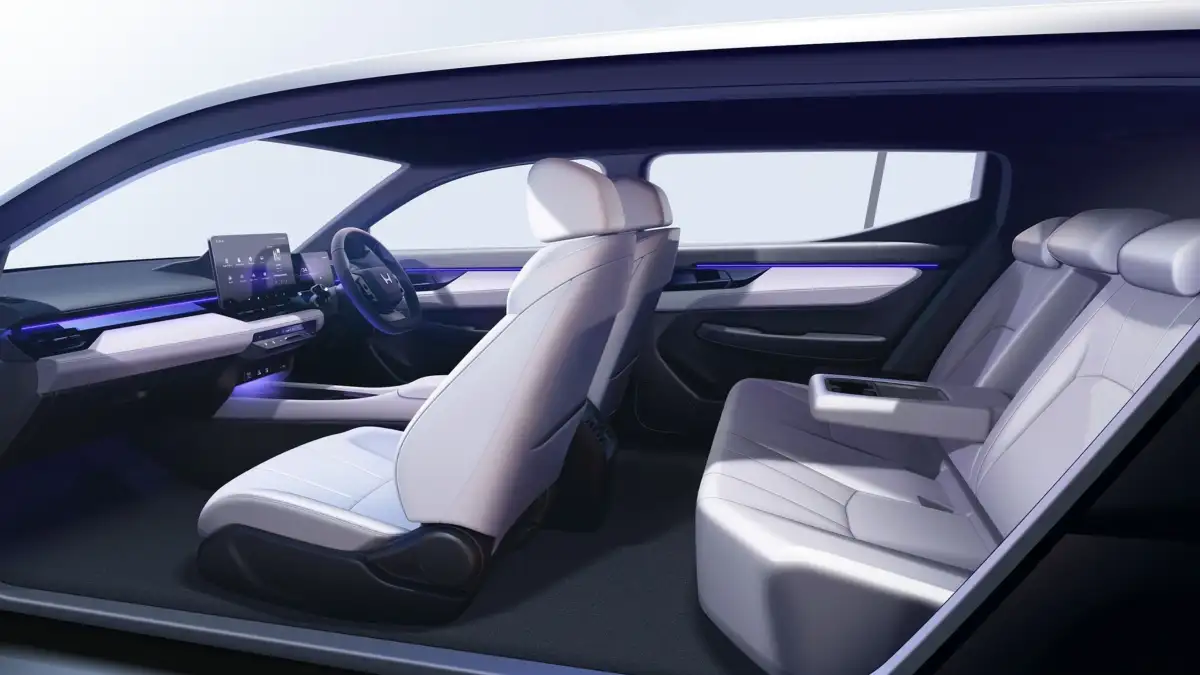
On December 2, 2026, Honda will pull the covers off the Honda Alpha—its first all-electric passenger vehicle for the Indian market, and a model that will make its global premiere right here in India. Ahead of that big reveal, Honda has released the first official design sketches of the Alpha’s interior, giving prospective buyers their earliest look inside the cabin of the brand’s most important India launch in years.
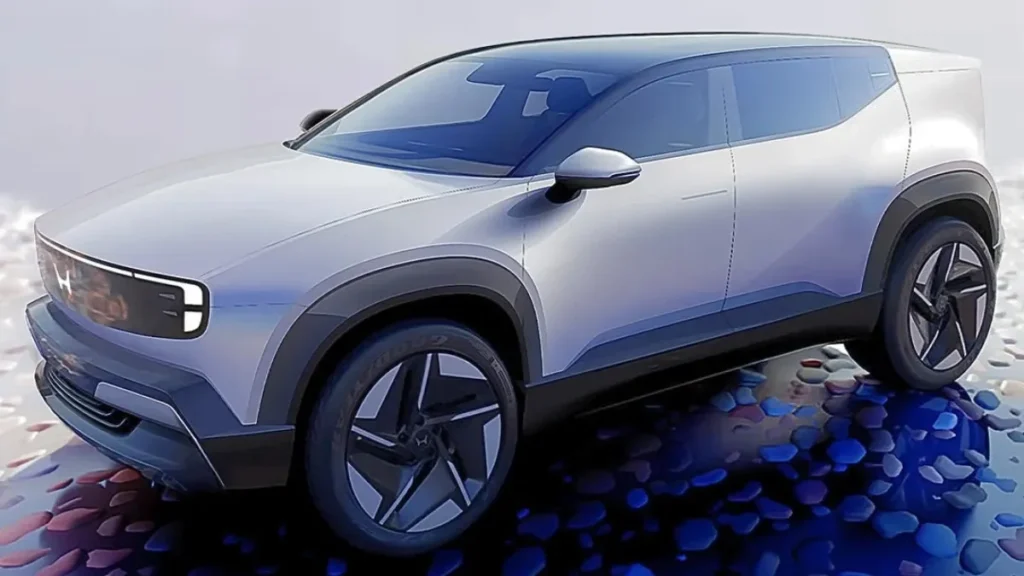
Previously previewed in concept form as the 0 α (Alpha) prototype at the Japan Mobility Show in October 2025, the upcoming electric SUV represents a complete reset in how Honda approaches cabin design, digital technology, and local EV manufacturing. Here is everything the official sketches tell us, what remains under wraps until December 2, and why building the Alpha in Rajasthan matters so much for Honda’s future in India.
Inside the Honda Alpha: Minimalist, Digital, and Thoroughly Modern
Anyone who has sat inside a recent Honda in India knows the brand’s traditional interior philosophy: sensible ergonomics, physical dials where you expect them, and clean, conservative styling that prioritises longevity over showroom drama. The official interior sketches of the Honda Alpha show a noticeable shift forward—keeping that signature sense of openness and usability, while finally embracing a contemporary, screen-led EV layout.
The cabin follows a clean, horizontal dashboard theme built around a dual-tone black and off-white colour palette, accented by a strip of ambient lighting stretching across the passenger side. Rather than crowding the dashboard with rows of conventional switches, Honda has pared back physical controls to create a calmer, uncluttered visual space.
The focal point is a wide, integrated display arrangement split across two independent screens:
- A fully digital instrument cluster tucked neatly behind the steering wheel—a welcome milestone for Honda Cars India, whose current petrol models have not yet offered a full digital driver display.
- A large central free-standing touchscreen infotainment system positioned prominently in the middle of the dashboard.
Sitting in front of the driver is a newly designed, chunky three-spoke steering wheel featuring a flat bottom, physical multi-function buttons, and Honda’s updated branding. Below the main dashboard, the sketches highlight a contemporary, raised centre console with dedicated storage pockets, charging ports, and neatly integrated controls, alongside rear air-conditioning vents tucked behind the console for second-row passengers.
Of course, design sketches always carry a touch of artistic polish—wider proportions, sleeker trim lines, and dramatic lighting. The final production-spec cabin revealed on December 2 may tone down a few flourishes for everyday durability, but the core architecture and digital-first direction are unmistakable.
Honda Alpha Interior: Visible Design Highlights
| Cabin Area | What the Official Sketches Show | Why It Matters for Indian Buyers |
| Dashboard Architecture | Wide, horizontal, minimalist layout with dual-tone finish | Creates a sense of width and airy cabin space |
| Driver Display | Separate fully digital instrument cluster | Brings Honda’s cockpit tech up to speed with modern EV rivals |
| Infotainment Screen | Large central touchscreen display | Acts as the primary hub for navigation, media, and EV telemetry |
| Steering Wheel | New three-spoke flat-bottom wheel with physical buttons | Blends modern styling with tactile, easy-to-reach controls |
| Centre Console | Raised, contemporary layout with storage and charging ports | Maximises practical everyday stowage for phones, bottles, and cables |
| Ambience & Rear Comfort | Strip ambient lighting and rear AC vents | Elevates premium feel and addresses Indian summer comfort |
Exterior Design Direction: Carrying Forward the 0 α Prototype
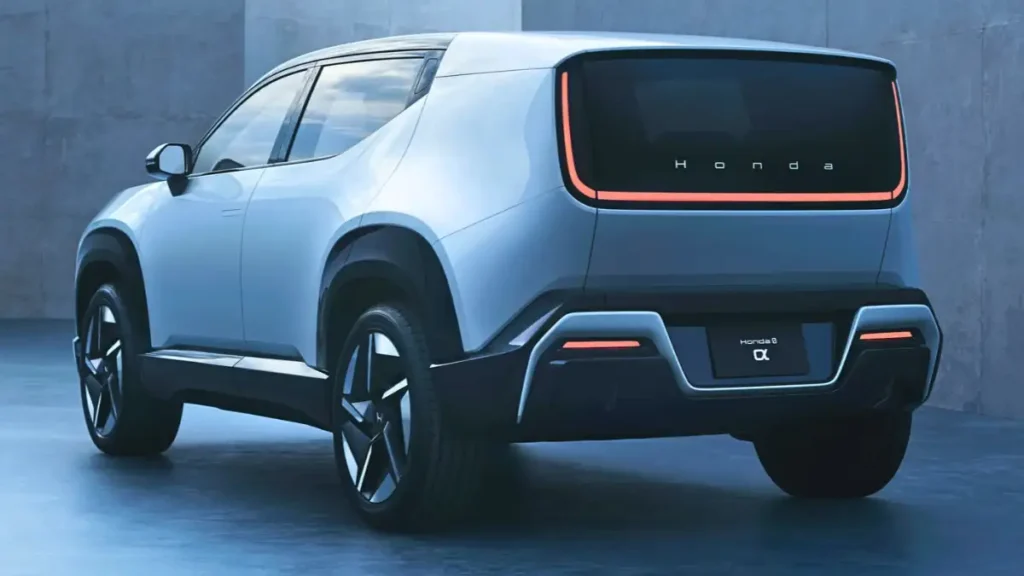
While the latest official sketches put the spotlight on the cabin, Honda has already given the world a clear preview of the Alpha’s exterior identity through the 0 α prototype shown in Tokyo in October 2025, supplemented by fresh exterior design sketches.
Unlike conventional Hondas that lean toward soft, understated curves, the Alpha takes a distinctly futuristic approach. It wears a boxy, upright SUV silhouette with a strong stance, flush-fitting front door handles, rear door handles tucked neatly high near the window line, and distinctive lighting signatures that immediately mark it out as part of Honda’s new-generation electric family.
As the concept transitions into a road-going production car, practical changes—such as conventional outside rear-view mirrors, road-legal lighting housings, and sensible tyre profiles—are naturally part of the process. Even so, retaining the prototype’s upright proportions should pay real dividends inside, translating into generous headroom and an airy glasshouse for families.
Powertrain, Battery, and Range: The Big Questions for December 2
If there is one area where Honda is keeping its cards tightly close to its chest, it is what sits beneath the floor. Ahead of the December 2 global premiere, Honda has not officially revealed the Alpha’s battery capacity, electric motor output, driving range, or fast-charging specifications.
The company has also stayed silent on whether buyers will be able to choose between multiple battery pack sizes or different drivetrain configurations, such as front-wheel drive versus all-wheel drive.
Those technical numbers will ultimately make or break the Alpha’s reception in India. The midsize electric SUV segment has matured rapidly over the past eighteen months. Buyers shopping in this space are no longer impressed by sub-300km real-world ranges or sluggish DC charging curves. To stand shoulder-to-shoulder with established domestic and international rivals, the Alpha will need a competitive battery setup capable of delivering stress-free intercity highway runs alongside quick top-ups at public fast chargers.
All of those official figures—along with the complete variant-wise feature list and safety suite—are expected to be disclosed when the production-ready SUV takes the stage on December 2.
Made in India at Tapukara: Why Local Production Is Key
One of the most encouraging facts Honda has already confirmed has nothing to do with touchscreens or styling: the Honda Alpha will be manufactured locally at Honda’s Tapukara plant in Rajasthan.
For Honda Cars India, this is a pivotal strategic shift. Until now, the company’s Indian operations have revolved almost entirely around petrol-powered passenger vehicles. Committing to local EV production at Tapukara signals that Honda is not treating the Alpha as a low-volume, headline-chasing CBU import meant solely for brand building.
Local manufacturing brings three immediate advantages in a price-sensitive market like India:
- Sharper Pricing: Avoiding steep import duties allows Honda to position the Alpha competitively against locally built electric SUVs.
- Stronger Domestic Supply Chain: Localising EV components builds the supplier backbone Honda will need for future electrified models.
- Long-Term Ownership Confidence: Locally produced vehicles typically benefit from better spare-parts availability and more predictable service costs over a five-to-eight-year ownership cycle.
Entering India’s Most Competitive Electric SUV Arena
When the Honda Alpha goes on sale, it will be stepping directly into the busiest, most fiercely contested corner of India’s electric car market. Midsize electric SUVs have become the primary battleground for Indian families looking to transition away from petrol and diesel without giving up space or road presence.
The Alpha will find itself going up against a formidable line-up of established and upcoming models from Tata Motors, Mahindra, Hyundai, Maruti Suzuki, and other manufacturers—including heavy hitters like the Tata Sierra EV, Mahindra BE 6, Hyundai Creta Electric, and Maruti e Vitara.
Honda Alpha: Launch Status and Market Snapshot
| Key Detail | Current Status |
| Model Name | Honda Alpha |
| Category | Midsize Electric SUV (Honda’s first EV for India) |
| Concept Preview | 0 α (Alpha) prototype at Japan Mobility Show (October 2025) |
| Global / India Debut Date | December 2, 2026 |
| Manufacturing Location | Honda’s Tapukara plant, Rajasthan (Made in India) |
| Battery & Range Specs | Not yet officially announced |
| Pricing & Bookings | Not yet confirmed |
| Customer Deliveries | Timeline unconfirmed |
| Primary Segment Rivals | Midsize EVs from Tata, Mahindra, Hyundai, Maruti Suzuki, and others |
Standing out in that crowd requires more than a respected badge on the nose. Tata and Mahindra have built strong momentum with bold designs and proven local EV ecosystems, while Hyundai and Maruti Suzuki bring massive nationwide dealership and service footprints. Honda’s ace in the hole has always been its reputation for cabin packaging, smooth refinement, and dependable long-term engineering. Pairing those traditional Honda strengths with a clean, minimalist digital cabin and local manufacturing at Tapukara gives the Alpha a genuine fighting chance.
What Happens Next on December 2?
The countdown is officially in its final stretch. With the December 2, 2026 debut right around the corner, the interior sketches have done their job—proving that Honda is ready to leave behind its conservative past and deliver a cabin that looks and feels genuinely built for the electric era.
When the wraps come off in a few days, all eyes will be on the production-spec exterior, the exact cabin equipment list, and—most importantly—the battery, range, and charging figures. Pricing, booking schedules, and delivery timelines are still unconfirmed and may follow closer to the market launch. One thing, however, is already clear: with a locally manufactured electric SUV built in Rajasthan, Honda is finally ready to get serious about India’s electric future.

1 Comment
Pingback: Suzuki Ignis Returns as a New Compact Electric Car