


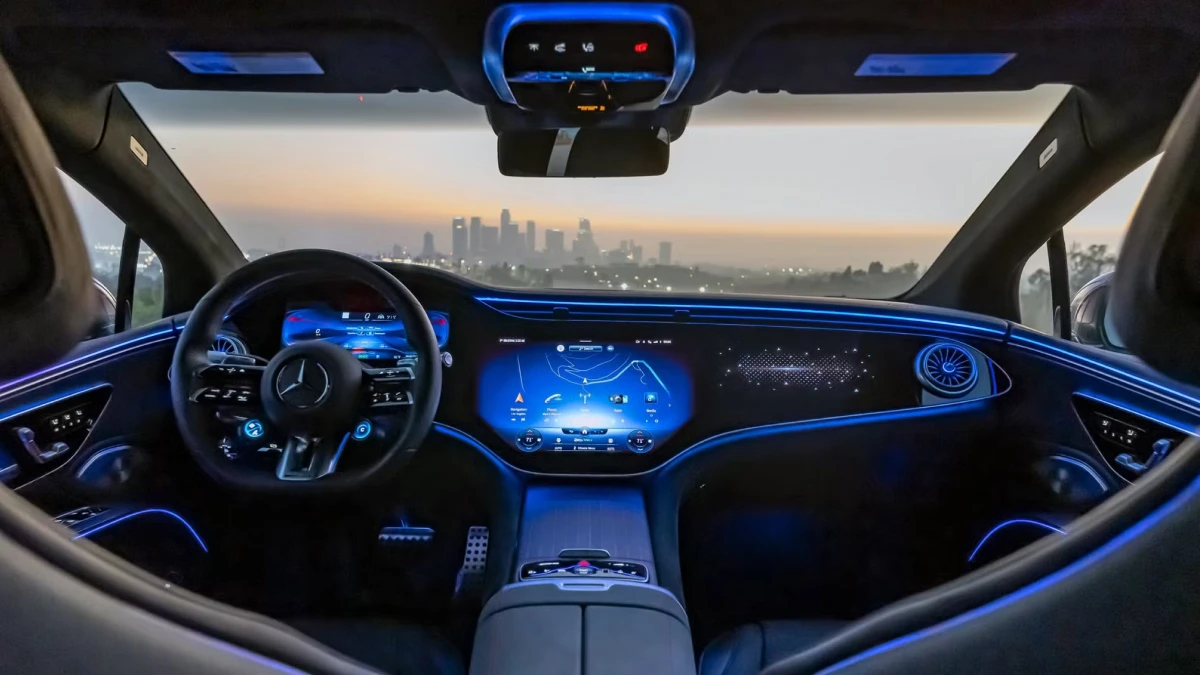
To understand the modern automotive industry, you have to ask five critical questions: Why are there so many screens in cars now? What actually happens when one goes blank? Why are software problems increasingly becoming safety problems? What is happening in India with screen-heavy cars like the Mahindra XUV 7XO and the new Electric Origin SUVs? And finally, are automakers designing vehicles with too much dependence on a single screen and software architecture?
Twenty years ago, a car was a mechanical entity. It featured a basic radio, physical climate controls, analog gauges for speed and RPM, and a mechanical handbrake. The dashboard was designed for tactile simplicity. Today, a single central display can control navigation, music, phone calls, air-conditioning, vehicle settings, drive modes, 360-degree cameras, EV charging schedules, ADAS warnings, and connected-car functions. In many modern vehicles, even the driver’s instrument cluster is effectively just another software application running on the same digital architecture.
This creates a brand-new, complex problem: When a physical switch breaks, one function stops working. When a central display or software module fails, several critical driving functions can disappear simultaneously.
The Screenification of Cars: From Novelty to Necessity
The industry has effectively moved from building “a car with a screen” to building “a computer on wheels with a car attached.” This shift is particularly evident in the rise of newer EVs and Software-Defined Vehicles (SDVs).
In older vehicle architectures, mechanical controls were hardwired to individual functions. You turned a dial, and a physical cable or dedicated electrical circuit opened a vent. In a modern car, the process relies on a central computer. You tap a glass screen, the software registers the input, sends a signal through the vehicle’s network to a specific electronic control unit (ECU), which then actuates a motor to open a vent.
Automotive publications like Motor1 have noted that screens have evolved from being a luxury novelty to becoming almost universal in new cars. As more vehicle functions are integrated into this digital architecture, the screen is no longer just an entertainment hub—it is the brain stem of the vehicle. And as recent data shows, roughly 30 active US recalls related to vehicle displays were associated with around 3.8 million vehicles by mid-2026.
Not All Blank Screens Are the Same
To understand the safety implications, it is important to categorize screen failures. They are not all created equal:
- A. Infotainment Screen Failure: If the central touchscreen crashes, you lose your navigation, music, phone interface, and some ambient vehicle settings. This is highly annoying, but not necessarily an immediate danger to your driving capability.
- B. Rear-Camera Display Failure: This is significantly more serious. The physical camera on the tailgate might be working perfectly, but if the software or central display fails to show the image, the driver loses the required rearward visual information. This exact scenario has triggered massive recalls across multiple global brands.
- C. Digital Instrument Cluster Failure: This is a severe safety hazard. If the screen behind the steering wheel goes black, you lose your speedometer, critical warning lights, ADAS alerts, and fuel/battery charge information. Driving at 100 km/h without knowing your speed or engine status turns a “screen glitch” into an immediate safety crisis.
- D. Multiple-Display / System Failure: This is the nightmare scenario. A single software glitch or electrical short can take down the instrument cluster, the infotainment display, the camera feed, and ADAS information simultaneously. The driver is left completely blind to the vehicle’s internal state.
Why a Screen Problem Can Become a Safety Problem
A touchscreen is not inherently safety-critical. The problem occurs when manufacturers make safety-critical information dependent on that touchscreen.
Consider the reversing camera. In the United States, Federal Motor Vehicle Safety Standard (FMVSS) No. 111 mandates a clear rear-view image on applicable vehicles to prevent back-over accidents. Manufacturers rely on the central infotainment display to satisfy this legal requirement. Therefore, if the software crashes and the screen goes blank, the vehicle is suddenly in violation of federal safety standards—even if the physical camera lens and wiring are flawless. The software pathway has become the safety defect.
The Big International Recall Story
The sheer scale of screen-related recalls over the past few years highlights how difficult it is to perfect automotive software. Motor1 recently reported massive Ford recalls involving hundreds of thousands of vehicles due to rear-camera display problems, alongside similar actions from Honda, GM, Hyundai, Genesis, and Nissan.
| Manufacturer | Reported Problem | Why It Matters |
| Ford | Rear-camera image can be distorted/missing | Driver loses rear visibility (Over 1.7 million vehicles affected in recent years) |
| Honda | Rear-camera display failure | Reduced visibility and regulatory safety risk |
| GM | Distorted or blank rear-camera image | Direct safety risk while reversing |
| Hyundai | Displays can go blank while driving | Driver loses critical vehicle speed/warning information |
| Genesis | Displays can go blank | Instrument and display information becomes unavailable |
| Nissan | Software-related display problem | Driver information is adversely affected |
| BMW | Individual vehicle display failures | Demonstrates hardware/software complexity in luxury vehicles |
The Mercedes-Benz & Hyundai/Kia Examples
To prove this isn’t just a budget-car problem, Mercedes-Benz recalled approximately 144,049 vehicles in the US in 2026. The issue? An infotainment control unit could unexpectedly reset, causing the instrument panel display to go completely blank. The affected models included high-end flagships like the AMG GT, SL, E-Class, C-Class, CLE, and GLC.
Similarly, in early 2026, over 84,000 Hyundai and Kia vehicles (including the Tucson, Ioniq 5, Palisade, and EV9) were recalled in the US over software errors affecting instrument-panel displays. The screens failed to show speed and warning lights.
The fix for these modern recalls? A software update. This cements a new reality: A software update is now the exact equivalent of a mechanical recall repair.
The India Story: Where This Gets More Interesting
India is rapidly entering the exact same phase as global markets. We are seeing more screens, more software, more dependencies, and consequently, more potential for software failures.
To maintain editorial clarity when tracking these technological growing pains in India, MotorFuturist categorizes screen-related issues into three distinct tiers:
- Official Recall: A government or manufacturer-confirmed safety recall.
- Manufacturer Service/Software Update: An official technical patch, but not legally classified as a safety recall.
- Owner-Reported Issue: Forum, social media, or ownership reports that indicate a pattern, but do not establish the existence, scale, or cause of a systemic defect.
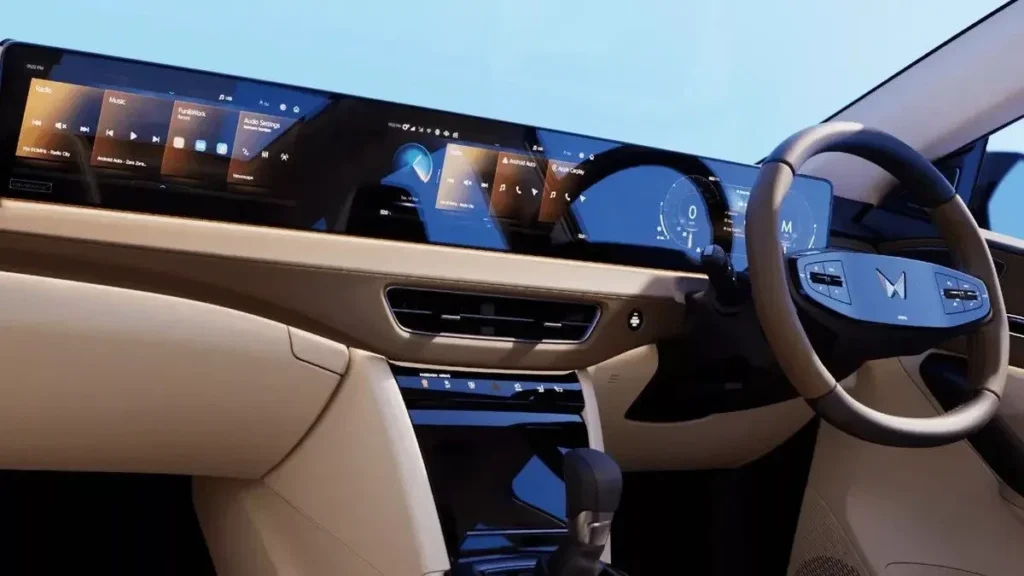
India Case Study: Mahindra’s Screen-Heavy SUVs
Mahindra is a particularly interesting case study because its newest products are heavily software-defined, pushing the boundaries of what Indian buyers expect from domestic vehicles.
Mahindra XUV 7XO:
Marketed heavily around its technology, the XUV 7XO features a massive 31.24cm HD triple-screen setup powered by Adrenox+ software and Qualcomm Snapdragon 8155P hardware. It packs Dolby Vision/Atmos, 49 pre-installed apps, Alexa with ChatGPT integration, and numerous connected-car functions.
Mahindra XEV 9e / XEV 9S / BE 6 (Electric Origin SUVs):
Mahindra explicitly describes these as software-driven vehicles. They feature expansive digital interfaces and rely heavily on Over-The-Air (OTA) update functionality to manage battery systems, infotainment, and user profiles.
The Reality of Complex Code:
With this immense technological package comes an important engineering question: How much of a car’s functionality should depend on a common digital architecture?
- Owner Reports: Across automotive forums and social media, there are owner reports describing XUV 7XO and XEV 9e infotainment glitches. Reports include screens blanking out while driving, audio suddenly going mute, user-profile loading problems, NFC functionality issues, and app inconsistencies. One highly publicised owner report involved an XEV 9e screen turning off entirely while driving, with another user echoing similar behaviour in an XUV 7XO.
- Software Updates: Mahindra actively provides OTA and service center software updates to address these bugs. Features frequently become stabilized or fixed through subsequent patches.
Important Note: Owner reports on social media are not the same as a recall. While they identify patterns worth investigating, they do not establish a systemic defect. As of now, Mahindra is utilizing software updates to refine the user experience.
Why EVs Are Particularly Vulnerable
It is inaccurate to say EVs are inherently less reliable. However, newer EVs tend to introduce significantly more complexity all at once. An EV typically bundles:
- Massive central displays
- Intricate Battery Management Systems (BMS)
- Extensive connected functions and app integration
- Over-The-Air (OTA) update modules
- Digital keys and multiple independent ECUs
- Advanced ADAS suites
Therefore, the opportunity for software bugs increases simply because the ecosystem is exponentially more complex than a traditional combustion-engine car.
The Real Problem: Software Architecture
To understand why a screen goes blank, look at the architecture.
- Old Architecture: Reverse Camera → Wire → Dedicated Display. (Failure point: A cut wire or broken screen).
- Modern Architecture: Reverse Camera → ECU → Vehicle CAN Bus Network → Central Compute Unit → Operating System → Display Software → Screen.
There are vastly more potential failure points. That is why a perfectly functioning physical camera can still produce a “Camera Unavailable” warning on the dash. A perfectly functioning wheel speed sensor can still result in no speed being displayed if the software rendering the digital gauge clusters crashes.
Hardware vs. Software: Why Diagnosis Is Getting Harder
This changes after-sales service fundamentally. In the past, a traditional mechanic operated on a simple premise: “The part is broken. Replace the part.”
In a software-defined vehicle, the diagnostic process sounds like an IT department: “Which ECU is failing? Which firmware is it running? Is there a conflict on the communication bus? Which OTA release caused the module dependency error?”
This requires a massive shift for Indian service centers. A mechanic trained primarily around engines, gearboxes, and suspensions now needs to diagnose operating systems, CAN communication, digital keys, and ADAS calibration. The future service advisor must be part mechanic, part software technician.
Are OTA Updates the Solution?
Yes—but only partly.
Over-The-Air (OTA) updates are fantastic. They eliminate workshop visits, allow for faster fixes, distribute patches to thousands of vehicles overnight, and can even add new features to your car after purchase. Mahindra currently provides detailed instructions for updating its Electric Origin SUVs directly through the infotainment system.
But there is a major downside. OTA makes software problems easier to fix—but potentially easier to distribute.The same software architecture that allows a manufacturer to fix a vehicle remotely can also allow a single buggy line of code to accidentally brick the displays of thousands of vehicles simultaneously.
How Vehicle Recalls Work in India
Traditionally, a recall meant a faulty physical component (like a defective airbag). Today, the recall system is changing globally. Faulty software that creates a safety defect now triggers recalls just as quickly as a snapping steering column.
India has a formal vehicle recall framework under the Central Motor Vehicles Rules (CMVR). The process involves the identification of a safety defect, a manufacturer recall decision, notification to authorities, and direct owner communication. Importantly, India’s framework explicitly requires manufacturers to ensure dealers have the “parts, assemblies, materials including software, and technical instructions” needed to rectify the defect free of charge.
Additionally, the Society of Indian Automobile Manufacturers (SIAM) maintains a public voluntary recall database, allowing the public to track the number of affected vehicles and potential defect information.
Global vs. India — The Digital Shift Comparison
| Issue | International Markets | Indian Market |
| Blank Infotainment Displays | Official safety recalls exist | Owner reports & service issues emerging |
| Digital Cluster Failures | Multiple recalls triggered | Increasing dependence on digital clusters |
| Rear-Camera Failures | Major regulatory recall category | Growing safety implications |
| OTA Fixes | Increasingly common | Growing rapidly |
| Software-Defined Vehicles | Mature and regulated market | Rapid expansion by domestic automakers |
| Recall Framework | Established regulatory systems | Formal CMVR framework & SIAM databases |
| Main Challenge | Software complexity | Software optimization & local service capability |
What Happens When Your Screen Goes Blank While Driving?
If you are driving and your screen goes black, do not panic and do not attempt risky system resets while moving.
- Assess the Infotainment Screen: If the central screen dies, check if your instrument cluster is still working. If your warning lights, speed, and vehicle controls (like steering and brakes) remain functional, pull over safely when possible.
- Assess the Instrument Cluster: If the screen behind your steering wheel goes blank, treat it much more seriously. You no longer have access to critical driving information. Pull over immediately.
- Rear Camera Failure: If the camera disappears while reversing, stop. Revert to your physical mirrors, turn your head for direct rearward visibility, and rely on parking sensors if available.
Contact your dealer. Do not assume the car is safe to drive long distances if you cannot see engine or battery warning lights.
What Buyers Should Check Before Buying a Screen-Heavy Car
Before purchasing a tech-heavy modern SUV, ask these questions during your test drive:
- What happens if the screen fails? Can you still control the AC, hazard lights, windshield defogger, and drive modes?
- Does the car have physical controls? Physical buttons for volume, hazards, and HVAC demisting are crucial for safety.
- Is the instrument cluster independent? Does it run on a separate software module from the infotainment system?
- Can the rear camera work independently?
- How does the manufacturer handle software updates? Are true OTA updates available, or do you need a service center visit?
- Can the car drive normally without connectivity?
- What happens when the 12V battery is weak? (In modern EVs, a failing 12V auxiliary battery will instantly cause screens to flicker or die, taking down the software architecture with it).
Screens Aren’t the Enemy: The Future is More Screens, Not Fewer
It would be too simplistic to say screens are bad. Screens offer genuine, undeniable advantages: better high-definition navigation, enhanced 360-degree camera visibility, easier software updates, deep customization, and advanced driver assistance interfaces.
The problem is over-dependence without redundancy. The irony is that this trend isn’t slowing down. The industry is rapidly moving toward passenger screens, full-width pillar-to-pillar displays, augmented-reality windshields, and digital rear-view mirrors. The challenge isn’t stopping technology; it is ensuring that it works flawlessly 100% of the time.
The Bigger Question: Who Owns the Software?
As vehicles become Software-Defined, a massive legal and logistical question looms: Who is responsible when something goes wrong? Is it the car manufacturer? The Tier-1 hardware supplier? The computer chipmaker? The cloud provider? A modern vehicle can contain hundreds of millions of lines of code. Consequently, automotive quality control is no longer just about panel gaps; it is strictly about software quality control.
MotorFuturist Verdict: The Future Isn’t Just Electric. It’s Digital.
The automotive industry spent decades improving engines, brakes, crash structures, airbags, and tires. Now, it faces an entirely new engineering mountain: software reliability.
The modern car isn’t simply transporting you anymore. It is computing, communicating, displaying, updating, and learning. When your screen goes black, the physical glass hasn’t broken. The problem is that the car’s software-defined architecture has temporarily stopped communicating with the driver.
That is why screen failures deserve to be treated as more than an annoyance. The question isn’t whether cars should have screens. The question is whether critical safety and driving functions should ever be left without a physical backup.

5 Comments
Pingback: Upcoming Cars in India October-November 2026: New SUVs, EVs & More
Pingback: Kia Sorento Mileage: 19.60 kmpl Hybrid, Diesel & AWD Figures
Pingback: Hyundai Bayon Revealed: 115hp Engine, AI Features & Price
Pingback: 2026 Audi Q3 Launched at ₹51.99 Lakh: Audi vs BMW X1 vs Mercedes-Benz GLA
Pingback: Car Discounts October 2026: Up to ₹13.38 Lakh Festive Offers