


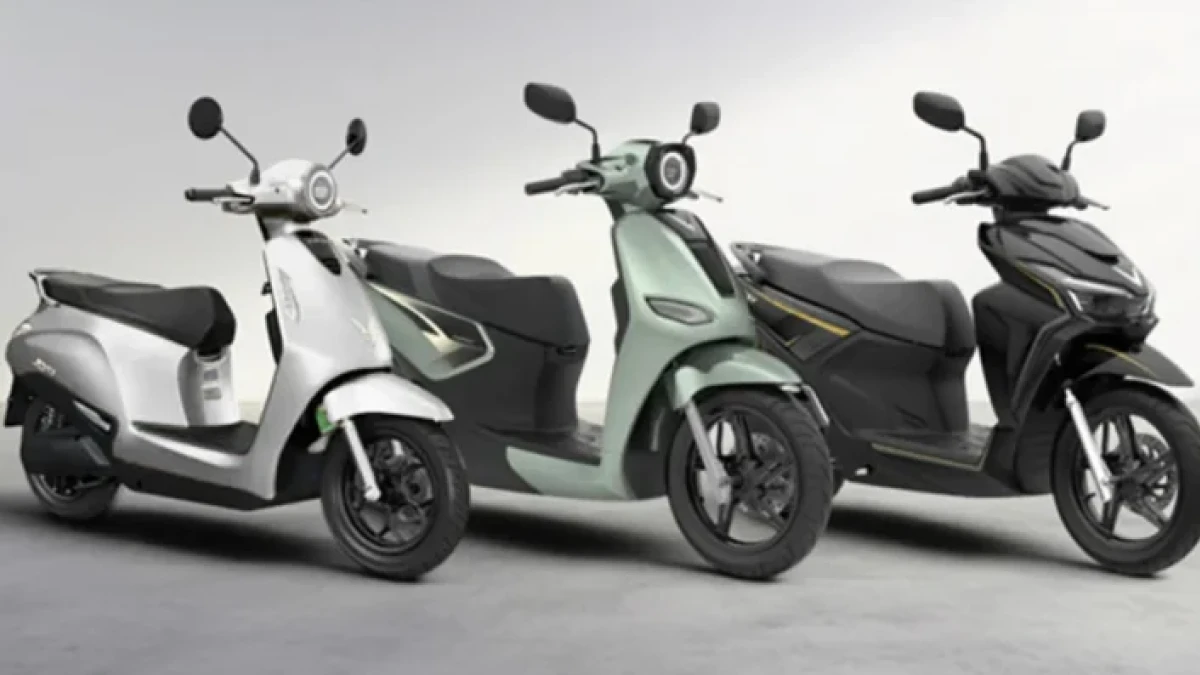
India’s electric two-wheeler market is no longer an experiment driven by early adopters. It has grown into a high-volume battleground where legacy automakers and homegrown startups fight fiercely over range, reliability, and everyday practicality. Now, a fresh international challenger is preparing to join the fray. Vietnamese electric vehicle manufacturer VinFast has confirmed plans to enter India’s electric scooter space in 2027—and instead of dipping a toe in with a single model, it is bringing three locally manufactured, made-for-India electric scooters.
This move marks a notable shift for VinFast in the subcontinent. Until now, most of the conversation around the brand in India has centred on its electric car ambitions. Stepping into two-wheelers signals that VinFast wants real volume and everyday visibility on Indian streets.
Rather than shipping existing overseas scooters straight to Indian showrooms, the company plans to use three of its Vietnamese-market models—the Evo, Kyo, and Kinet—as mechanical and conceptual starting points. From there, VinFast will heavily rework their design and chassis specifically for Indian roads and buyer habits. Final Indian names, confirmed specifications, and prices are still under wraps, but looking closely at the donor scooters and VinFast’s localisation strategy gives us a very clear picture of what is coming.
Three Scooters, Three Different Riders
One of the smartest decisions in VinFast’s 2027 roadmap is launching a three-pronged lineup right out of the gate. Indian scooter buyers do not fit into one neat box. A college student looking for quick acceleration wants something completely different from a parent doing daily school runs and grocery trips. By adapting the Evo, Kyo, and Kinet simultaneously, VinFast is covering three distinct corners of the market from day one.
1. The Evo-Based Model: Everyday Affordability
In Vietnam, the VinFast Evo serves as the accessible entry point to the brand’s lineup. It is built around straightforward commuting, maximum efficiency, and keeping running costs low. For India, the Evo-derived scooter is expected to be VinFast’s most budget-friendly offering—targeted at first-time EV buyers and households looking for a dependable, no-nonsense daily runabout.
2. The Kyo-Based Model: The Premium Family All-Rounder
Sitting a step above the Evo is the VinFast Kyo. Positioned as a more upmarket family scooter, the Kyo steps up with a stronger electric motor, larger wheels, and extra convenience features. In the Indian market, this middle-ground family segment is where the bulk of the sales volume lives, making the Kyo-derived model arguably the most critical of the three for VinFast’s long-term success.
3. The Kinet-Based Model: Performance and Sporty Appeal
Rounding out the trio is the VinFast Kinet, the sportier, performance-focused option. Fitted with a significantly stronger hub motor and a higher top speed, the Kinet is aimed at riders who refuse to give up brisk acceleration and highway-ready pace just because they switched to electric power. In India, this version will naturally speak to younger commuters and enthusiasts who want sharper throttle response alongside practical daily usability.
Inside the Vietnamese Blueprint: What Hardware Are We Looking At?
While VinFast has made it clear that the Indian models will not be carbon copies of the scooters sold in Vietnam, the Vietnamese-market versions offer the clearest look at the baseline engineering VinFast is working with.
It is worth keeping in mind that the numbers below reflect the Vietnamese specifications and have not been confirmed for the India-spec scooters.
Vietnamese-Market VinFast Scooters: Reference Specifications
| Specification | VinFast Evo (Vietnam) | VinFast Kyo (Vietnam) | VinFast Kinet (Vietnam) |
| Target Segment | Entry-level family commuter | Premium family scooter | Sporty performance scooter |
| Peak Motor Power | 2.45kW | 3kW | 5.2kW |
| Claimed Range | 165km | 160km | 145km |
| Claimed Top Speed | 70kph | Not specified | 90kph |
| Combined Battery Capacity | 3kWh (1.5kWh fixed + 1.5kWh removable) | 3kWh (1.5kWh fixed + 1.5kWh removable) | 3kWh (1.5kWh fixed + 1.5kWh removable) |
| Battery Chemistry | LFP (built-in unit) | LFP (built-in unit) | LFP (built-in unit) |
| Underseat Storage | 12 litres | 21 litres | 22 litres |
| Wheel Size | 12-inch | 14-inch | 14-inch |
Two details immediately stand out from that table.
First, look at the battery arrangement. All three Vietnamese models share a clever combined capacity of 3kWh, split right down the middle: a built-in 1.5kWh LFP (Lithium Iron Phosphate) battery paired with an additional removable 1.5kWh battery. LFP chemistry is widely prized for its thermal stability and longevity—two traits that matter enormously in India’s brutal summer heat. Meanwhile, having a removable pack is a genuine lifesaver for urban Indian riders living in multi-storey apartments without dedicated basement charging sockets. Whether VinFast retains this exact hybrid fixed-plus-removable setup for India remains unconfirmed, as battery packaging directly impacts underseat boot space.
Second, notice the 14-inch wheels on the Kyo and Kinet. Most mainstream electric scooters in India run on 12-inch wheels. Larger 14-inch wheels generally roll over potholes, broken tarmac, and expansion joints with far more composure, which could give VinFast’s upper two scooters a noticeable ride-quality edge if they carry over to India.
Re-Engineering for India: Ground Clearance, Boot Space, and Beyond
History is full of global two-wheeler brands that stumbled in India because they underestimated local road conditions and buyer expectations. VinFast appears to be paying attention to those lessons. The company has explicitly stated that its Indian scooters will undergo meaningful chassis and design modifications before their 2027 debut.
Two practical upgrades are already high on the engineering checklist:
- Increased Ground Clearance: Indian city streets and suburban lanes are notorious for unscientific speed breakers, deep waterlogged potholes, and uneven road edges. Scraping a low-slung underfloor battery pack is a fast way to ruin a scooter’s reputation. Raising the chassis clearance is essential so riders can carry a pillion over tall speed humps without wincing.
- Larger Underseat Storage: Look back at the Vietnamese spec sheet, and you will notice the Evo only offers 12 litres of underseat storage, while the Kyo and Kinet sit at 21 and 22 litres respectively. That tighter space is largely a side effect of housing a removable battery pack under the seat. Indian family scooter buyers, however, expect to fit a full-face helmet, a charger, or a week’s worth of vegetables under the seat. Expanding usable boot space will be crucial to winning over pragmatic Indian households.
Beyond ground clearance and storage, VinFast may also tweak motor tuning, battery configurations, and exterior styling to align better with Indian tastes. That could mean calibrating low-end torque for easier two-up climbing on steep flyovers, strengthening suspension damping for heavier loads, or rethinking the battery placement to free up more cargo volume.
Local Manufacturing and the Crowded Indian EV Arena
Every single one of VinFast’s three electric scooters will be manufactured locally in India. In a price-sensitive two-wheeler market, local production isn’t a bonus—it is a survival requirement. Importing kits or fully built scooters would price VinFast straight out of the mainstream conversation.
Building the scooters domestically allows VinFast to keep retail prices sharp, tap into India’s rapidly maturing EV component supplier network, and ensure replacement parts don’t get stuck in customs for weeks when a customer needs a routine repair.
Even with local manufacturing in its corner, VinFast is walking into a fiercely competitive showroom environment. By 2027, the Indian electric scooter space will be even more established than it is today. VinFast’s trio will have to go head-to-head against deeply entrenched players like the TVS iQube, Bajaj Chetak, and the Ather lineup, alongside several other domestic EV brands.
What VinFast Needs to Win Over Indian Buyers
| Competitive Factor | Why It Matters in India | The Challenge for VinFast |
| Aggressive Pricing | Value-for-money dictates high-volume two-wheeler sales | Must match or undercut established domestic rivals through heavy localisation |
| Battery Warranty & Safety | Buyers worry about thermal safety and battery replacement costs | LFP chemistry helps, but strong multi-year warranty backing will be vital |
| Charging Convenience | Many urban buyers lack private garage parking | Retaining removable batteries or offering easy home/public charging will be key |
| After-Sales & Service Reach | Legacy rivals like TVS and Bajaj already have massive dealer networks | VinFast must build trustworthy service support quickly outside top metro cities |
| Everyday Practicality | Scooters serve as primary family transport, not just second vehicles | Delivering generous boot space, comfortable seating, and tall ground clearance |
Having good hardware on paper is only half the job. Established brands like Bajaj and TVS win thousands of buyers every month simply because there is a familiar service centre ten minutes away from the customer’s home. For VinFast, pairing competitive pricing with transparent battery warranties, reliable software, and accessible after-sales support will be just as important as motor power or claimed range.
Launch Timeline and What Still Remains Unconfirmed
VinFast has confirmed that all three made-for-India electric scooters are scheduled to arrive in 2027. Because we are still ahead of their official Indian unveil, several key pieces of information have yet to be finalised or announced publicly:
- Official Indian Names: It is not yet known whether the scooters will keep the Evo, Kyo, and Kinet badges or receive brand-new names tailored for India.
- Final Specifications: Exact Indian battery capacities, whether the removable battery setup carries over, certified IDC range figures, and final motor outputs will be revealed closer to launch.
- Pricing and Variants: Ex-showroom prices and trim-wise feature lists are still pending.
- Exact Launch Windows: Whether all three launch simultaneously or roll out sequentially across 2027 has not been detailed yet.
The Road Ahead
VinFast’s decision to build three distinct, locally manufactured electric scooters for India in 2027 is an ambitious statement of intent. Instead of treating India as an afterthought for leftover global models, the Vietnamese automaker is clearly willing to spend the time and engineering effort required to adapt its Evo, Kyo, and Kinet platforms for Indian tarmac—tackling ground clearance, underseat storage, and local sourcing head-on.
The Indian electric two-wheeler market does not hand out easy victories, especially to newcomers going up against household names like TVS, Bajaj, and Ather. Still, if VinFast gets the pricing right, delivers genuine everyday practicality, and backs its scooters with dependable after-sales support, 2027 could give Indian commuters three very compelling new electric options to choose from.
