


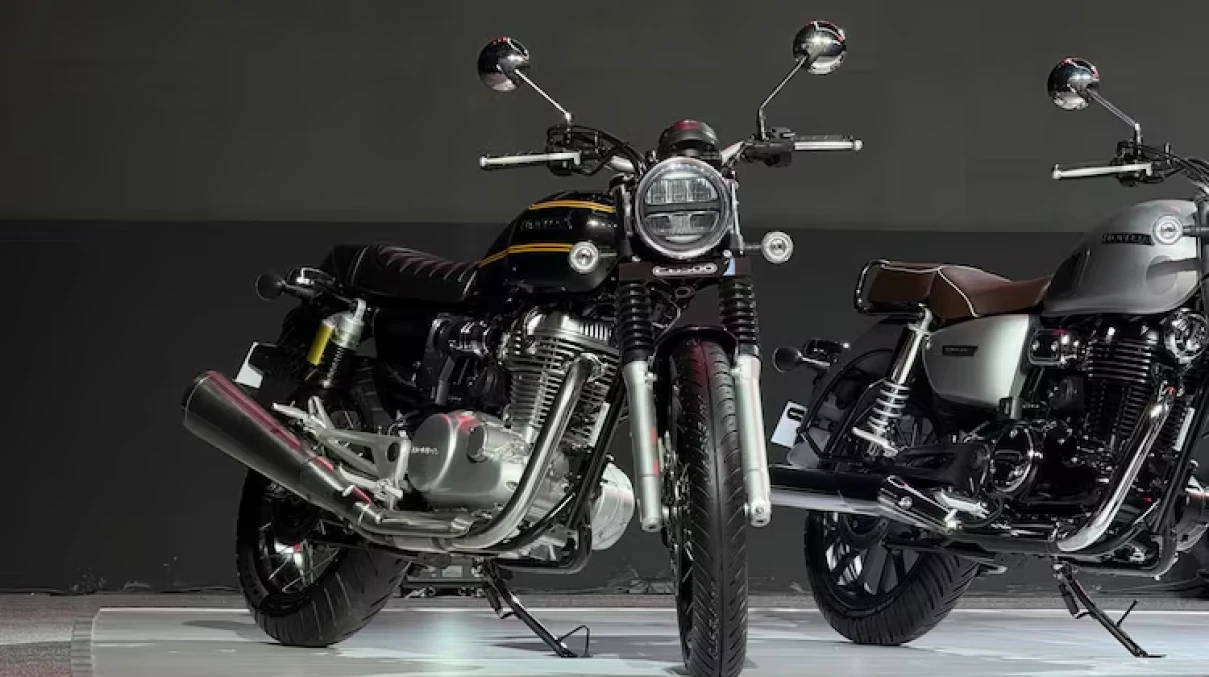
For the last few years, Indian riders who loved the raw, unhurried thump of a proper 500cc single-cylinder motorcycle have been left out in the cold. Ever since Royal Enfield pulled the plug on its older 500cc UCE-powered bikes, the market split cleanly into two camps: approachable 350cc singles on one side, and heavier, pricier 650cc parallel-twins on the other. That middle ground—big displacement, simple air-cooled mechanics, and a relaxed stride—sat virtually empty.
Honda has just stepped squarely into that gap with the launch of the Honda CB500 in India. With prices starting at ₹2.75 lakh (ex-showroom, Chennai) for the base Alloy trim, this is not another imported, high-revving international twin wearing a steep sticker price. Instead, Honda has gone down a very different path: a locally manufactured, newly developed 501cc air- and oil-cooled single-cylinder roadster built with Indian riding conditions and pricing realities in mind.
Available across three trims and packed with practical rider aids, the CB500 is one of the most unusual—and intriguing—launches in India’s mid-capacity motorcycle space this year. Let’s walk through its variants, engine character, tax-defying pricing strategy, and how it stacks up against the established retro crowd.
Pricing and Variants: Three Ways to Spec the CB500
Honda has kept the CB500’s variant lineup clean and easy to follow. All three versions share the same 501cc mechanical heart and core electronics, with the differences coming down to wheel hardware and visual finishes.
| Variant | Price (Ex-Showroom, Chennai) | Wheel Setup | Key Highlights |
| CB500 Alloy | ₹2.75 lakh | Alloy wheels | Most accessible entry point; practical everyday setup |
| CB500 Spoke | ₹3.00 lakh | Cross-spoke tubeless rims | Classic retro look with modern puncture convenience |
| CB500 Spoke Top Variant | ₹3.02 lakh | Cross-spoke tubeless rims | Adds exclusive colour schemes and custom graphics |
The pricing gap between the base Alloy trim and the mid-tier Spoke trim stands at ₹25,000. On paper, that might look like a hefty jump purely for a change of wheels, but anyone who has priced out genuine cross-spoke tubeless rims knows they are significantly more expensive to engineer and manufacture than regular cast alloys.
What stands out most is the top variant. At ₹3.02 lakh, it asks for just ₹2,000 more than the standard Spoke version to unlock exclusive colours and graphics. If you are already stretching your budget to ₹3 lakh for the spoked look, skipping the extra ₹2,000 for the more distinctive paintwork hardly makes sense.
A 501cc Single-Cylinder Engine: Why Honda Broke Its Own Mould
When most riders hear the name “Honda CB500,” their minds immediately jump to the liquid-cooled parallel-twin models Honda sells overseas. That makes the Indian-market CB500 a genuine surprise. Rather than borrowing a complex twin-cylinder unit, Honda has developed a brand-new 501cc, air- and oil-cooled, single-cylinder engine specifically for this platform.
The output numbers tell you everything about what Honda’s engineers were chasing: 28hp of peak power and a stout 43.3Nm of peak torque, routed through a manual gearbox.
If you are comparing spec sheets purely on horsepower, 28hp from a half-litre engine might initially raise a few eyebrows—especially when smaller liquid-cooled 400cc singles routinely cross 40hp. Look right next to that figure, though, and the 43.3Nm torque number brings the whole concept into focus.
Honda clearly did not build this motorcycle for redline sprints or weekend track days. A big-bore, air- and oil-cooled single tuned for 43.3Nm is all about effortless low- and mid-range pull. It is designed to let you roll on the throttle in a higher gear, surf a broad wave of torque through city traffic, and settle into an unhurried, relaxed highway cruise without constantly dancing on the gear lever.
Of course, spec sheets only tell part of the story. How genuinely engaging—or vibey—a big 501cc single feels on Indian tarmac will depend heavily on how Honda has sorted out its gearing ratios, overall kerb weight, and low-speed throttle response. Those real-world riding impressions will ultimately decide whether the CB500 wins over long-time big-single loyalists.
Honda CB500: Key Specifications at a Glance
| Specification | Honda CB500 Details |
| Engine Displacement | 501cc |
| Engine Configuration | Single-cylinder |
| Cooling System | Air- and oil-cooled |
| Maximum Power | 28hp |
| Peak Torque | 43.3Nm |
| Transmission | Manual gearbox with slipper clutch |
| Traction Aid | Honda Selectable Torque Control (HSTC) |
| Instrument Console | Analogue-digital unit with Honda RoadSync |
| Wheel Options | Cast alloy (base) / Cross-spoke tubeless (higher trims) |
| Number of Variants | Three |
Modern Hardware Wrapped in Classic Simplicity
Retro motorcycles often walk a fine line between old-school charm and feeling outdated. Honda appears to have found a sensible middle ground on the CB500, keeping the mechanical layout straightforward while including the modern rider aids that actually make a difference on unpredictable Indian roads.
- Honda Selectable Torque Control (HSTC): With 43.3Nm of torque hitting the rear tyre low in the rev range, wet concrete, loose gravel, or painted road markings can easily catch a rider off guard. HSTC monitors rear-wheel traction under acceleration and steps in to keep slides in check.
- Slipper Clutch: Big single-cylinder engines naturally generate strong engine braking. A slipper clutch smooths out aggressive downshifts, preventing the rear wheel from chattering or hopping when you drop a gear quickly approaching a corner or a sudden speed breaker.
- Analogue-Digital Instrument Console: Instead of bolting a flashy rectangular tablet onto a classic roadster, Honda retains an analogue-digital cluster that suits the bike’s timeless character while still displaying essential trip and rider data clearly.
- Honda RoadSync Connectivity: Compatible smartphones can pair directly with the motorcycle via Honda RoadSync, bringing supported connected features to the rider without cluttering the handlebars with aftermarket mounts.
- Cross-Spoke Tubeless Wheels: Available on the two upper variants, these rims solve the oldest headache in retro motorcycling. You get the authentic, shimmering wire-spoke aesthetic that defines classic roadsters, paired with the peace of mind of tubeless tyres that can be plugged on the roadside in minutes if you pick up a nail.
Beating the 40% GST Wall: Why Local Manufacturing Matters
To appreciate just how aggressive that ₹2.75 lakh starting price is, you have to understand the tax environment Honda is working inside. In India, motorcycles with engine capacities above 350cc are hit with a steep 40% GST rate. That single tax bracket is the main reason so many 400cc to 500cc motorcycles quickly climb past the ₹3.5 lakh to ₹5 lakh mark, especially when brought in as imported kits or Completely Built Units (CBUs).
Honda’s decision to manufacture the CB500 in India with locally sourced components is what makes the entire business case work. Localisation shields the bike from heavy import duties and gives Honda enough breathing room to absorb the 40% GST slab while still landing well under the ₹3 lakh ex-showroom mark for the base model.
Just as importantly for buyers, local manufacturing usually pays off long after you ride out of the showroom. Domestic production generally means shorter waiting times for replacement parts, simpler periodic maintenance, and more reasonable ownership costs compared to imported mid-capacity machines.
Where the CB500 Fits Against Its Rivals
By launching at ₹2.75 lakh and topping out at ₹3.02 lakh, the Honda CB500 carves out a very distinct pocket between everyday 350cc–400cc roadsters and the larger 650cc twins.
Its most obvious points of comparison are the Royal Enfield Interceptor 650 and the Royal Enfield Continental GT 650, along with other retro-styled and road-focused motorcycles spread across the 350cc to 650cc space. Crucially, the CB500’s ₹2.75 lakh starting tag sits noticeably below the entry price of the Royal Enfield 650 twins, making it an appealing step up for riders who want a larger-displacement classic motorcycle without stretching into 650cc twin territory.
| Comparison Factor | Honda CB500 | Royal Enfield 650 Twins (Interceptor / GT) | 350cc–400cc Retro Roadsters |
| Engine Character | 501cc air/oil-cooled big single; torque-rich, traditional thump | 648cc parallel-twin; smoother, higher top-end refinement | Smaller singles; lighter, urban-focused performance |
| Starting Price Position | ₹2.75 lakh (undercuts 650 twins) | Higher starting price bracket | More affordable entry point |
| Key Differentiator | Rare 500cc single-cylinder layout with HSTC and tubeless spokes (higher trims) | Twin-cylinder smoothness and strong highway punch | Lower GST bracket (for sub-350cc) and lighter daily handling |
| Ideal Rider | Riders wanting classic big-single torque and relaxed cruising | Riders prioritising twin-cylinder refinement and higher cruising speeds | Newer riders or city commuters prioritising economy and agility |
Choosing between the CB500 and a 650cc twin ultimately comes down to what kind of mechanical feel puts a smile on your face. If you crave velvety twin-cylinder smoothness and higher top-end highway speeds, the Royal Enfield 650 twins remain hard to beat. If you have been missing the unmistakable, torquey pulse of a large single-cylinder roadster—backed by Honda’s engineering and modern traction aids—the CB500 is offering something nobody else currently sells.
Should You Buy the Honda CB500?
The Honda CB500 is a bold, refreshing curveball in an Indian motorcycle market that often plays it safe with spec-sheet horsepower battles. Rather than chasing peak output figures, Honda has built a locally manufactured, torque-heavy 501cc single that revives a beloved riding style left behind years ago.
For practical buyers who want the most value out of that 501cc motor and don’t mind cast wheels, the ₹2.75 lakh Alloy variant is easily the sharpest deal in the lineup. For purists who believe a classic half-litre roadster simply looks right on wire spokes—and refuse to deal with inner tubes—stepping up to the ₹3.02 lakh Spoke top variant delivers the complete visual package with exclusive colours for barely anything more than the mid-tier Spoke trim.
Ultimately, the CB500’s long-term success will hinge on how refined that 501cc single feels once riders throw a leg over it in the real world. On paper, though, Honda has nailed the pricing, respected the retro brief, and given Indian enthusiasts a genuinely distinct reason to look past the usual suspects.
