


Launching a brand-new car company in India is not for the faint-hearted. Between entrenched domestic giants and global heavyweights fighting over every rupee of market share, newcomers rarely get a second chance to make a first impression. That is why all eyes are currently on JSW Motors, the new passenger vehicle venture backed by the JSW Group, as it prepares to pull the covers off its very first SUV on December 3, 2026.
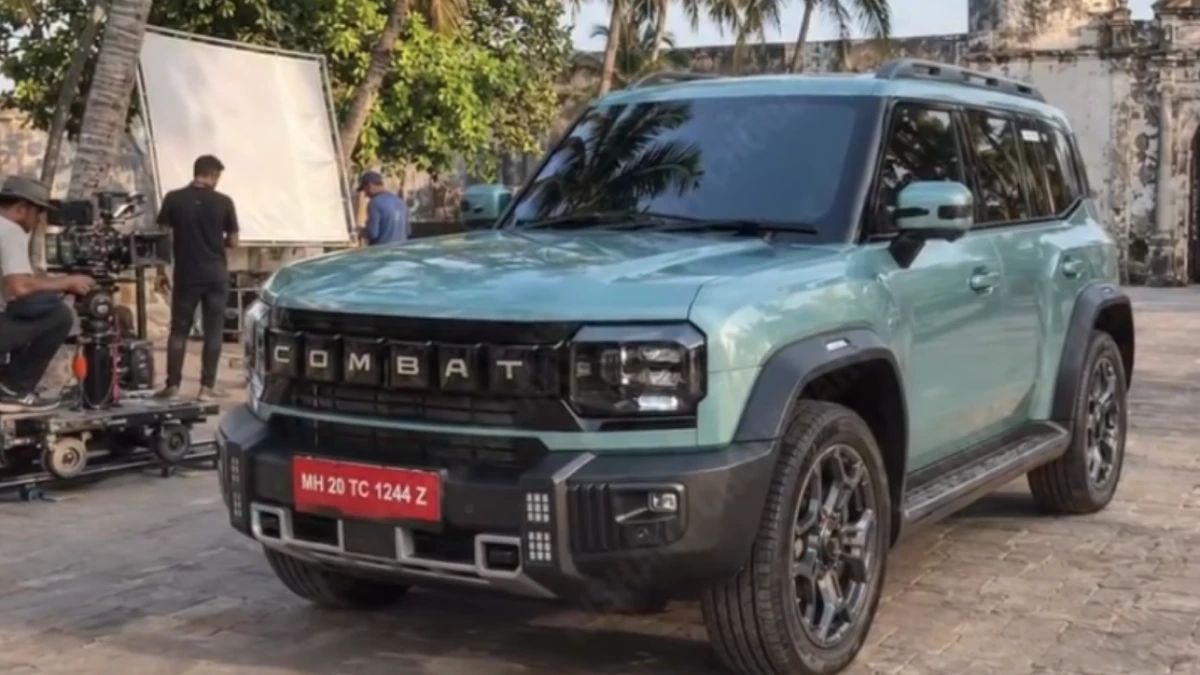
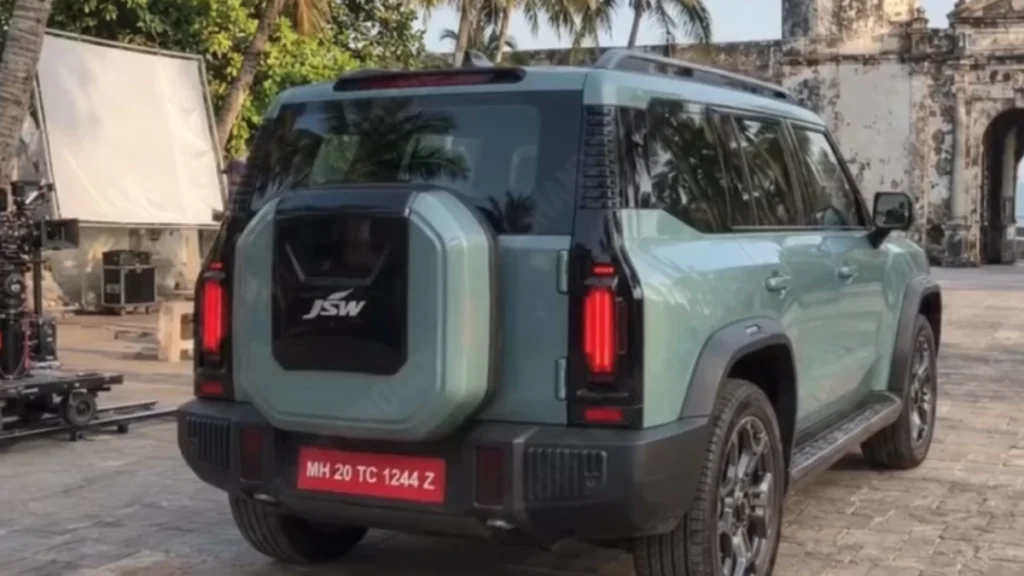
Before the stage lights could even be turned on, however, fresh leaked images of the JSW Combat have surfaced online. The photos give us our clearest look yet at the India-spec SUV, confirming that JSW is sticking closely to the rugged, boxy blueprint of its donor vehicle—the internationally sold Jetour T2—while giving it a distinct local identity.
With a plug-in hybrid powertrain on the cards and a bold, off-roader silhouette that stands apart from the sea of swoopy urban crossovers, the Combat is shaping up to be one of the most closely watched automotive debuts of the year. Here is a detailed breakdown of what the leaked images reveal, why JSW chose the Jetour T2 as its starting point, and what Indian SUV buyers should realistically expect when December 3 arrives.
What the Leaked Images Reveal About the JSW Combat
If you were expecting a soft, rounded city crossover, the JSW Combat is the exact opposite. The leaked photos show an SUV with unapologetically boxy, upright proportions that lean heavily into classic off-road styling.
The most obvious visual change separating the Indian model from its international sibling sits right on the nose. On the global Jetour T2, bold ‘JETOUR’ lettering stretches across the front grille. On the leaked India-spec SUV, that badge has been swapped out for ‘COMBAT’ lettering. It is a small detail on paper, yet it immediately gives the front end its own brand identity without messing with the proportions that made the donor car turn heads overseas.
Beyond the rebadged grille, the Combat appears to retain almost all of the Jetour T2’s signature exterior cues:
- Boxy SUV proportions: Flat body panels and a squared-off roofline that maximise road presence.
- Upright front-end design: A tall, flat nose paired with an upright windscreen that gives the driver a commanding view of the road ahead.
- Squared wheel arches: Chunky, squared-off cladding around the wheels that reinforces its rugged, go-anywhere stance.
- High ground-clearance stance: Plenty of daylight beneath the body, visually signalling its readiness for broken tarmac and rough trails.
- Distinctive grille treatment: A structured, utilitarian front face that avoids excessive chrome in favour of tough, purposeful styling.
Because the Jetour T2’s exterior design is already one of its strongest selling points globally, JSW Motors appears to have made a sensible call: keep the silhouette intact, apply local branding cleanly, and save the heavy lifting for engineering localisation and cabin tuning. Any additional India-specific exterior tweaks, colour options, or trim-level differences will become clear once the production-ready SUV rolls onto the stage on December 3.
Built on the Jetour T2: Why JSW Took the Partnership Route
To understand the JSW Combat, you have to look at its origins. The SUV is based on the Jetour T2, a model developed and sold internationally by China’s Chery-owned Jetour brand. Overseas, the T2 has built a strong reputation for pairing rugged, Defender-inspired styling with a spacious, technology-focused cabin.
For a brand-new automaker like JSW Motors, basing its first product on an already engineered international vehicle is a smart, pragmatic move. Developing a brand-new SUV platform from a blank sheet of paper takes anywhere from four to five years and requires thousands of crores in research, crash-testing, and tooling—all before a single showroom opens its doors.
By tapping into the Jetour T2’s existing architecture, JSW Motors can skip the multi-year gestation period and get a competitive, modern product onto Indian roads much faster. Just as importantly, it frees up capital and management focus for the areas that actually make or break a new car brand in India:
- Localisation: Adapting components and assembly processes for Indian conditions and cost structures.
- Distribution: Building a reliable network of showrooms across metro and Tier-1 cities.
- After-sales support: Ensuring spare parts availability and trained service technicians are in place from day one.
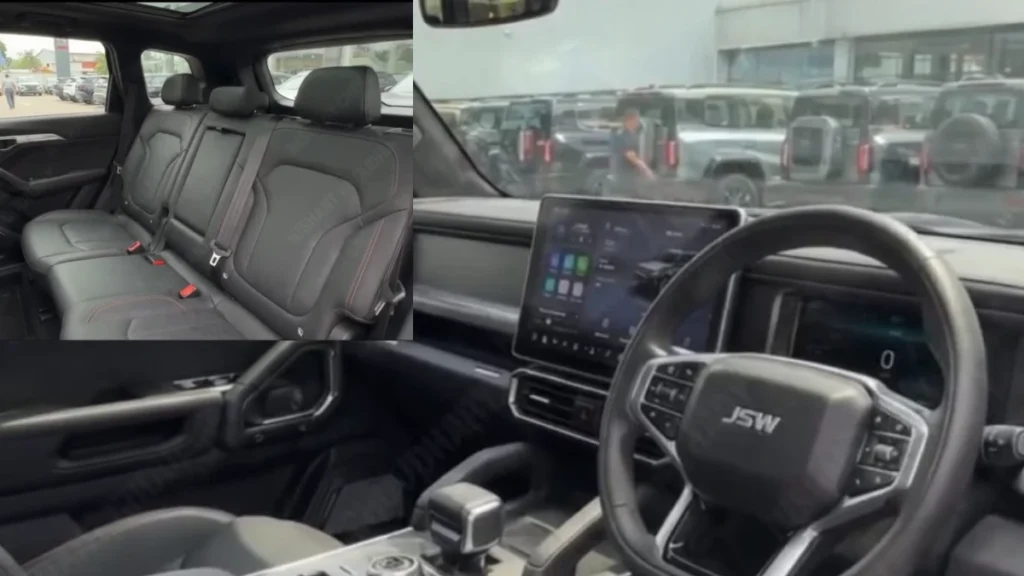
While the Combat is expected to carry over much of the Jetour T2’s underlying engineering and spacious cabin philosophy, JSW Motors has not yet released the final India-specific specification sheet. Until the official unveil, global T2 features and dimensions should be viewed as a strong preview rather than a locked-in brochure.
The Plug-In Hybrid (PHEV) Bet: How It Works for India
Perhaps the most interesting technical detail surrounding the JSW Combat is its expected plug-in hybrid (PHEV) powertrain. While India’s passenger vehicle market has seen plenty of mild-hybrids, a handful of strong-hybrids, and a rapidly growing list of pure electric vehicles, plug-in hybrids remain relatively rare outside the luxury segment.
A plug-in hybrid sits right in the middle of the electrification spectrum. It combines a conventional internal combustion engine with an electric motor and a rechargeable battery pack that is noticeably larger than what you find in a regular strong-hybrid. Unlike a standard hybrid—which only charges its battery through the engine and regenerative braking—a PHEV can be plugged directly into an external wall charger or public charging point.
In everyday use, that setup offers a compelling best-of-both-worlds experience:
- For weekday city commutes: You can charge the battery overnight at home and complete shorter daily trips purely on silent, zero-emission electric power.
- For weekend highway runs: Once the battery depletes—or when you need extra overtaking punch—the petrol engine steps in seamlessly, eliminating the range anxiety and charger-hunting that can still complicate long-distance EV road trips in India.
Here is how a plug-in hybrid compares against the other electrified powertrains Indian SUV buyers are currently considering:
| Powertrain Type | How It Charges | Electric-Only Driving | Highway Convenience | Best Suited For |
| Plug-In Hybrid (PHEV) | External plug-in charger + engine/braking | Yes, covers typical daily urban commutes | High (runs on fuel like a normal car on long trips) | Buyers wanting daily EV savings without highway range anxiety |
| Strong Hybrid | Self-charging via engine and braking only | Very brief, low-speed city creeping only | High (quick refuelling at any petrol pump) | Buyers without home charging who want high city mileage |
| Pure Electric (BEV) | External AC home charger or DC fast charger | 100% electric at all times | Depends on highway fast-charger availability | Buyers with dedicated home charging and predictable routes |
Internationally, the Jetour T2 is offered with electrified powertrain configurations. However, JSW Motors has not yet officially confirmed the exact engine displacement, electric motor setup, battery pack capacity, combined power output, or certified electric-only range for the India-spec Combat. Those numbers will be critical on December 3, as they will determine both the SUV’s real-world running costs and how aggressively it can challenge established premium SUVs.
JSW Motors Enters the Indian Passenger Vehicle Arena
The Combat is far more than just another new SUV launch; it is the flagship moment for the JSW Group’s entry into India’s passenger vehicle business.
As one of the country’s largest industrial conglomerates, JSW brings serious heavyweight backing to the table. With deep roots across steel, energy, and large-scale manufacturing, the group already possesses the kind of industrial muscle, supplier relationships, and capital resilience that startups can only dream of. In an industry where steel supply, battery energy ecosystems, and manufacturing efficiency directly shape vehicle pricing, JSW’s core businesses give its automotive arm a natural head start.
That said, building a respected consumer car brand requires a very different playbook from running industrial plants. Indian SUV buyers—especially those spending serious money on a premium plug-in hybrid—are famously demanding. They look closely at dealership experience, long-term reliability, resale value, and how quickly a service centre can source a replacement bumper or sensor.
How well JSW Motors executes its retail rollout, warranty coverage, and localisation strategy will matter just as much as how good the Combat looks in person.
JSW Combat: Current Launch Status and Key Details
With the official unveil scheduled for December 3, 2026, here is a quick summary of everything currently confirmed and what remains under wraps for the JSW Combat:
| Key Detail | Current Status |
| Model Name | JSW Combat |
| Manufacturer | JSW Motors (JSW Group) |
| Body Style | Boxy, rugged 5-seat/mid-to-large SUV |
| Donor / Base Vehicle | Jetour T2 (Chery-owned Jetour brand) |
| Expected Powertrain | Plug-in Hybrid (PHEV) |
| Confirmed India Specs | Awaited (engine, battery, output, and EV range not yet officially announced) |
| India Debut Date | December 3, 2026 |
| Pricing | Not announced |
| Customer Deliveries | Not confirmed |
What to Watch for on December 3
The leaked images of the JSW Combat have done their job—they have put JSW Motors squarely on the radar of Indian SUV enthusiasts. Swapping the grille lettering to ‘COMBAT’ while keeping the Jetour T2’s tough, squared-off stance ensures the SUV will stand out immediately on Indian roads.
Still, the real test begins on December 3, 2026. That is when JSW Motors will need to move past teaser appeal and answer the questions that actually drive bookings: How much electric-only range will the plug-in hybrid deliver? How well-equipped will the cabin be for Indian families? What will the dealership footprint look like at launch? And most importantly, where will JSW position the price tag?
If JSW pairs the Combat’s head-turning design and plug-in hybrid versatility with sharp pricing and a credible after-sales promise, India’s premium SUV segment could be in for a very interesting shake-up.
Source – Instagram – Nick Audience
