

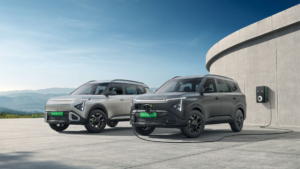



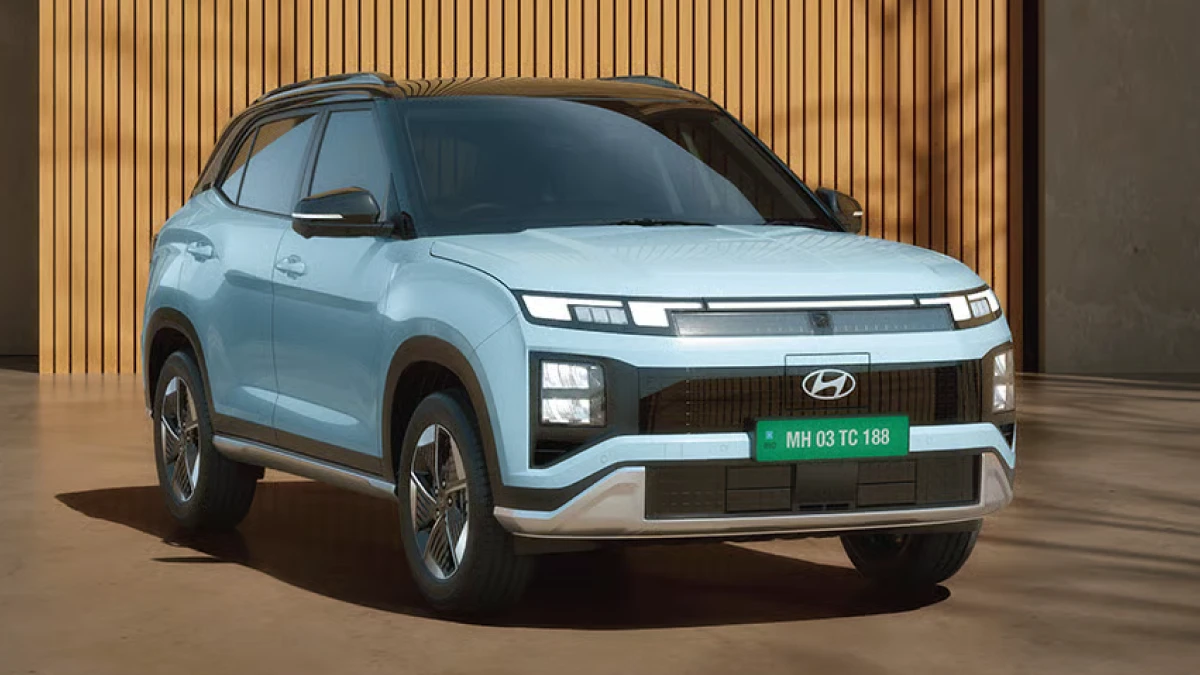
Hyundai Motor India Limited (HMIL) has introduced an Assured Buyback Programme specifically tailored for the Hyundai Creta Electric (EV). The initiative addresses two primary concerns among prospective electric vehicle buyers: resale value uncertainty and battery degradation anxiety.
By offering a guaranteed return value of up to 60% after 3 years (36 months) or 45,000 km of usage, Hyundai aims to establish a clear depreciation floor for the Creta EV. This structured resale mechanism brings the financial predictability of traditional Internal Combustion Engine (ICE) vehicles to the electric mid-size SUV segment.
1. Structure of the Assured Buyback Programme
The Assured Buyback Scheme operates through Hyundai Financial Services in partnership with accredited banking institutions and corporate fleet partners. The scheme guarantees a pre-determined trade-in or buyback value at specific tenure milestones.
The table below outlines the core financial terms, tenure options, and mileage caps under the Hyundai Assured Buyback Programme:
| Program Milestone | Assured Value Percentage | Maximum Permissible Mileage | Monthly EMI Reduction Impact | Target Buyer Persona |
| 36 Months / 3 Years | Up to 60% of Ex-Showroom Price | 45,000 km (15,000 km/year) | 22% to 25% Lower Monthly EMI | Corporate professionals, early tech adopters |
| 48 Months / 4 Years | Up to 50% of Ex-Showroom Price | 60,000 km (15,000 km/year) | 18% to 20% Lower Monthly EMI | Family buyers, medium-term fleet owners |
| 60 Months / 5 Years | Up to 40% of Ex-Showroom Price | 75,000 km (15,000 km/year) | 12% to 15% Lower Monthly EMI | Long-term vehicle owners |
*Note: Final buyback valuation depends on vehicle condition inspections, adherence to authorized service schedules, and staying within agreed mileage caps.
2. Market Impact: EV Depreciation vs. ICE Depreciation
Historically, electric vehicles in India have experienced higher initial depreciation rates (45%–55% over 3 years) compared to petrol or diesel counterparts (30%–35% over 3 years). This higher rate is largely driven by rapid battery technology iterations, evolving charging standards, and consumer uncertainty regarding out-of-warranty battery replacement costs.
By capping the 3-year depreciation at 40%, Hyundai effectively aligns the residual value of the Creta EV with established petrol and diesel SUVs like the Creta 1.5L Petrol and Kia Seltos.
3. Financial Breakdown: Creta EV Assured Buyback vs. Standard Loan
To understand the financial dynamics, we compare a standard 3-year auto loan against a 3-year Assured Buyback financing structure for an estimated ex-showroom price of ₹20.00 Lakh.
The table below provides a detailed financial comparison between standard auto financing and the Assured Buyback framework:
| Financial Parameter | Standard 36-Month Auto Financing | 36-Month Assured Buyback Scheme | Financial Variance / Savings |
| Vehicle Ex-Showroom Price | ₹20,00,000 | ₹20,00,000 | ₹0 |
| Down Payment (20%) | ₹4,00,000 | ₹4,00,000 | ₹0 |
| Loan Amount Financed | ₹16,00,000 | ₹16,00,000 | ₹0 |
| Estimated Interest Rate (p.a.) | 8.75% | 8.75% | 0.00% |
| Standard Monthly EMI | ₹50,691 / month | ₹38,200 / month | ₹12,491 / month saved |
| Total Outflow over 36 Months | ₹18,24,876 | ₹13,75,200 | ₹4,49,676 lower initial outflow |
| Guaranteed Buyback Value | Market-Determined (~₹10.00L) | ₹12,00,000 (60% Guaranteed) | ₹2,00,000 guaranteed delta |
| End-of-Tenure Options | Keep vehicle or sell privately | 1. Retain (Pay Balance) 2. Trade-in for new Hyundai EV 3. Return vehicle to dealer | Flexible exit pathways |
4. Total Cost of Ownership (TCO) Comparison: Creta EV vs. Creta Petrol vs. Creta Diesel
Beyond resale value guarantees, the Creta Electric benefits from lower per-kilometer running costs. Over a 3-year, 45,000 km ownership cycle, running cost savings help offset the initial purchase price premium over internal combustion engine (ICE) variants.
The table below calculates the Total Cost of Ownership (TCO) over 3 years and 45,000 km:
| Cost Head (45,000 km / 3 Years) | Hyundai Creta Electric (45 kWh) | Hyundai Creta 1.5L Petrol (CVT) | Hyundai Creta 1.5L Diesel (AT) |
| Ex-Showroom Price | ₹20,00,000 | ₹17,50,000 | ₹19,00,000 |
| Road Tax & Registration | ₹20,000 (EV Subsidy / Low Duty) | ₹1,75,000 (10% Avg.) | ₹2,28,000 (12% Avg.) |
| Energy / Fuel Cost per KM | ₹1.20 / km (Home AC Charging) | ₹7.20 / km (@ ₹96/L, 13.3 km/L) | ₹5.80 / km (@ ₹88/L, 15.1 km/L) |
| Total Energy / Fuel Cost | ₹54,000 | ₹3,24,000 | ₹2,61,000 |
| Scheduled Service Costs | ₹12,000 | ₹28,000 | ₹36,000 |
| Gross Outflow (Cost + Tax) | ₹20,86,000 | ₹22,77,000 | ₹24,25,000 |
| Resale Value after 3 Years | ₹12,00,000 (60% Guaranteed) | ₹11,37,500 (65% Market) | ₹12,35,000 (65% Market) |
| Net 3-Year Ownership Cost | ₹8,86,000 | ₹11,39,500 | ₹11,90,000 |
5. Technical Specifications: Creta EV Battery and Performance
The Hyundai Creta Electric utilizes an adapted K2 platform integrated with a dedicated liquid-cooled battery assembly. Powered by a single front-mounted permanent magnet synchronous motor (PMSM), it matches the performance metrics of the Creta 1.5L Turbo Petrol while delivering instant torque.
The table below outlines the core powertrain specifications for the Hyundai Creta Electric:
| Specification Parameter | Hyundai Creta Electric Performance Metric |
| Battery Pack Capacity | 45 kWh Liquid-Cooled Lithium-Ion Battery |
| Electric Motor Configuration | Single PMSM (Front-Wheel Drive) |
| Maximum Horsepower | 138 HP (102 kW) |
| Maximum Torque Output | 255 Nm (Instant Torque) |
| 0 to 100 km/h Acceleration | ~8.8 Seconds |
| ARAI Claimed Range | ~475 km per full charge |
| Real-World Expected Range | 320 km – 360 km (Mix of City + Highway) |
| AC Charging Time (11 kW Wallbox) | 4 Hours 30 Minutes (10% to 100%) |
| DC Fast Charging Time (50 kW DC) | 58 Minutes (10% to 80%) |
| Standard Battery Warranty | 8 Years or 1,600,000 km |
6. Competitive Landscape: Creta EV vs. EV Rivals with Buyback Schemes
The mid-size electric SUV segment in India features established contenders, including the Tata Curvv.ev, MG ZS EV, and BYD Atto 3. Resale protection schemes are increasingly becoming a competitive differentiator in this space.
The table below compares the Hyundai Creta EV against its primary electric SUV rivals in terms of battery specs, range, and resale value support:
| Feature / Metric | Hyundai Creta EV | Tata Curvv.ev 55 | MG ZS EV Executive | BYD Atto 3 Dynamic |
| Battery Capacity | 45 kWh | 55 kWh | 50.3 kWh | 49.92 kWh |
| ARAI / Claimed Range | 475 km | 585 km | 461 km | 410 km |
| Peak Power Output | 138 HP | 167 HP | 174 HP | 204 HP |
| Assured Buyback Available | Yes (Up to 60% @ 3Y) | Third-Party Lease Partner Only | Yes (60% @ 3Y via MG Shield) | No Direct OEM Buyback Scheme |
| DC Fast Charge Peak | 50 kW | 70 kW | 50 kW | 80 kW |
| Expected Price Range | ₹18.00L – ₹22.00L | ₹17.49L – ₹21.99L | ₹18.98L – ₹25.44L | ₹24.99L – ₹33.99L |
Strategic Verdict: Does the Assured Buyback Scheme Make the Creta EV a Safe Buy?
The Hyundai Assured Buyback Programme helps address key financial barriers to electric vehicle adoption in India. By providing a 60% guaranteed residual value floor at the 3-year mark, Hyundai addresses battery degradation fears, stabilizes market depreciation, and lowers initial monthly EMI payments through structured financing.
For urban commuters, corporate fleet operators, and family buyers considering their first EV, the Creta Electric combined with an Assured Buyback scheme presents a predictable, financially manageable pathway to electric mobility.

