


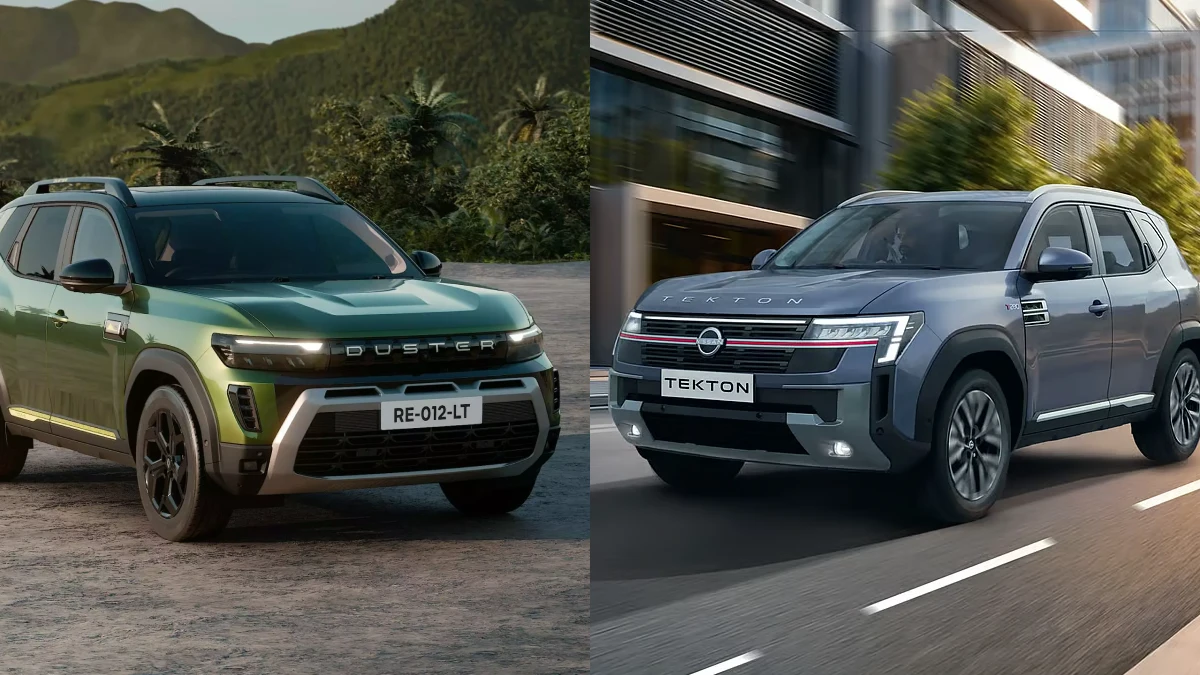
The midsize SUV space in India is witnessing an exciting new chapter of sibling rivalry. Following their global alliance’s renewed product offensive, Nissan has officially introduced its highly anticipated compact contender—the Nissan Tekton. Built on the same shared architecture as the iconic Renault Duster, the Tekton represents the spiritual successor to the older Terrano lineage.
However, do not mistake this for a simple badge-engineering job. While both vehicles roll off the same manufacturing line, share identical mechanical underpinnings, and target a starting price of ₹10.49 Lakh (ex-showroom), they target completely different audiences. Renault has doubled down on its rugged, utilitarian heritage, while Nissan has aimed higher, positioning the Tekton as a more premium, urban-centric “Baby Patrol”.
Decoupling the Alliance: Tekton vs. Duster
While platform-sharing drastically lowers development costs, the visual and physical executions here are highly distinct. Nissan and Renault have gone to significant lengths to ensure their vehicles maintain unique brand characters, separating themselves through visual aesthetic cues, cabin appointments, and long-term powertrain roadmaps.
The matrix below highlights the core design paths, component packaging, and technical variances between these two midsize platform twins:
| Architectural & Feature Parameters | Nissan Tekton Flagship Ecosystem | Renault Duster Core Ecosystem |
| Introductory Price Spectrum | ₹10.49 Lakh to ₹18.59 Lakh | ₹10.49 Lakh to ₹18.49 Lakh |
| Exterior Design Inspiration | Squared-off, global “Nissan Patrol” aesthetic | Butch, ruggedly traditional utilitarian design |
| Front Lighting Architecture | Slim LED units with connected light bars & C-DRLs | Separated block LED lamps with eyebrow DRLs |
| Interior Color Theme & Accents | Dual-tone Rose Gold and Burgundy with gold accents | Tactical Black and Green functional adventure theme |
| Cabin Styling Accents | Premium piano black panels & metallic detailing | Hard-wearing, driver-focused textured plastics |
| Future Powertrain Roadmap | Standard Turbo Petrol lineup exclusively | Upcoming Strong Hybrid (1.8L) system addition |
| Variant Nomenclature Structure | Visia, Acenta, N-Connecta, Tekna, Tekna Plus | Authentic, Evolution, Techno, Iconic |
Exterior Visuals: Rugged Adventure vs. Sophisticated Muscle
The easiest way to tell these two apart is from the front end. The Renault Duster leans heavily into its heritage, showing off chunky body cladding, rugged skid plates, and prominent “DUSTER” block lettering right across its grille.
Nissan, by contrast, has given the Tekton a much more commanding, upscale face inspired by its flagship Patrol luxury SUV. The front features a wider, more traditional grille highlighted by a distinctive red accent strip. Sleek, split-LED headlights run into a full-width connected light bar above the grille, giving the vehicle a wide stance at night. Around the sides, the Tekton swaps out the Duster’s functional roof rails for silver-finished sleek items and rides on its own multi-spoke 18-inch diamond-cut alloy wheel package.
Cabin Atmosphere: Premium Comfort vs. Pure Utility
Inside the cabin, the layout differences are even more apparent. While both SUVs share the basic hardpoints of their dashboards and identical 700-litre cargo bays, the touchpoints could not feel more different.
The Duster uses a dark, adventure-inspired black-and-green theme designed to resist mud and scuffs from weekend trail trips. The Tekton changes gears entirely, opting for an upscale, dual-tone Rose Gold and Burgundy leatherette treatment. Premium gold trim frames the center console, steering wheel spokes, and door handles, while the passenger side of the dashboard gets a completely unique geometric finish to hide its utilitarian roots.
Both models come well-equipped with premium tech features, including:
- A crisp 10.1-inch central infotainment touchscreen featuring built-in Google navigation.
- A crisp 10.25-inch fully digital driver display cluster.
- A sprawling panoramic glass sunroof.
- 6-way power-adjustable and ventilated front seats.
Shared Engineering & Safety Milestones
Under the skin, the shared mechanical bits remain completely unchanged. Both vehicles are powered by either a 100 hp 1.0-litre three-cylinder turbo-petrol engine or a punchier 163 hp 1.3-litre four-cylinder turbo-petrol unit. Gearbox options are split between a 6-speed manual and a quick-shifting 6-speed Dual-Clutch Transmission (DCT). Crucially, both vehicles have already achieved a perfect 5-star crash safety rating from Bharat NCAP, bringing a standard safety kit that features 6 protective airbags, a 360-degree camera system, and a comprehensive Level 2 ADAS suite.
The Long-Term Engine Split
While they launch with identical turbo-petrol options, their long-term powertrain strategies will soon split them up. Renault plans to introduce an advanced, highly efficient 1.8-litre strong hybrid system to the Duster range later down the line.
Nissan, however, will skip the strong hybrid powertrain for the Tekton entirely, choosing instead to focus purely on traditional turbo-petrol performance and a more premium feature list to draw buyers away from segment heavyweights like the Hyundai Creta and Kia Seltos.
Final Takeaway
The Nissan Tekton and Renault Duster prove that sharing a platform doesn’t mean losing your unique brand identity. If you want a rugged, no-nonsense lifestyle SUV built for rough roads, the Duster remains a legendary choice. But if you prefer a more sophisticated urban crossover with a premium cabin, upscale styling, and advanced safety features, the Tekton is a highly compelling newcomer to look out for.

2 Comments
Pingback: Upcoming Cars in India October-November 2026: New SUVs, EVs & More
Pingback: Renault Duster Hybrid Could Drive Strong Sales Growth