


The Indian passenger vehicle market achieved milestone growth during the first half of the 2027 financial year (H1 FY2027, covering April to September 2026). Domestic wholesale dispatches across 14 leading car manufacturers reached 26,36,926 units, marking an expansive 27.16 percent year-on-year (YoY) increase compared to the 20,73,764 units delivered during H1 FY2026.
This surge added 5,63,162 additional vehicles to Indian roads in six months. Market leader Maruti Suzuki and second-place Tata Motors drove the majority of this expansion, collectively generating over 71 percent of the total volume gain. Below is a detailed, manufacturer-by-manufacturer breakdown of sales figures, market share movements, and key strategic takeaways shaping the domestic automotive landscape.
1. Manufacturer Sales and Market Share Ranking (H1 FY2027 vs H1 FY2026)
The table below provides a comprehensive comparison of domestic sales volumes, market shares, and percentage changes across all 14 major automotive manufacturers in India for the April–September 2026 period.
| Rank | Automotive Manufacturer | H1 FY2027 Sales (Units) | H1 FY2026 Sales (Units) | Volume Change (Units) | YoY Growth (%) | H1 FY2027 Market Share (%) | H1 FY2026 Market Share (%) | Market Share Shift |
| 1 | Maruti Suzuki | 10,80,240 | 7,95,447 | +2,84,793 | +35.80% | 40.97% | 38.36% | +2.61% |
| 2 | Tata Motors | 3,76,840 | 2,64,028 | +1,12,812 | +42.73% | 14.29% | 12.73% | +1.56% |
| 3 | Mahindra & Mahindra | 3,58,142 | 2,97,570 | +60,572 | +20.36% | 13.58% | 14.35% | -0.77% |
| 4 | Hyundai Motor India | 3,05,146 | 2,71,780 | +33,366 | +12.28% | 11.57% | 13.11% | -1.54% |
| 5 | Toyota Kirloskar | 1,73,127 | 1,66,116 | +7,011 | +4.22% | 6.57% | 8.01% | -1.44% |
| 6 | Kia India | 1,68,683 | 1,31,006 | +37,677 | +28.76% | 6.40% | 6.32% | +0.08% |
| 7 | JSW MG Motor | 43,318 | 37,946 | +5,372 | +14.16% | 1.64% | 1.83% | -0.19% |
| 8 | Skoda Auto India | 36,328 | 36,217 | +111 | +0.31% | 1.38% | 1.75% | -0.37% |
| 9 | Honda Cars India | 30,287 | 25,133 | +5,154 | +20.51% | 1.15% | 1.21% | -0.06% |
| 10 | Renault India | 23,123 | 17,584 | +5,539 | +31.50% | 0.88% | 0.85% | +0.03% |
| 11 | Nissan Motor India | 20,401 | 8,948 | +11,453 | +128.00% | 0.77% | 0.43% | +0.34% |
| 12 | Volkswagen India | 15,130 | 17,499 | -2,369 | -13.54% | 0.57% | 0.84% | -0.27% |
| 13 | Citroen India | 4,745 | 2,913 | +1,832 | +62.89% | 0.18% | 0.14% | +0.04% |
| 14 | Jeep India | 1,414 | 1,577 | -163 | -10.34% | 0.05% | 0.08% | -0.03% |
| Total | Industry Aggregate | 26,36,926 | 20,73,764 | +5,63,162 | +27.16% | 100.00% | 100.00% | N/A |
2. Market Leader Breakdown: Maruti Suzuki Crosses 10.8 Lakh Units
Maruti Suzuki expanded its market leadership in H1 FY2027 by dispatching 10,80,240 units, up 35.80 percent from 7,95,447 units in H1 FY2026.
- Market Share Gain: Maruti Suzuki raised its total market share from 38.36 percent to 40.97 percent, capturing an additional 2.61 percentage points of the Indian passenger car industry.
- Absolute Volume Increase: The manufacturer added 2,84,793 units year-on-year, representing the single largest volume expansion in the industry.
- Core Product Drivers: High-volume models across various segments supported this growth. The Maruti Dzire led the overall passenger vehicle chart with 1,25,988 units, while the WagonR, Ertiga, Fronx, Swift, and Baleno each crossed the 1.0 lakh unit dispatch threshold.
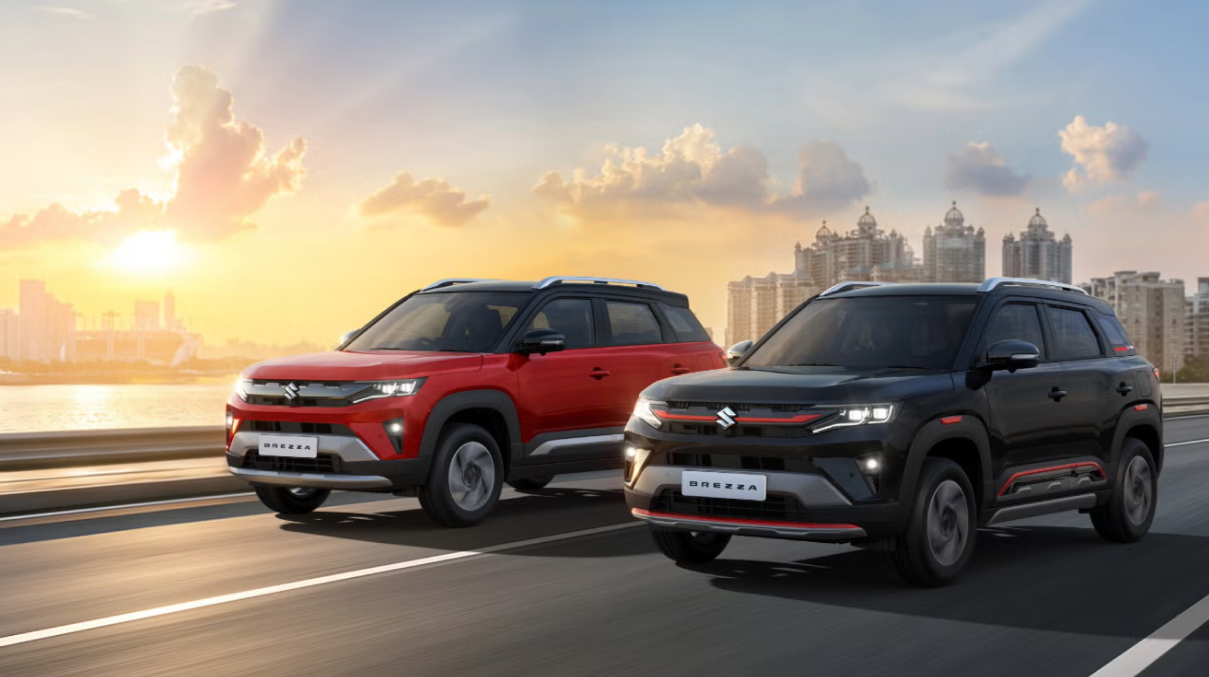
- SUV Expansion: The introduction of the Victoris alongside updated versions of the Brezza strengthened Maruti’s position in the utility vehicle space.
3. The Battle for Second Place: Tata Motors Overtakes Mahindra
A significant development in H1 FY2027 was Tata Motors climbing to second place in overall manufacturer sales, moving ahead of Mahindra & Mahindra.
Tata Motors (Rank 2)
- Sales Volume: Reached 3,76,840 units, reflecting a 42.73 percent YoY growth over 2,64,028 units in H1 FY2026.
- Market Share Expansion: Gained 1.56 percentage points to reach a 14.29 percent market share.
- Volume Anchors: The Tata Punch (1,23,287 units) and Tata Nexon (1,11,919 units) drove the brand’s performance, ranking as India’s top two best-selling SUVs across all powertrains.
Mahindra & Mahindra (Rank 3)
- Sales Volume: Delivered 3,58,142 units, marking a 20.36 percent YoY growth from 2,97,570 units.
- Market Share Shift: Because Mahindra’s 20.36 percent growth rate was lower than the broader market average (27.16 percent), its market share contracted slightly from 14.35 percent to 13.58 percent.
- Volume Gap: Tata Motors finished 18,698 units ahead of Mahindra at the conclusion of the six-month period.
4. Mid-Tier Performance: Hyundai, Toyota, and Kia
The middle tier of the market saw contrasting growth trajectories between established volume brands and expanding challengers.
- Hyundai Motor India (Rank 4): Registered 3,05,146 units, a 12.28 percent increase over H1 FY2026 (2,71,780 units). However, slower relative growth caused its market share to drop from 13.11 percent to 11.57 percent.
- Toyota Kirloskar Motor (Rank 5): Recorded 1,73,127 units, up 4.22 percent YoY. Strong demand for the Rumion, Fortuner, and Taisor helped maintain volume, though its market share adjusted from 8.01 percent to 6.57 percent.
- Kia India (Rank 6): Dispatched 1,68,683 units, achieving a 28.76 percent YoY increase. Kia narrowed the gap with Toyota to just 4,444 units, raising its market share to 6.40 percent.
5. Percentage Growth Leaders and Market Contractions
Fastest Percentage Growth
- Nissan Motor India: Posted the highest percentage growth in H1 FY2027, rising 128.00 percent to 20,401 units from a base of 8,948 units in H1 FY2026. This increased Nissan’s market share from 0.43 percent to 0.77 percent.
- Citroen India: Recorded a 62.89 percent growth, delivering 4,745 units compared to 2,913 units in the prior period.
- Renault India: Increased dispatches by 31.50 percent to 23,123 units, raising its share slightly to 0.88 percent.
Volume Contractions
Only two of the 14 manufacturers reported lower sales compared to H1 FY2026:
- Volkswagen India: Decreased by 13.54 percent to 15,130 units, with market share adjusting to 0.57 percent.
- Jeep India: Declined by 10.34 percent to 1,414 units, bringing its market share to 0.05 percent.
Strategic Summary and Market Outlook
The first half of FY2027 demonstrated strong overall momentum for India’s passenger vehicle industry. Market concentration remained high, with the top four manufacturers—Maruti Suzuki, Tata Motors, Mahindra, and Hyundai—commanding a combined 80.41 percent of all domestic sales.
As the industry moves through the second half of the fiscal year (H2 FY2027), festive delivery volumes, new model launches, and production adjustments will determine whether Tata Motors can hold its second-place position over Mahindra, and if emerging brands can sustain their growth rates in a competitive market.
