


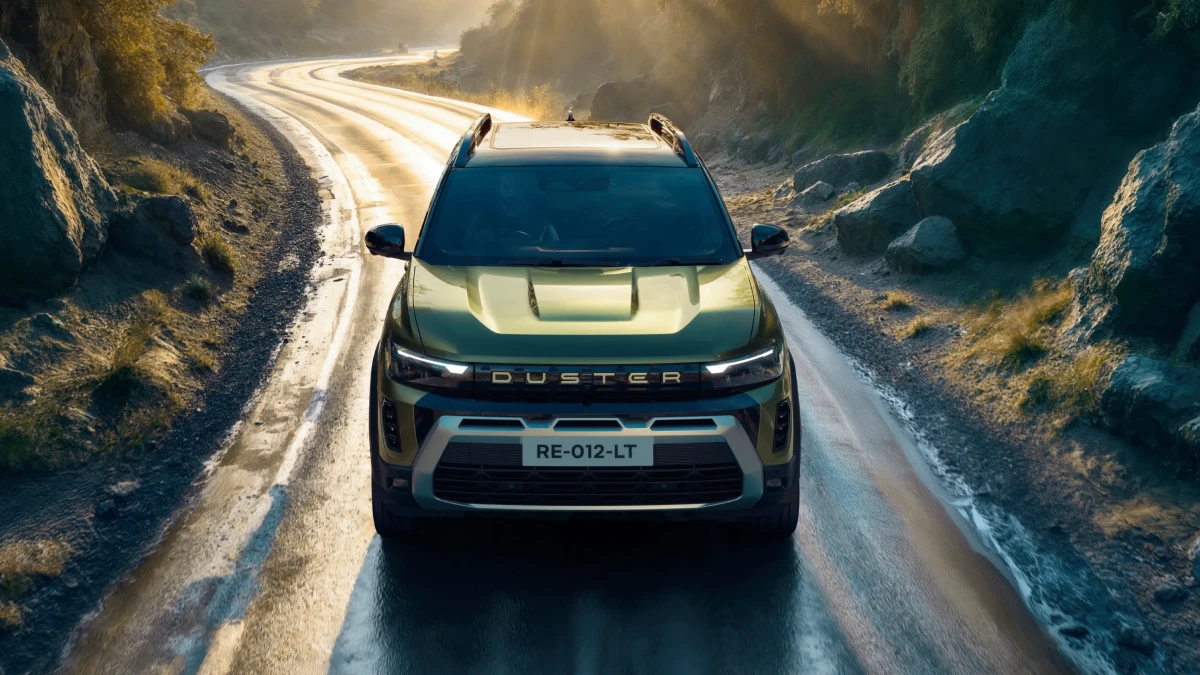
Renault India is taking a clear position on the future of the country’s passenger vehicle market. As the French automaker prepares for the high-profile launch of the new Duster E-Tech 160 hybrid, company leadership emphasizes that strong hybrid technology will serve as an essential volume driver for the foreseeable future.
Rather than viewing hybrids merely as a temporary stepping stone toward pure battery electric vehicles (BEVs), Renault expects strong hybrids to hold a dominant position in the Indian automotive landscape over the next 10, 15, or even 20 years.
1. Why Renault Is Banking on Strong Hybrid Technology
The Indian automotive sector is undergoing a shift driven by changing emissions policies, stringent CAFE (Corporate Average Fuel Economy) targets, and evolving buyer preferences. While pure electric vehicles continue to expand their presence, charging infrastructure gaps and battery production costs mean that internal combustion engines (ICE) combined with self-charging electric setups remain practical for long-distance drivers.
Francisco Marques, Vice President of Sales and Marketing at Renault India, noted that the full transition from ICE vehicles to complete fleet electrification will likely take longer than early industry forecasts suggested.
Conventional ICE → Mild Hybrid / CNG → Strong Hybrid (E-Tech) → Pure Electric (BEV)
By introducing self-charging hybrid powertrains, Renault aims to bridge this gap. Strong hybrids deliver significant fuel savings and reduced tailpipe emissions without requiring drivers to rely on public charging stations, making them well-suited for urban commuters and highway travelers alike.
2. Renault Duster E-Tech 160 Hybrid Specifications
Set to officially launch on October 17, 2026, the Renault Duster E-Tech 160 will become the flagship variant within the updated Duster lineup.It joins the localized 1.0-litre and 1.3-litre turbo-petrol options, giving buyers three distinct powertrain choices.
The Duster hybrid pairs a naturally aspirated 1.8-litre four-cylinder petrol engine with two electric motors and a 1.4 kWh lithium-ion battery pack.
| Technical Parameter | Renault Duster E-Tech 160 Specifications |
| Primary Engine | 1.8-Litre Naturally Aspirated 4-Cylinder Petrol |
| Electric Motor Setup | Dual Electric Motors (49 hp Drive Motor + 20 hp Generator) |
| Traction Battery Capacity | 1.4 kWh Lithium-Ion Pack |
| Combined System Power Output | 160 hp |
| Combined Torque Output | 172 Nm |
| Transmission Type | Multi-Mode Dedicated Hybrid Transmission (DHT) |
| Electric Driving Capability | Up to 80% EV Mode Running in Urban Traffic Conditions |
According to official engineering figures, the system’s larger battery capacity allows the Duster E-Tech 160 to operate in pure EV mode for up to 80% of typical city driving cycles, substantially reducing fuel consumption in stop-and-go traffic.
3. How Renault’s E-Tech System Differs From Competitors
The strong hybrid segment in India’s midsize SUV class has primarily been shaped by Toyota’s power-split hybrid technology, which is also utilized by Maruti Suzuki. Renault’s proprietary E-Tech system uses a different mechanical setup inspired by Formula 1 energy management strategies.
| Feature Comparison | Renault Duster E-Tech 160 | Toyota / Maruti Suzuki Hybrid Setup |
| Petrol Engine Displacement | 1.8-Litre 4-Cylinder NA | 1.5-Litre 3-Cylinder NA |
| Combined Power Output | 160 hp | 116 hp |
| Transmission Architecture | Multi-Mode Clutchless Dedicated Hybrid Transmission (DHT) | Electronic Continuously Variable Transmission (e-CVT) |
| Traction Battery Size | 1.4 kWh | 0.6 kWh |
| System Focus | High-Power Performance + City Efficiency | Maximum Fuel Efficiency |
Mechanical Design Differences
- Toyota/Maruti Setup (Power-Split e-CVT): Uses a planetary gear set to blend engine and electric power seamlessly. It prioritizes fuel economy, producing a combined 116 hp.
- Renault E-Tech Setup (Multi-Mode DHT): Uses a dog-clutch transmission with fixed gear ratios without a traditional clutch plate. The primary electric motor drives the wheels directly, while the secondary motor acts as a high-voltage starter-generator and engine synchronizer. This design yields a combined output of 160 hp, delivering stronger overtaking acceleration while maintaining electric efficiency.
4. Market Competition and Segment Dynamics
When the Duster E-Tech 160 arrives in showrooms, it will compete directly in the midsize SUV segment alongside established strong-hybrid models:
- Maruti Suzuki Grand Vitara Strong Hybrid
- Toyota Urban Cruiser Hyryder Strong Hybrid
- Maruti Suzuki Victoris Hybrid
Indian Market Powertrain Context (H1 2026 Data)
While interest in hybrid technology is growing rapidly, sales volumes highlight the expansion potential for new entrants:
| Powertrain Type | H1 2026 Passenger Vehicle Sales Volume | Overall Market Share Context |
| Petrol Vehicles | ~13.42 Lakh Units | Dominant Market Share |
| CNG Vehicles | ~5.96 Lakh Units | Substantial Mass-Market Share |
| Strong Hybrids | ~57,885 Units | High-Growth Segment |
Although strong hybrids currently represent a smaller volume compared to conventional petrol and CNG models, their sales trajectory demonstrates steady growth as buyers seek diesel-like fuel efficiency without high emissions or complex exhaust treatment systems.
5. Localisation and Expected Price Positioning
A key factor governing the market success of the Renault Duster hybrid will be its retail price. Currently, competitor strong hybrids in this segment are priced between ₹16 lakh and ₹20 lakh (ex-showroom).
Renault is actively working on localizing components of the imported E-Tech powertrain assembly to achieve cost parity. Because localized manufacturing directly lowers import duties and supply chain overheads, effective localization will allow Renault to offer the 160 hp hybrid setup at a competitive price point relative to less powerful alternatives.
Read – Platform Siblings, Distinct Identities: Nissan Tekton vs. Renault Duster Compared
Summary of What Lies Ahead
With the official launch set for October 17, 2026, the Renault Duster E-Tech 160 will test whether Indian midsize SUV buyers are ready to adopt a higher-power, performance-oriented hybrid powertrain. If priced competitively through local manufacturing, the Duster hybrid could establish a strong position in India’s expanding strong-hybrid market.
