


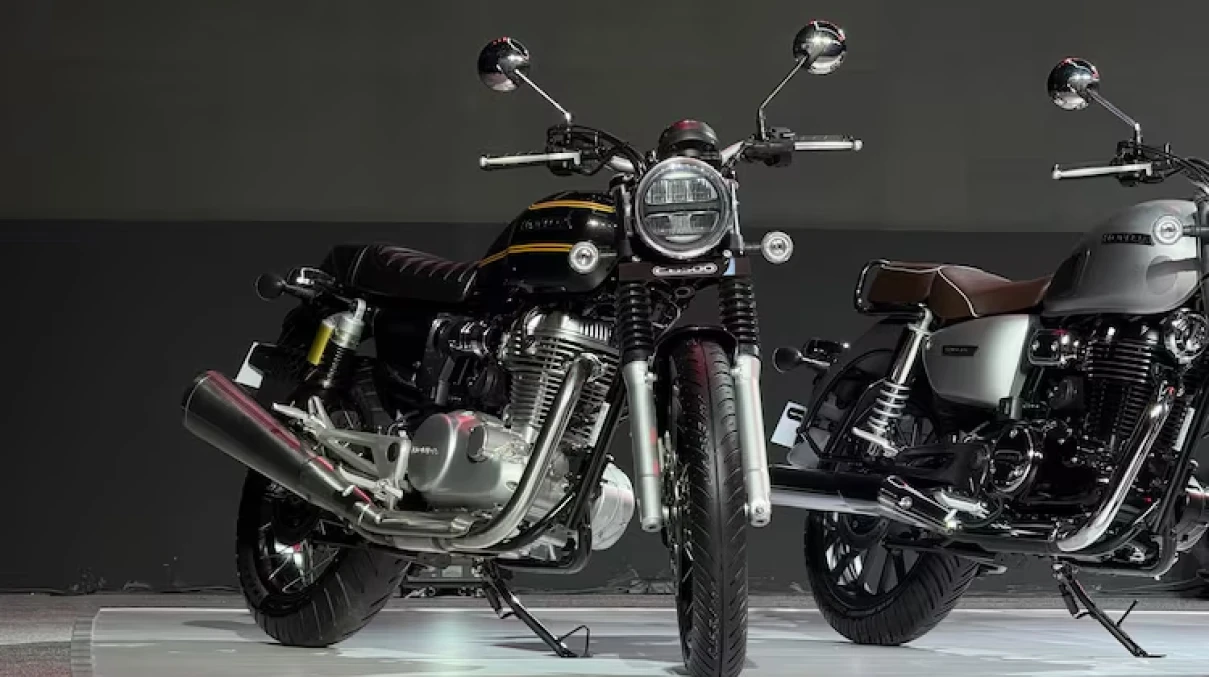
Honda has officially launched the new CB500 in India, boldly expanding its modern-classic motorcycle portfolio with a larger-capacity retro roadster. Prices aggressively start at ₹2.75 lakh (ex-showroom) for the Alloy variant and climb to ₹3.02 lakh for the fully loaded, top-spec spoke-wheel version.
The CB500 is a particularly fascinating machine because it blatantly ignores the usual middleweight formula. Instead of adopting the parallel-twin engine found in international markets, the India-spec motorcycle packs a massive 501cc air- and oil-cooled single-cylinder engine producing 28 hp and 43.3 Nm of torque.
Because the motorcycle is manufactured locally in India, Honda has managed to position it significantly below the larger 650cc retro twins currently dominating the market.
Honda CB500 Price in India
The CB500 is structured across three distinct variants to cater to different stylistic preferences.
| Variant | Wheels | Ex-Showroom Price |
| CB500 Alloy | Alloy wheels | ₹2.75 lakh |
| CB500 Spoke | Cross-spoke, tubeless | ₹3.00 lakh |
| CB500 Spoke (Exclusive colours/graphics) | Cross-spoke, tubeless | ₹3.02 lakh |
(All prices are ex-showroom)
The mid-tier Spoke variant costs exactly ₹25,000 more than the base Alloy trim, while the top-tier version demands just another ₹2,000 to unlock exclusive paint schemes and striking graphics. This incredibly tight pricing strategy ensures that the entire CB500 range is contained within a narrow ₹27,000 price band, giving buyers the freedom to choose based on aesthetics rather than rigid budget constraints.
Which Honda CB500 Variant Should You Buy?
Choosing the right CB500 ultimately comes down to your visual preference and intended usage.
CB500 Alloy — ₹2.75 lakh
The base variant makes the most sense if you primarily want the CB500 for its torquey 501cc engine, iconic Honda reliability, and modern electronics suite. The alloy wheels make it the most affordable entry point into the big-single club, perfect for riders who prefer the convenience of alloys and tubeless tires without the vintage spoke flair.
CB500 Spoke — ₹3.00 lakh
This is arguably the sweet spot of the lineup. For an additional ₹25,000, you gain cross-spoke wheels equipped with tubeless tyres. This setup provides that authentic, old-school heritage appearance without the nightmare of fixing a puncture on traditional tube-type spoke wheels on the side of a highway.
CB500 Spoke Top — ₹3.02 lakh
The flagship version retains the premium cross-spoke tubeless setup but adds exclusive colours and graphics. Given that the premium is a mere ₹2,000 over the mid-spec version, this is the absolute no-brainer for buyers who want the most distinctive, head-turning CB500 on the road.
Honda CB500 Engine: The 501cc Single-Cylinder Heart
The biggest headline surrounding the CB500 isn’t its gorgeous styling; it’s the thumping heart sitting inside the frame.
The India-spec Honda CB500 is powered by a 501cc air- and oil-cooled single-cylinder engine.
- Power: 28 hp
- Torque: 43.3 Nm
- Configuration: Air- and oil-cooled, single-cylinder
- Character: Torque-focused
This represents a radical departure from the parallel-twin CB500 family sold globally. The India-spec CB500 is essentially a dedicated, large-capacity retro single-cylinder motorcycle purpose-built for our riding conditions and tastes, rather than simply an imported twin-cylinder model.
Why the 501cc Single-Cylinder Engine Matters
The Indian motorcycle market is currently flooded with 350cc, 400cc, and 450cc singles, along with several 650cc twins. However, the space around 500cc single-cylinder retro motorcycles has been largely vacant since Royal Enfield unceremoniously discontinued its beloved 500cc UCE motorcycles in early 2020.
The CB500 fills that exact void. Instead of chasing frantic, high-rpm horsepower, Honda has deliberately focused on large displacement, meaty low-end torque, and a deeply relaxed riding character. This is designed to appeal directly to riders who miss the distinctive, unhurried “thump” and feel of a big single.
Honda CB500 Power vs Displacement
At first glance, 28 hp might look a bit modest for a half-litre motorcycle. But horsepower is not the point here.
Honda is positioning the CB500 as a heritage roadster, not a canyon-carving streetfighter. The massive 43.3 Nm of torque is the true defining metric. The motorcycle is engineered for relaxed cruising, highly usable low- and mid-range grunt, comfortable all-day highway touring, and classic single-cylinder character. You ride the torque wave, rather than wringing out the rev limiter.
Honda CB500 Design & Styling
Honda proudly notes that the CB500 is a heritage roadster drawing deep inspiration from legendary models like the iconic CB750. The motorcycle faithfully executes the traditional modern-classic formula:
- A perfectly round LED headlamp
- An upright, commanding riding position
- A beautifully sculpted, teardrop fuel tank
- Exposed, meticulously finished mechanical components
- Classic roadster proportions with minimal plastic cladding
- The highly sought-after classic spoke-wheel aesthetic
The robust design is perfectly matched to the imposing physical size of the large single-cylinder engine casing.
Cross-Spoke Wheels With Tubeless Tyres
One of the CB500’s most brilliant practical features is the availability of cross-spoke wheels that natively support tubeless tyres (offered on the mid and top variants).
This gives buyers the gorgeous visual appeal of wire-spoke wheels without the inherent anxiety of traditional tube-type setups. For everyday riders and tourers, tubeless tyres are a massive convenience because a puncture can be plugged in minutes without removing the wheel from the motorcycle. It also lends the CB500 a decidedly premium, heritage appearance.
Honda CB500 Features
Despite looking like it rolled straight out of the 1970s, the CB500 hides a highly modern electronic suite beneath its retro skin.
- Honda Selectable Torque Control (HSTC): Honda’s proprietary traction control system actively monitors and manages rear-wheel slip to keep you safe on loose or wet surfaces.
- Assist and Slipper Clutch: Reduces rear-wheel hop during aggressive downshifts and makes pulling the clutch lever significantly lighter in stop-and-go traffic.
- Honda RoadSync: Brings advanced smartphone connectivity for navigation, calls, and music directly to the cockpit.
- Analogue-Digital Instrument Cluster: Perfectly blends traditional analogue charm with modern digital readouts.
- Dual-Channel ABS: Disc brakes are fitted at both ends, backed by a dual-channel Anti-lock Braking System.
- All-LED Lighting: Ensures maximum visibility and a modern touch at night.
Honda CB500 vs CB350
Where does the new 500 fit against the existing 350?
| Specification | Honda CB350 | Honda CB500 |
| Engine | 348.6cc | 501cc |
| Engine type | Single-cylinder | Single-cylinder |
| Cooling | Air-cooled | Air + oil cooled |
| Power | 20.7 hp | 28 hp |
| Torque | 29.4 Nm | 43.3 Nm |
| Positioning | Modern classic | Large-capacity heritage roadster |
| Starting price | ₹1.95 lakh | ₹2.75 lakh |
| Wheel options | Alloy/spoke (variant dependent) | Alloy/cross-spoke |
| Target buyer | 350cc classic-bike buyer | Larger-engine retro-bike buyer |
The CB500 sits definitively above the CB350 family, serving as the logical upgrade path for riders outgrowing the 350cc segment.
Honda CB500 vs Royal Enfield Interceptor 650
This is the comparison every buyer will make. The CB500 starts at ₹2.75 lakh, while the Royal Enfield Interceptor 650 starts considerably higher at around ₹3.39 lakh (ex-showroom Chennai).
The two motorcycles deploy vastly different philosophies.
- Honda CB500: A 501cc single producing 28 hp and 43.3 Nm. It is a pure retro roadster with a lower starting price and brilliant tubeless cross-spoke options.
- Interceptor 650: A 648cc parallel-twin offering significantly higher performance, twin-cylinder character, and highway dominance.
The Honda isn’t trying to beat the Interceptor in a drag race. Instead, it offers a deeply relaxed, single-cylinder riding experience at a far more accessible entry price.
Honda CB500 vs BSA Gold Star
The newly revived BSA Gold Star 650 is the CB500’s most direct conceptual rival. Both motorcycles celebrate the large single-cylinder engine, lean heavily into retro styling, boast premium positioning, and drip with classic motorcycle character. Look out for our upcoming detailed comparison: Honda CB500 vs BSA Gold Star 650: Which Big Single Makes More Sense?
Honda CB500’s Biggest Advantage in India
The CB500’s most lethal weapon isn’t its displacement; it’s its strategic positioning. Honda has effectively forged a brand-new sub-segment between the ubiquitous 350cc retro roadsters and the heavier, pricier 650cc twin-cylinder motorcycles.
It delivers significantly more displacement and torque than the CB350, while remaining substantially more affordable and manageable than the 650cc retro twins. This makes the CB500 an irresistible proposition for riders who feel that a 350cc is too small, but don’t want the weight, heat, or expense of a 650 twin.
Made in India: Why It Matters
The CB500 is proudly manufactured in India. This is a massive logistical triumph because motorcycles above 350cc fall into a brutal 40% GST tax slab. By localizing production, Honda has completely bypassed the heavy import duties that would have otherwise ruined the pricing strategy, explaining exactly how they managed to launch a 500cc motorcycle at an incredible ₹2.75 lakh.
Honda CB500: Who Should Buy It?
The CB500 is the perfect match for riders who demand:
- A visually arresting, distinctive retro motorcycle.
- The unmistakable character of a large single-cylinder engine.
- Strong, effortless low-end torque.
- Bulletproof Honda reliability and brand prestige.
- Premium electronics (HSTC, RoadSync).
- The convenience of tubeless spoke wheels.
- An upgrade from the sea of common 350cc motorcycles.
Who Should Not Buy the CB500?
If your priority is maximum horsepower, aggressive high-speed performance, the silky refinement of a twin-cylinder, or sharp sporty handling, walk away. The CB500 is about mechanical soul and character, not spec-sheet racing. A 650cc twin will better serve riders hunting for outright speed.
Verdict: Is the Honda CB500 Worth Considering?
Absolutely—especially if you crave something genuinely different. The Honda CB500 doesn’t try to win the numbers game with 28 hp, but its thumping 43.3 Nm of torque, 501cc displacement, and immaculate retro character give it a unique proposition that virtually no other motorcycle currently offers in India.
At ₹2.75 lakh, the base version is aggressively positioned against larger motorcycles. However, we highly recommend stepping up to the ₹3 lakh Spoke variant. For an extra ₹25,000, the cross-spoke tubeless setup perfectly completes the CB500’s heritage aesthetic while keeping you safe from roadside puncture nightmares. The missing 500cc big single has finally returned to India, and it wears a Honda badge.
FAQ
What is the Honda CB500 price in India?
The Honda CB500 starts at an aggressive ₹2.75 lakh ex-showroom for the Alloy variant and goes up to ₹3.02 lakh for the top-spec spoke variant.
What engine does the Honda CB500 use?
The India-spec CB500 uses an all-new 501cc air- and oil-cooled single-cylinder engine producing 28 hp and 43.3 Nm of torque.
Is the Honda CB500 a twin-cylinder motorcycle?
No. Unlike the parallel-twin CB500 models sold in international markets, the India-spec CB500 uses a purpose-built single-cylinder engine.
Does the Honda CB500 have spoke wheels?
Yes, the higher CB500 variants are equipped with premium cross-spoke wheels that are fully compatible with tubeless tyres.
Which Honda CB500 variant is the cheapest?
The CB500 Alloy is the entry-level variant, priced at ₹2.75 lakh ex-showroom.
Which Honda CB500 variant has tubeless spoke wheels?
The mid-spec Spoke and top-spec Spoke variants both feature cross-spoke wheels designed natively for tubeless tyres.
What are the Honda CB500’s main rivals?
The CB500 fills the void between 350cc singles and 650cc twins. It is positioned as an alternative to motorcycles like the Royal Enfield Interceptor 650 and the BSA Gold Star 650.
