


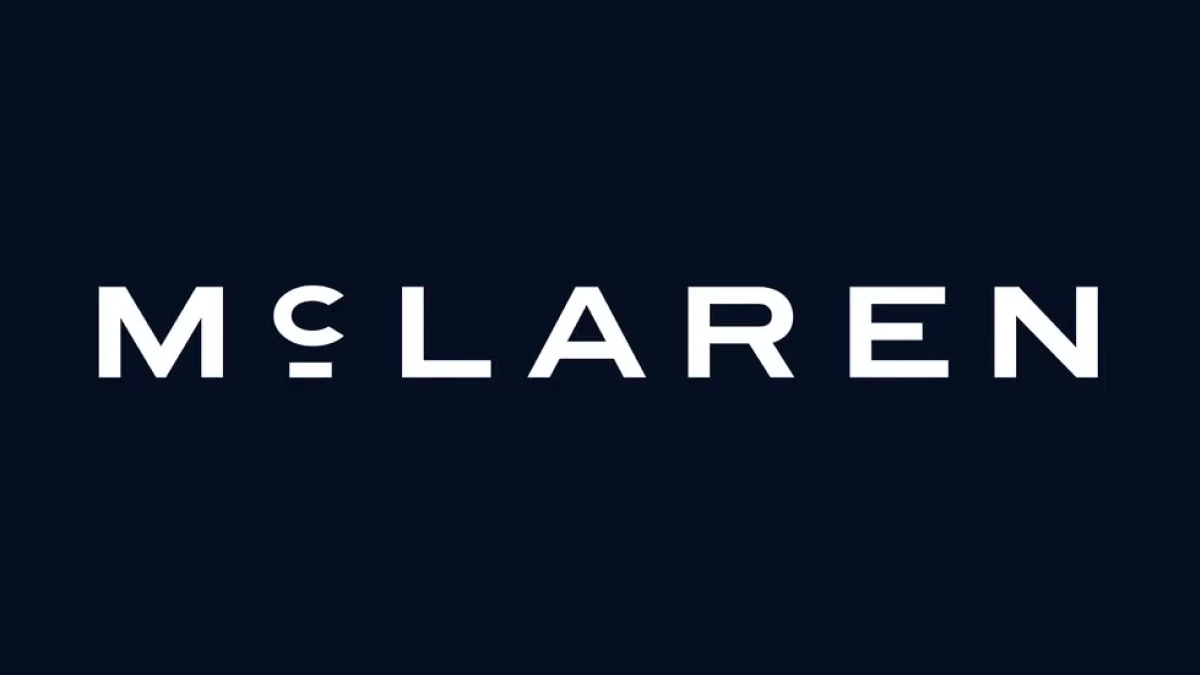
British supercar manufacturer McLaren Automotive and its motorsport arm, McLaren Racing, have officially unveiled a new brand identity.The comprehensive visual redesign replaces the bold, mixed-case logo used since 1981 with a modernized wordmark, a proprietary corporate font family, and a deeper color palette.
The rebranding arrives during a transformational period for the Woking-based company. Backed by a major £500 million ($672 million) investment to expand its UK engineering and manufacturing infrastructure, McLaren is preparing to broaden its vehicle lineup beyond mid-engined supercars.Future additions to the portfolio include front-engined models, two-row grand tourers, and McLaren’s first-ever performance SUV.
McLaren Brand Identity Evolution: Key Changes
| Branding Element | Outgoing Visual Identity | Next-Generation Identity (2026 Onward) |
| Corporate Wordmark | Mixed-case, heavy sans-serif font (In use since 1981) | Wide, all-uppercase sans-serif with raised lowercase ‘c’ resting on a horizontal bar |
| Bespoke Typeface | Standard marketing typography | McLaren Sans custom typeface |
| Secondary Identifiers | Isolated Speedmark on road cars | Speedmark retained; Speedy Kiwi and Heritage Shield restored |
| Badging Placement | Nose and tail Speedmark badges | “M C L A R E N” wordmark spelled across vehicle rear section |
| Primary Color Palette | Bright Papaya Orange and Gloss White | Midnight Theme: Midnight Blue, Ember, Anthracite, Colnbrook Silver, and Mist White |
| First Vehicle Application | McLaren W1 (Final model with classic logo) | McL 6GT Concept (Unveiled at Monterey Car Week) |
Inspiration Behind the Design: Returning to New Zealand Roots
Unlike many modern automotive rebrands that opt for minimal digital-first flat design, McLaren’s updated wordmark draws directly from the company’s early motorsport heritage.
The Auckland Service Station Connection
The core inspiration for the new uppercase typography comes from the hand-painted garage sign above the service station owned by Bruce McLaren’s parents, Les and Ruth McLaren, in Remuera, Auckland.It was in this New Zealand workshop that a 15-year-old Bruce McLaren modified a 1929 Austin Seven, driving it to his first competitive motorsport victory at Muriwai Beach.
Unique Typographic Details
- The Underlined ‘c’:The lettermark uses all capital letters except for the lowercase ‘c’, which sits raised above a thin horizontal bar.This matches the original hand-painted lettering on the Auckland garage signage.
- McLaren Sans Font:Developed as an exclusive font family, McLaren Sans will be used across digital interfaces, dealership collateral, racing liveries, and vehicle infotainment displays.
Preservation of Iconic Heritage Symbols
While the primary wordmark changes, McLaren confirmed that its established visual icons will remain active across both automotive and racing divisions.
- The Speedmark: The asymmetric swoosh logo introduced in 1997 remains an integral identifier. It will appear on vehicle steering wheels, aerodynamic bodywork, and Formula 1 car liveries.
- The Speedy Kiwi:The original graphic created by Bruce McLaren in the 1960s to honor his New Zealand heritage remains part of the official brand asset library.
- Papaya Orange:While the automotive brand is adopting darker corporate tones—featuring Midnight Blue and Anthracite—Papaya Orange remains the primary color for McLaren Racing in Formula 1, IndyCar, and WEC Hypercar programs.
Debut Model and Rollout Timeline
The first public application of the new identity appeared on the McL 6GT concept car unveiled during Monterey Car Week.The mid-engined V8 supercar concept—which features a 6-speed manual transmission as a tribute to the original M6GT road car project—bears the new spelled-out wordmark across its rear taillight housing.
The flagship McLaren W1 hypercar serves as the final model to roll off the assembly line with the legacy 1981 branding. All next-generation production cars launching from late 2026 onward will feature the new full-width rear badging and McLaren Sans digital cockpit layouts.
Strategic Product Expansion: Beyond Mid-Engined Supercars
The brand identity update mirrors a broader diversification strategy underway at McLaren’s Woking headquarters.
| Planned Model Category | Architectural Layout | Target Timeline | Market Positioning |
| Manual Supercars | Mid-Engined V8 / Manual Gearbox | Production version based on McL 6GT | Analog driver-focused enthusiast models |
| Front-Engined GTs | Front-Mid Engine / Rear-Wheel Drive | Upcoming lineup expansion | Luxury long-distance grand touring |
| Two-Row Models | Multi-Passenger Cabin Layout | Late 2020s | Practical multi-seat high-performance cars |
| McLaren High-Performance SUV | All-Wheel Drive / Hybrid or Electric | Before 2030 | Competition for Aston Martin DBX & Ferrari Purosangue |
By uniting its motorsport heritage with a modernized corporate image, McLaren’s revised visual identity prepares the brand for its next chapter—expanding into new vehicle segments while preserving the racing legacy established by Bruce McLaren.
