


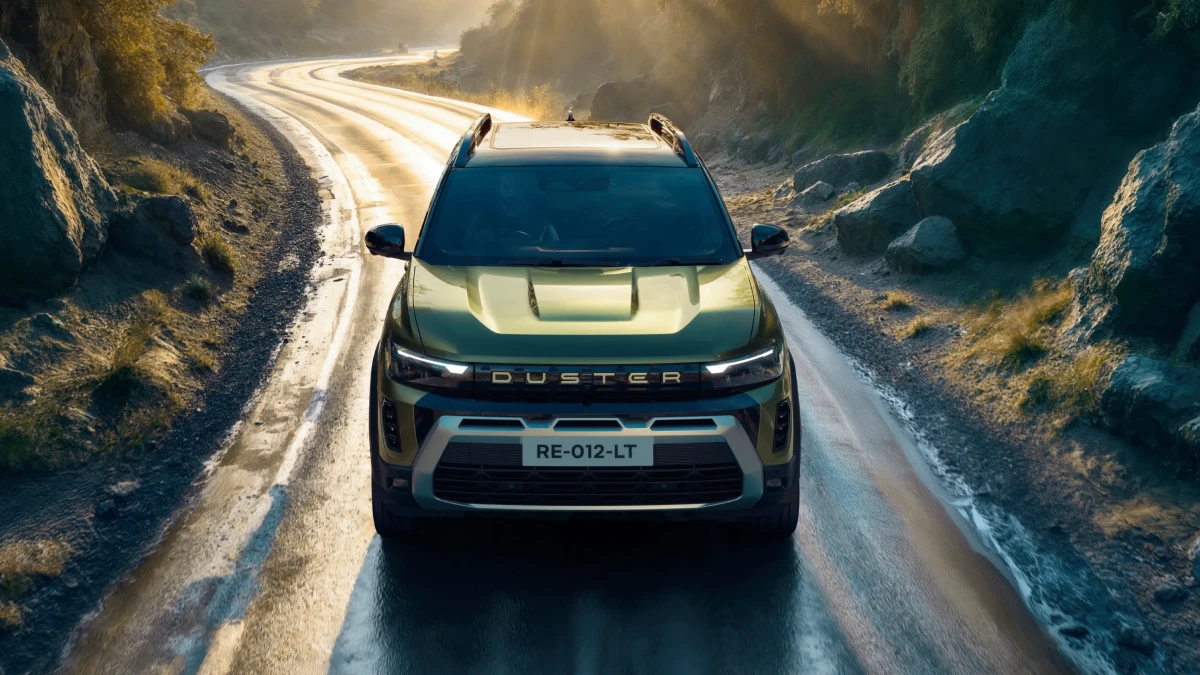
The new Renault Duster Strong Hybrid could be the variant that gives Renault’s popular SUV nameplate a stronger position in India’s competitive mid-size SUV market. Combining a 1.8-litre petrol engine with electric motors, a sophisticated automatic transmission and a claimed fuel efficiency of 29kmpl, the hybrid aims to deliver both performance and lower fuel consumption.
Priced from ₹16.99 lakh, the Renault Duster Hybrid also stands out for offering a relatively powerful hybrid system at a competitive introductory price. Its combination of electric driving capability, impressive ride comfort and engaging performance makes it an interesting alternative to established hybrid SUVs from Maruti Suzuki and Toyota.
However, the hybrid powertrain comes with compromises. The battery reduces boot capacity, some driver-assistance and parking features available on the top petrol variant are missing, and a spare wheel is not included as standard.
So, is the Renault Duster Hybrid worth buying? Here is a detailed look at its price, specifications, mileage, performance, features, practicality and competition.
Renault Duster Hybrid Price in India
Renault has positioned the Duster Strong Hybrid competitively, with two variants available at launch. The hybrid range starts at ₹16.99 lakh and extends to ₹19.49 lakh for the top-spec Emotion variant.
Renault Duster Hybrid price list
| Variant | Ex-showroom Price |
|---|---|
| Renault Duster Hybrid Evolution | ₹16.99 lakh |
| Renault Duster Hybrid Emotion | ₹19.49 lakh |
Prices are introductory ex-showroom prices. Renault has announced that these introductory prices apply to deliveries until December 31, 2026. Confirm the applicable price, offers and on-road cost with your local dealership.
The starting price is one of the Duster Hybrid’s biggest attractions. It brings a strong-hybrid powertrain into a price bracket where buyers are also considering turbo-petrol automatic SUVs.
The Evolution variant is worth considering for buyers who prioritise fuel efficiency and driving performance. Those looking for the top trim should carefully compare its equipment list with the more feature-rich petrol variants before making a decision.
Renault Duster Hybrid: Engine and Specifications
The Renault Duster Hybrid uses the company’s E-Tech 160 strong-hybrid system. Unlike a conventional mild-hybrid setup, this system combines a petrol engine with electric motors to move the vehicle using electric power, petrol power or a combination of both.
The system is designed to improve efficiency in city traffic while retaining the performance needed for highway driving.
Renault Duster Hybrid specifications
| Specification | Renault Duster Strong Hybrid |
|---|---|
| Powertrain | 1.8-litre petrol strong hybrid |
| Engine configuration | Naturally aspirated, four-cylinder |
| Hybrid system | Renault E-Tech 160 |
| Combined power | 160 PS |
| Maximum electric motor torque | 208 Nm |
| Battery capacity | 1.4kWh |
| Battery type | Lithium-ion NMC |
| Transmission | Multi-mode automatic |
| Electric driving | Available |
| Claimed fuel efficiency | 29kmpl |
| Claimed 0–100kmph acceleration | Approximately 9.6 seconds |
| Fuel tank capacity | 50 litres |
| Claimed driving range | More than 1,400km |
| Seating capacity | 5 |
| Boot capacity | 372 litres |
| Standard spare wheel | No; puncture repair kit provided |
| Starting price | ₹16.99 lakh |
Specifications and performance figures are based on published manufacturer information and automotive reviews. Actual fuel economy and driving range depend on traffic, driving style, road conditions and other factors.
How Does the Renault Duster Hybrid Powertrain Work?
The Duster Hybrid’s E-Tech system is more sophisticated than a basic petrol engine with electric assistance.
It combines a 1.8-litre petrol engine with two electric motors and a 1.4kWh battery. The system automatically determines how to use the available power depending on speed, acceleration demand and battery charge.
In suitable conditions, the Duster can move using electric power alone. When additional power is required, the petrol engine and electric motors work together. At other times, the petrol engine can drive the wheels directly or help charge the battery.
The battery recharges through the hybrid system, including energy recovered during deceleration and braking. This means owners do not need to plug the vehicle into an external charger.
Renault Duster Hybrid: Key powertrain features
| Feature | Details |
|---|---|
| Electric-only operation | Allows the SUV to move without running the petrol engine in suitable conditions |
| Hybrid driving | Petrol engine and electric motors work together when required |
| Regenerative braking | Recovers some energy during deceleration and braking |
| Automatic power management | Selects operating modes according to driving conditions |
| Multi-mode transmission | Uses different ratios for the petrol engine and electric motor |
| External charging | Not required |
| Main benefit | Improved fuel efficiency with responsive acceleration |
The transmission is a particularly interesting part of this setup. Rather than using a conventional continuously variable transmission, Renault employs a multi-mode system with four ratios for the petrol engine and two for the main electric motor.
This arrangement is intended to combine smooth electric driving with direct engine response when accelerating or cruising at higher speeds.
For buyers who dislike the familiar high-revving sensation some CVT-equipped cars produce under hard acceleration, the Duster Hybrid’s transmission behaviour could be a significant advantage.
Renault Duster Hybrid Mileage: Is 29kmpl Realistic?
Fuel efficiency is one of the strongest reasons to consider the Renault Duster Hybrid.
Renault claims an ARAI-certified fuel economy of 29kmpl. This figure places the Duster among the most fuel-efficient hybrid SUVs in its segment and gives it a substantial claimed advantage over the petrol-powered Duster variants.
However, the certified figure should not be treated as a guaranteed real-world result.
In its road test, Autocar India reported an indicated fuel economy of approximately 16.9kmpl in city driving. Consumption fell to around 11–12kmpl during hard performance testing. The latter figure reflects demanding driving conditions rather than ordinary commuting.
Renault Duster Hybrid mileage figures
| Mileage Metric | Figure |
|---|---|
| ARAI-claimed mileage | 29kmpl |
| City economy reported during road testing | Approximately 16.9kmpl |
| Economy during hard performance testing | Approximately 11–12kmpl |
| Fuel tank capacity | 50 litres |
| Manufacturer-claimed driving range | More than 1,400km |
Real-world test figures are indicative and should not be interpreted as guaranteed results for every owner.
The difference between certified and real-world efficiency is normal. A vehicle’s consumption changes with traffic, air-conditioning use, road gradients, driving speed and acceleration habits.
The Duster Hybrid is likely to be most appealing to buyers who spend considerable time in city traffic but also need an SUV capable of longer highway journeys.
How much fuel could the Duster Hybrid save?
The following table illustrates how the claimed 29kmpl efficiency compares with the certified figures for the turbo-petrol Duster variants.
| Powertrain | ARAI-Claimed Mileage |
|---|---|
| 1.0-litre turbo-petrol manual | 19.41kmpl |
| 1.3-litre turbo-petrol manual | 17.75kmpl |
| 1.3-litre turbo-petrol DCT automatic | 18.45kmpl |
| 1.8-litre Strong Hybrid automatic | 29kmpl |
Based on these figures, the hybrid has a claimed mileage advantage of approximately 57% over the 1.3-litre turbo-petrol DCT.
That is a substantial difference on paper. Nevertheless, the financial benefit depends on the actual mileage each owner achieves, annual kilometres driven, fuel prices and the price difference between the variants being compared.
For buyers who drive relatively few kilometres each year, the cheaper petrol variants may still make financial sense. Those with long daily commutes or frequent journeys may have more opportunity to benefit from the hybrid’s efficiency.
Renault Duster Hybrid Performance: Is It Better Than the Petrol Version?
The Duster Hybrid is not designed purely to maximise fuel economy. Its electric motors also contribute to performance, particularly when moving away from a standstill.
The electric motor can deliver torque immediately, helping the SUV respond quickly to accelerator inputs. When the petrol engine joins in, the combined system produces up to 160 PS.
Renault claims a 0–100kmph time of approximately 9.6 seconds, making the hybrid a competitive performer in its category.
Performance highlights
- Responsive acceleration: Electric motor assistance helps the SUV move away from a standstill with confidence.
- Smooth low-speed driving: The vehicle can operate in electric mode in suitable conditions, reducing engine noise during some city journeys.
- Stronger combined output: The 160 PS hybrid system offers more combined power than the Toyota-sourced strong-hybrid systems used in the Grand Vitara and Urban Cruiser Hyryder.
- Automatic operation: The powertrain manages the transition between electric and petrol power without requiring the driver to select individual operating modes.
- Relaxed highway cruising: The petrol engine can drive the wheels directly in appropriate conditions, while electric assistance helps during acceleration and overtaking.
The transmission also gives the Duster a different driving character from hybrids that use an e-CVT. Under acceleration, the multi-mode gearbox can produce noticeable changes in engine and motor gearing instead of the continuous ratio changes associated with a conventional e-CVT.
For drivers who enjoy being behind the wheel, this could be one of the Duster Hybrid’s most appealing characteristics.
Renault Duster Hybrid Ride and Handling
Ride comfort has long been an important part of the Duster’s appeal. The hybrid retains that focus, but its heavier powertrain required changes to the suspension and steering setup.
The hybrid is approximately 100kg heavier than the petrol versions. Renault has therefore retuned the suspension rather than simply carrying over the same setup.
The vehicle uses frequency-dependent damping, or FDD, which is designed to respond differently to different types of road movement. The aim is to absorb smaller, sharp bumps while maintaining body control during larger movements.
Ride and handling assessment
| Area | Assessment |
|---|---|
| Ride comfort | A major strength of the hybrid |
| Suspension | Retuned for the additional weight |
| Dampers | Frequency-dependent damping |
| Steering | Precise response and reassuring weighting |
| High-speed stability | A strong point in road testing |
| Urban usability | Smooth hybrid operation can help in traffic |
| Driving character | More engaging than a purely efficiency-focused setup |
The steering has also been recalibrated to account for the changed weight distribution. The result, according to the road test, is a well-controlled SUV with precise responses and strong high-speed stability.
This matters because a hybrid SUV should do more than return good mileage. It also needs to remain comfortable over poor roads and composed on the highway.
The Duster Hybrid appears to deliver a compelling combination of efficiency, comfort and driver engagement.
Renault Duster Hybrid Exterior Design
Renault has kept the exterior changes relatively subtle. The hybrid does not attempt to look dramatically different from the petrol-powered Duster.
Instead, a few details distinguish it from the other variants.
Exterior highlights
- Hybrid identification badge on the front door.
- Illuminated Duster lettering at the front.
- Familiar Duster SUV styling.
- Underbody packaging adapted to accommodate the hybrid battery.
- Revised exhaust arrangement to suit the hybrid system.
The restrained changes should appeal to buyers who prefer the regular Duster’s rugged design rather than a heavily redesigned hybrid-specific appearance.
The illuminated front lettering provides a more noticeable visual distinction, while the hybrid badge identifies the powertrain.
Renault Duster Hybrid Interior and Features
The Duster Hybrid receives a brighter cabin treatment than the petrol versions. It uses Dune Brown leatherette upholstery and a lighter headliner, creating a more open appearance inside the SUV.
There are also several useful convenience details, including one-touch operation with anti-pinch protection for all four windows, a touch-operated cabin lamp and gas struts for the bonnet.
However, the hybrid’s equipment list is not identical to that of the top-spec petrol Duster.
Renault Duster Hybrid: Interior and equipment overview
| Feature | Details |
|---|---|
| Upholstery | Dune Brown leatherette |
| Headliner | Lighter finish |
| Windows | One-touch up/down with anti-pinch protection on all four windows |
| Cabin lamp | Touch-operated |
| Bonnet support | Gas struts |
| Instrument display | Unconventional cluster design |
| Volume control | Steering-mounted stalk behind the wheel |
| Front seat ventilation | Available |
| 360-degree camera | Not offered on the hybrid at launch |
| Level 2 ADAS | Not offered on the hybrid at launch |
| Auto-dimming mirror | Missing compared with the relevant top petrol equipment |
| Spare wheel | Optional accessory; not standard |
Some controls could be easier to use. The volume adjustment is located on a stalk behind the steering wheel, while the ventilated-seat controls are positioned where they can be difficult to see and reach.
The instrument cluster may also take some getting used to, especially for drivers who prefer conventional round dials.
The more significant issue is the missing equipment. The hybrid does not receive the 360-degree camera, Level 2 ADAS and auto-dimming mirror available on the relevant top-spec petrol variant.
These omissions matter because buyers spending close to ₹20 lakh may expect a comprehensive feature list.
If parking assistance and driver-assistance technology are priorities, compare the hybrid and petrol variants carefully rather than assuming the more expensive powertrain automatically brings more equipment.
Renault Duster Hybrid Boot Space and Practicality
The biggest practical compromise is boot capacity.
The petrol-powered Duster offers a 518-litre boot, while the hybrid’s battery packaging reduces this to 372 litres.
Renault Duster Hybrid vs Petrol: Practicality comparison
| Practicality Metric | Duster Petrol | Duster Hybrid |
|---|---|---|
| Boot capacity | 518 litres | 372 litres |
| Difference in boot capacity | — | 146 litres less |
| Spare wheel | Depends on variant and equipment | Not standard |
| Puncture repair kit | Depends on equipment | Provided |
| Space-saver spare wheel | Check variant and dealer specification | Available as an accessory |
The hybrid loses 146 litres of boot space compared with the petrol model. That difference could be important for families who regularly carry large suitcases, a stroller or bulky luggage.
The lack of a standard spare wheel is another consideration. Renault provides a puncture repair kit, with a space-saver spare available as an accessory.
Buyers who regularly travel on remote highways or poorly maintained roads should factor the additional spare-wheel cost into their purchase decision.
Is the rear seat spacious enough?
The Duster Hybrid’s rear seat is comfortable for average-sized adults, with well-cushioned seating and a relatively high seating position.
However, rear-seat space is not its strongest attribute. Rivals such as the Kia Seltos and Hyundai Creta offer a more generous-feeling rear passenger area.
For buyers who mostly drive themselves, the Duster’s driving characteristics may outweigh this limitation. Families who frequently travel with three adults in the rear should test the seating arrangement before making a decision.
Renault Duster Hybrid vs Toyota Hyryder, Grand Vitara and Victoris
The Duster Hybrid enters a segment where hybrid technology is already established.
The Toyota Urban Cruiser Hyryder and Maruti Suzuki Grand Vitara helped popularise strong-hybrid technology in the mid-size SUV category. The Maruti Suzuki Victoris also offers a strong-hybrid option.
Renault’s approach differs through its larger 1.8-litre four-cylinder engine, higher combined output and more complex multi-mode transmission.
Hybrid SUV comparison
| Specification | Renault Duster Hybrid | Maruti Suzuki Victoris Hybrid | Toyota Urban Cruiser Hyryder Hybrid |
|---|---|---|---|
| Powertrain | 1.8-litre strong hybrid | 1.5-litre strong hybrid | 1.5-litre strong hybrid |
| Combined power | 160 PS | Approximately 116 PS | Approximately 116 PS |
| Battery capacity | 1.4kWh | Approximately 0.76kWh | Approximately 0.76kWh |
| Transmission | Multi-mode automatic | e-CVT | e-CVT |
| ARAI-claimed mileage | 29kmpl | 28.65kmpl | Varies by variant |
| Main strength | Performance, efficiency and ride comfort | Fuel efficiency and established hybrid technology | Fuel efficiency and established hybrid technology |
Figures are based on published specifications and may vary by model year, variant and market. Confirm the latest specifications before publishing a direct buying comparison.
The Duster’s 29kmpl claimed mileage is marginally higher than the Victoris Hybrid’s published 28.65kmpl figure. Its 160 PS combined output is also considerably higher than the approximately 116 PS offered by the Toyota-sourced hybrid systems.
However, maximum power and certified mileage are only part of the buying decision. Pricing, after-sales support, equipment, boot space, passenger comfort and ownership costs all matter.
Which hybrid SUV should you choose?
Choose the Renault Duster Hybrid if:
- You want a more powerful strong-hybrid system.
- Fuel efficiency is a major priority.
- You enjoy driving and value responsive acceleration.
- Ride comfort and handling are important to you.
- You can accept reduced boot capacity and the missing equipment.
Consider the Toyota Urban Cruiser Hyryder or Maruti Suzuki Grand Vitara if:
- You prefer their established hybrid powertrain approach.
- Their cabin, equipment and practicality better match your needs.
- You find a variant and price that offer better overall value.
Consider the Maruti Suzuki Victoris Hybrid if:
- You want to compare another strong-hybrid alternative.
- Its equipment and ownership proposition better suit your requirements.
A test drive of each shortlisted SUV is recommended, particularly if you are choosing between the Duster’s multi-mode transmission and the e-CVT systems used by its rivals.
Renault Duster Hybrid: Pros and Cons
What we like
- Competitive introductory price: The ₹16.99 lakh starting price makes the hybrid an interesting proposition.
- Strong combined performance: The 160 PS powertrain is powerful for the segment.
- Impressive claimed efficiency: The ARAI figure of 29kmpl is a major selling point.
- Distinctive transmission: The multi-mode automatic offers a different driving experience from a conventional e-CVT.
- Comfortable ride: Retuned suspension helps the hybrid maintain the Duster’s ride-and-handling strengths.
- Electric driving capability: The system can run in EV mode in suitable conditions.
- Long claimed range: Renault quotes more than 1,400km under its stated range claim.
What could be better
- Reduced boot space: Capacity drops from 518 litres in the petrol version to 372 litres in the hybrid.
- Missing equipment: The 360-degree camera, Level 2 ADAS and auto-dimming mirror are not offered on the hybrid at launch.
- No standard spare wheel: Buyers must rely on the puncture repair kit or purchase the optional space-saver.
- Rear-seat space: It is not as generous as some competing SUVs.
- Unconventional controls: Some cabin controls and the instrument cluster may take time to get used to.
- Real-world mileage varies: The certified 29kmpl figure will not necessarily match every owner’s driving experience.
Is the Renault Duster Hybrid Worth Buying?
The Renault Duster Hybrid makes a strong case for itself by combining a powerful hybrid system, competitive claimed fuel economy and an engaging driving experience.
Its 1.8-litre petrol engine, electric motors and multi-mode automatic transmission distinguish it from several established hybrid SUVs. The claimed 29kmpl efficiency is particularly attractive for drivers who cover long distances or spend a significant amount of time in city traffic.
The ride and handling package is another major advantage. Rather than focusing only on fuel economy, Renault has worked to maintain comfort, steering precision and high-speed stability despite the hybrid system’s additional weight.
However, the hybrid is not the most practical version of the Duster in every respect. The reduction in boot space is significant, and the missing 360-degree camera and Level 2 ADAS may disappoint buyers looking for a fully equipped top-spec SUV. The optional spare wheel is another cost to consider.
Our Verdict
The Renault Duster Hybrid is worth shortlisting if you want strong-hybrid efficiency without giving up responsive performance and enjoyable driving dynamics.
Its appeal is strongest for buyers who drive themselves, cover substantial distances and value fuel economy. Families who prioritise luggage space, rear-seat room or a comprehensive list of technology features should compare the petrol Duster and rival SUVs before deciding.
Ultimately, the Duster Hybrid’s biggest achievement is that it makes efficiency and driving enjoyment part of the same package. Whether it is the right purchase depends on how much you value those strengths against its compromises.
Frequently Asked Questions (FAQs)
1. What is the price of the Renault Duster Hybrid in India?
The Renault Duster Hybrid starts at ₹16.99 lakh for the Evolution variant and goes up to ₹19.49 lakh for the Emotion variant. These are introductory ex-showroom prices, applicable to deliveries until December 31, 2026, as announced at launch.
2. What is the mileage of the Renault Duster Hybrid?
Renault claims an ARAI-certified fuel efficiency of 29kmpl. Actual mileage varies with traffic, road conditions, driving style and other factors.
3. What engine does the Renault Duster Hybrid use?
It uses a 1.8-litre naturally aspirated petrol engine combined with electric motors as part of Renault’s E-Tech 160 strong-hybrid system.
4. What is the power output of the Renault Duster Hybrid?
The hybrid system produces a combined output of 160 PS. The main electric motor delivers 208 Nm of torque.
5. Does the Renault Duster Hybrid need to be charged?
No. It is a self-charging strong hybrid. Its battery is charged through the hybrid system, including regenerative braking and engine operation. It does not need to be plugged into an external charger.
6. What is the boot space of the Renault Duster Hybrid?
The hybrid has a 372-litre boot, compared with 518 litres in the petrol-powered Duster. The battery packaging accounts for the difference.
7. Does the Renault Duster Hybrid come with a spare wheel?
A spare wheel is not provided as standard. The hybrid comes with a puncture repair kit, while a space-saver spare wheel is available as an accessory.
8. Does the Renault Duster Hybrid get a 360-degree camera and ADAS?
The hybrid does not offer the 360-degree camera or Level 2 ADAS available on the relevant top-spec petrol variant at launch. Buyers should confirm the latest equipment list with Renault before booking.
9. Is the Renault Duster Hybrid better than the Toyota Hyryder Hybrid?
The Duster Hybrid offers higher combined power and a different multi-mode transmission, while the Hyryder uses Toyota’s established 1.5-litre strong-hybrid system. The better choice depends on pricing, fuel economy in your driving conditions, equipment, space and ownership preferences.
10. Who should buy the Renault Duster Hybrid?
It is best suited to buyers who prioritise fuel efficiency, responsive performance, ride comfort and driving enjoyment. Those who need maximum boot space or a comprehensive driver-assistance feature list should compare alternatives before buying.
