


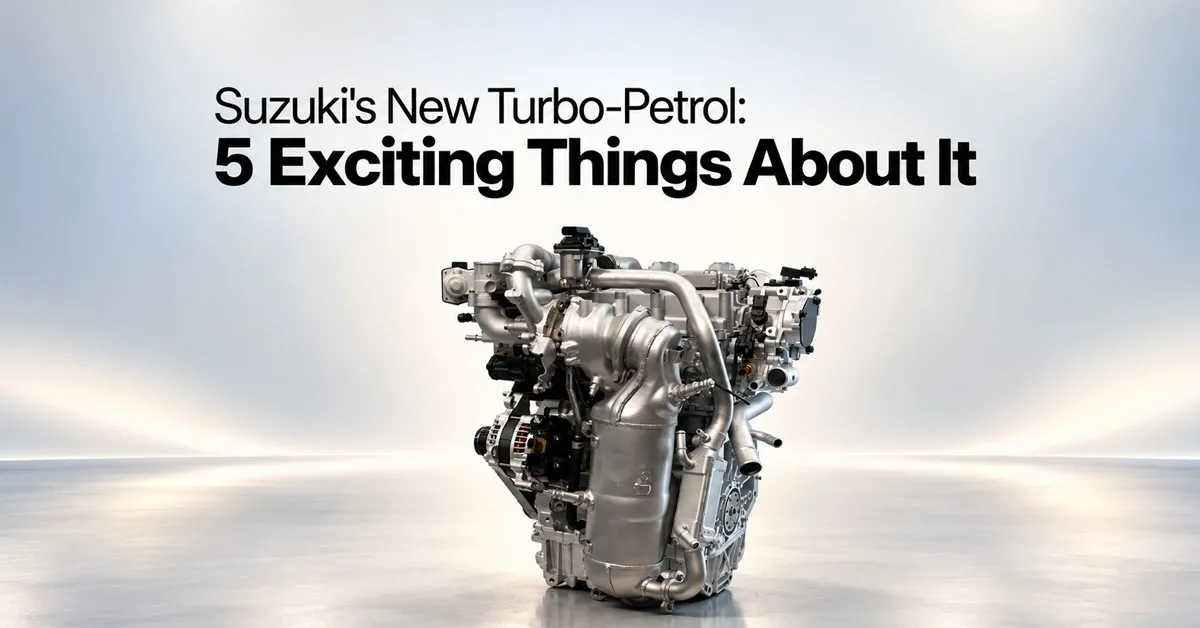
Suzuki has pulled the covers off its highly anticipated 1.2-litre direct-injection turbo petrol engine, and the specifications immediately make it a massive point of interest for the Indian automotive market.
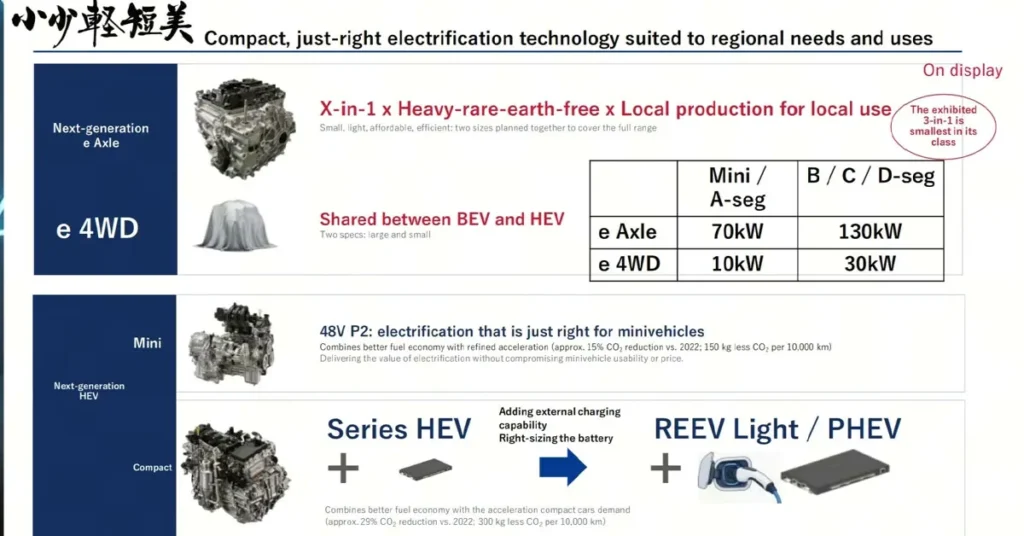
The new three-cylinder powerhouse produces a highly competitive 125bhp and 230Nm of torque. Crucially, it has been engineered from the ground up to operate on E100 flex fuel, Compressed Natural Gas (CNG), and Compressed Biogas (CBG).
More importantly for Indian consumers, Suzuki has explicitly identified India as one of the primary growth markets targeted for this new powertrain program. If introduced locally, this engine could finally arm Maruti Suzuki with a devastating answer to the turbo-petrol rivals currently dominating the compact SUV segment.
New Suzuki 1.2L Turbo Engine: Key Specifications
Based heavily on Suzuki’s new three-cylinder Z12E architecture, the engine utilizes a variable-geometry turbocharger paired with a water-cooled intercooler to maximize efficiency and throttle response.
| Specification | New Suzuki 1.2L DITC |
| Engine | 1.2-litre, 3-cylinder |
| Technology | Direct-injection turbo petrol (DITC) |
| Power | 125bhp / 93kW |
| Torque | 230Nm |
| Turbo | Variable-geometry turbocharger |
| Intercooler | Water-cooled |
| Thermal efficiency | Over 40% |
| Fuel compatibility | Petrol / E100 flex fuel |
| Alternative fuels | CNG, CBG |
| India relevance | Yes (Identified as a growth market) |
| Confirmed Maruti model | Not yet |
Why 125bhp and 230Nm Matters for Maruti
Historically, Maruti Suzuki has relied heavily on ultra-efficient, naturally aspirated petrol engines, mild hybrids, and a massive portfolio of CNG options. Their foray into turbo-petrols has been comparatively limited.
The new 1.2-litre DITC changes that narrative completely. While 125bhp is a strong figure, the 230Nm of torque is the true headline. Torque is what dictates mid-range acceleration. It is the force you feel pushing you back into the seat when:
- Executing rapid highway overtakes.
- Climbing steep hill inclines.
- Driving an SUV loaded with a full family and luggage.
This engine has the potential to give future Maruti SUVs a drastically more aggressive performance character without resorting to a larger, thirstier engine block.
Could the New Engine Power the Maruti Brezza?
This is the most logical and exciting India-specific application.
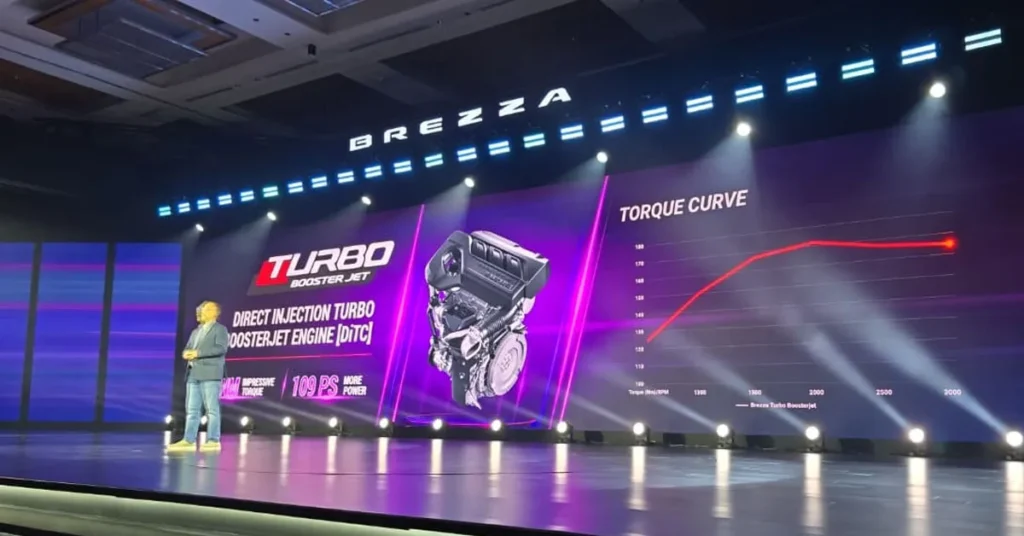
Currently, the Brezza relies on a naturally aspirated engine, while previous iterations (like the discontinued 1.0-litre Boosterjet referenced by industry sources) produced approximately 109bhp and 170Nm. If Suzuki were to drop this new 125bhp/230Nm engine into the Brezza, it would represent a massive leap of +16bhp and +60Nm over that older turbo benchmark.
That would instantly transform the Brezza from a sensible family commuter into one of the punchiest SUVs in its class.
However, there is an important caveat: Suzuki has not officially confirmed the Brezza as a production application for this engine in India. It remains a very strong potential application rather than a confirmed reality.
How Does It Compare With Other Compact SUV Turbo Engines?
If introduced, the new Suzuki engine would immediately disrupt the current turbo-petrol hierarchy in India.
| Engine | Approx. Power | Approx. Torque |
| Suzuki 1.2L DITC | 125bhp | 230Nm |
| Tata Nexon 1.2 Turbo | ~118bhp | ~170Nm |
| Hyundai Venue 1.0 Turbo | ~118bhp | ~172Nm |
| Kia Sonet 1.0 Turbo | ~118bhp | ~172Nm |
The numerical advantage is crystal clear: Torque. At 230Nm, the Suzuki engine would produce substantially more pulling power than the 1.0-litre turbo units utilized by Hyundai and Kia, as well as the 1.2-litre turbo found in the Tata Nexon. This characteristic is particularly advantageous for heavier SUVs.
Suzuki’s Big Focus: Efficiency Along With Performance
The engineering brilliance here isn’t just about raw output; it is about thermal efficiency.
Suzuki states the engine’s thermal efficiency will comfortably exceed 40%, with the broader development program aggressively targeting an ambition of 50%. This is being achieved by ruthlessly reducing various engine inefficiencies, specifically targeting:
- Cooling losses
- Exhaust losses
- Mechanical friction
- Pumping losses
The ultimate objective is highly relevant to Maruti buyers: More power + More torque + High efficiency.
Water-Cooled Intercooler: Why India Matters
The new engine utilizes a water-cooled intercooler—and Suzuki specifically noted that this system was developed with hot operating environments, such as India, in mind.
Turbocharged engines generate immense heat, and high intake-air temperatures severely degrade both performance and efficiency. A water-cooled intercooler manages charge-air temperatures far more consistently than an air-cooled unit. In Indian conditions—characterized by brutal ambient heat, stagnant traffic, long highway runs, and high-altitude mountain passes—this thermal management is a critical engineering advantage.
The Bigger Story: This Engine Can Run on E100
Perhaps the most future-proof aspect of the new Suzuki powertrain is its extreme fuel flexibility. The engine is engineered to support petrol extending all the way up to E100, alongside natural gas alternatives.
What Does E100 Mean?
E100 refers to fuel containing up to 100% ethanol. India is aggressively pushing towards higher ethanol blending in petrol (currently transitioning through E20). By designing the engine for E100 today, Suzuki is preparing for multiple future fuel pathways, ensuring the engine remains viable regardless of how India’s fuel ecosystem evolves over the next decade.
CNG and CBG Compatibility Could Be Even More Important
The engine’s ability to run on Compressed Natural Gas (CNG) and Compressed Biogas (CBG) adds a fascinating dimension to the Indian market.
Maruti Suzuki currently dominates India’s CNG sector. However, the current CNG market is heavily, almost exclusively, focused on fuel economy at the expense of performance. If Suzuki can successfully combine turbocharging with CNG, it could deliver a revolutionary proposition:
- Vastly superior torque
- Effortless highway overtaking capability
- Excellent drivability without the typical CNG power lag
- Retaining ultra-low running costs
Could This Be a Turbo CNG Engine for Future Maruti SUVs?
Imagine a future compact SUV offering a 1.2-litre turbo, 125bhp, 230Nm, and factory-fitted CNG compatibility. That would give Maruti a product utterly unmatched by any competitor in India. Suzuki could effectively shift the conversation from simply “CNG for economy” to “CNG for performance.”
Furthermore, compatibility with Compressed Biogas (CBG) aligns perfectly with India’s GOBARdhan program, which targets increasing domestic production and blending of renewable Bio-CNG.
Lightweight Engineering Could Make It Even More Interesting
Alongside engine development, Suzuki is heavily invested in a broader lightweight engineering program, targeting around 100kg of weight reduction in future vehicle architectures.
While this does not mean a future Maruti SUV using this engine will automatically be 100kg lighter, if related lightweight technologies eventually reach production models, the benefits amplify. A lighter vehicle paired with a 230Nm engine would drastically improve acceleration, braking, handling, and fuel efficiency without requiring a single extra horsepower from the engine itself.
What Could This Mean for Future Maruti Cars?
While the engine is confirmed, the specific Indian applications are still speculative.
- Maruti Brezza: The most obvious candidate. A turbocharged Brezza would instantly neutralize the performance gap against the Nexon, Venue, and Sonet.
- Future Premium SUVs: The engine could easily power upcoming SUVs positioned slightly above or below the Brezza footprint.
- Performance CNG Vehicles: If Maruti wants to offer high-performance CNG vehicles that don’t feel sluggish on the highway, this is the engine to do it.
- Flex-Fuel Pioneers: E100 compatibility makes this engine the prime candidate for India’s future flex-fuel vehicle strategy.
It is vital to reiterate: Suzuki has identified India as an intended growth market for this DITC engine, but they have not yet confirmed a specific production Maruti model, launch date, or domestic rollout schedule.
Our Take: Why This Engine Is Crucial for Maruti
Suzuki’s new 1.2-litre DITC engine could represent a watershed moment for future Maruti powertrains.
While the headline 125bhp and 230Nm figures are fiercely competitive, the true genius of this program is its unparalleled fuel flexibility. Developing a single, highly efficient engine architecture capable of seamlessly digesting standard petrol, E100 ethanol, CNG, and CBG provides Suzuki with immense strategic agility as India’s complex fuel landscape shifts.
For Maruti Suzuki, the immediate opportunity is obvious: a turbocharged compact SUV that finally answers the performance challenge laid down by Tata, Hyundai, and Kia, without sacrificing the brand’s legendary fuel efficiency.
The real story isn’t just that Suzuki built a 125bhp engine. It’s that Suzuki has engineered a next-generation powertrain ready for whatever fuel India decides to pump into it tomorrow, without giving up an ounce of performance today.
FAQ
What is the power of Suzuki’s new 1.2-litre turbo engine?
The new Suzuki 1.2-litre DITC (direct-injection turbo) engine produces 125bhp (93kW) and an impressive 230Nm of torque.
Is Suzuki’s new 1.2 turbo engine coming to India?
Suzuki has officially identified India as one of the primary intended growth markets for this new turbo engine program. However, a specific Indian production model and a precise launch date have not yet been confirmed.
Could the new Suzuki engine power the Maruti Brezza?
The Brezza is a very strong potential application. The new engine would offer substantially more torque than the current naturally aspirated engine and earlier turbo iterations. However, Maruti Suzuki has not confirmed the Brezza as the designated recipient for this engine.
Does the new Suzuki engine support CNG?
Yes. Suzuki confirms the new engine architecture is fully compatible with both conventional CNG and compressed biogas (CBG).
Does the engine support E100 fuel?
Yes. The engine is engineered to be highly flexible, supporting petrol extending all the way up to E100 (100% ethanol) flex fuel.
How much torque does the Suzuki 1.2 turbo produce?
The engine produces a maximum of 230Nm of torque, which is notably higher than many rival 1.0L and 1.2L turbo-petrol engines in the compact SUV segment.
Source – Link
Read – Upcoming Cars in India October & November 2026: 20+ New Cars Launching
