


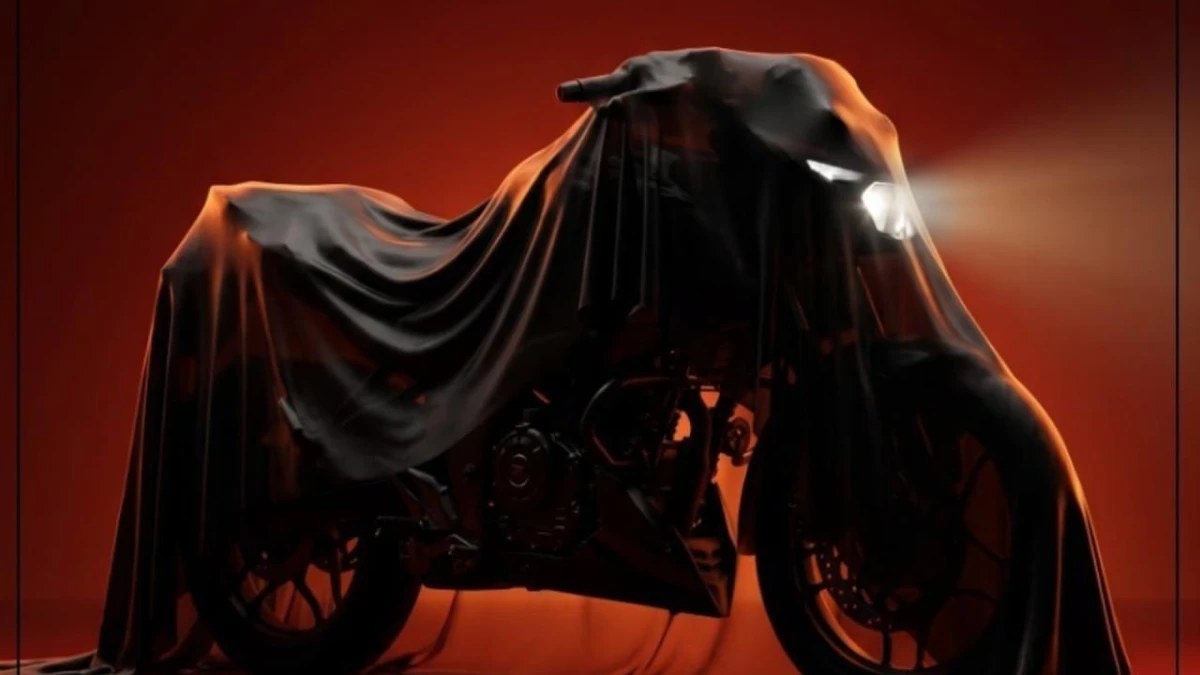
For over two decades, the “Definitely Male” moniker and the muscular silhouette of the Bajaj Pulsar have dominated Indian streets. From pioneering affordable performance with DTS-i engines to introducing clip-on handlebars and perimeter frames in mass-market commuter segments, the Pulsar line has defined urban riding for generations.
Now, Pune-based Bajaj Auto has officially released a teaser confirming the arrival of its next-generation Pulsar on August 12. Marking the kickoff of the Pulsar brand’s 25th anniversary, this launch is expected to spearhead an aggressive product strategy comprising up to 10 updated or all-new models across the 125cc to 160cc categories over the coming months.
Here is an extensive breakdown of what the upcoming August 12 launch signifies, the expected mechanical and electronic updates, and how the new Pulsar aims to shake up the 125cc–160cc sports-commuter market.
1. What Motorcycle Is Bajaj Launching on August 12?
While Bajaj Auto has kept the exact badge under wraps, industry test mules and internal signals highlight three primary possibilities:
- The All-New Next-Gen Pulsar 150: The iconic Pulsar 150 remains the most sentimental and commercially vital model in Bajaj’s history. While the N-series (N160, N250) and NS-series (NS160, NS200, NS400Z) have received substantial modern overhauls, the classic Pulsar 150 design has remained largely unchanged for several years. A ground-up replacement for the classic 150 on the 25th anniversary is considered the strongest candidate.
- Updated Pulsar N160 (4V Head): Test mules have spotted an updated N160 equipped with a refreshed 4-valve engine head, upside-down (USD) front forks, and a color TFT display.
- Next-Gen Pulsar 125 / N125: To capture the rapidly growing premium 125cc commuter space (competing against the TVS Raider 125 and Hero Xtreme 125R), a modern, lightweight 125cc Pulsar built on a fresh frame is also a strong contender.
2. Technical Breakdown: Engine, Chassis, & Hardware
The teaser silhouette indicates that this upcoming release is not just a cosmetic decal job; it represents a major generational step forward.
Expected Mechanical Upgrades
- Platform & Suspension Shift: One of the biggest structural changes expected is the transition from long-standing dual rear shock absorbers to a centrally mounted rear monoshock setup. Paired with a stiffer main frame, this update promises improved cornering stability and highway composure.
- 4-Valve Engine Architecture: Transitioning from 2-valve to 4-valve cylinder heads allows the engine to breathe better at higher RPMs, delivering better top-end performance without sacrificing low-end city pull.
- Refined Ergonomics: Redesigned seating geometry and a re-engineered footpeg triangle aim to provide a sporty yet comfortable daily commuting position.
3. Tech & Feature Upgrades: Catching Up to Modern Standards
In recent years, rider expectations in the sub-200cc segment have shifted heavily toward connected technology and riding aids. The upcoming Pulsar is expected to introduce several tech features previously reserved for higher-displacement offerings.
| Feature Category | Existing Pulsar 150 Classic | Expected Next-Gen August 12 Pulsar |
| Instrument Console | Semi-Digital Analog-LCD Combo | Fully Digital Color TFT Display |
| Connectivity | None | Bluetooth with Turn-by-Turn Navigation & Call/SMS Alerts |
| Lighting Setup | Halogen Headlamp + LED Tail Light | All-LED Lighting (Bi-LED Projector + LED DRLs) |
| Braking Systems | Single-Channel ABS | Dual-Channel ABS with Switchable ABS Modes |
| Riding Modes | None | Selectable Modes (Road, Rain, Off-Road / Sport) |
| Suspension | Twin Rear Gas Shocks | Monoshock Rear Suspension |
| Charging Port | Optional / Under-seat | Integrated USB Fast-Charging Port |
4. Current Bajaj Pulsar Portfolio Comparison
To see where the upcoming August 12 launch fits within the current lineup, the table below highlights key specifications across the existing Pulsar portfolio:
| Model Variant | Displacement | Peak Power | Transmission | Target Segment | Approx. Ex-Showroom Price |
| Pulsar 125 | 124.4 cc | 11.8 PS | 5-Speed | Entry Commuter | ₹ 82,425 – ₹ 94,000 |
| Pulsar 150 (Classic) | 149.5 cc | 14.0 PS | 5-Speed | Classic Sports-Commuter | ₹ 1,10,000 – ₹ 1,15,000 |
| Pulsar N160 | 164.82 cc | 16.0 PS | 5-Speed | Modern Naked Sports | ₹ 1,17,000 – ₹ 1,30,000 |
| Pulsar NS200 | 199.5 cc | 24.5 PS | 6-Speed | Performance Streetfighter | ₹ 1,39,280 – ₹ 1,45,000 |
| Pulsar NS400Z | 373 cc | 40.0 PS | 6-Speed (Assist/Slipper) | Flagship Performance | ₹ 1,86,150 |
| Upcoming Pulsar (Aug 12) | 125–160 cc (TBD) | 14.5 – 17.0 PS (Est.) | 5-Speed / 6-Speed | Next-Gen Sports-Commuter | ₹ 1.10L – ₹ 1.35L (Est.) |
5. Market Competition & Expected Pricing
The premium commuter market in India has grown increasingly competitive. If the upcoming model lands in the 150cc–160cc bracket, it will go head-to-head with well-established competitors:
- TVS Apache RTR 160 4V: Known for its feature-rich package (Glide Through Technology, riding modes, and SmartXonnect Bluetooth platform).
- Hero Xtreme 160R 4V: Offers upside-down front forks and punchy low-end acceleration.
- Honda SP160 / CB Unicorn: Targeted at buyers prioritizing fuel efficiency and refined commuting.
Estimated Pricing Strategy
Considering the addition of full-LED lighting, Bluetooth-enabled TFT instrumentation, and revised chassis componentry, the new Pulsar is expected to be priced between ₹ 1.10 lakh and ₹ 1.30 lakh (ex-showroom). This positioning keeps it accessible while offering a step up in technology and performance over legacy commuter options.
6. The Verdict: What to Expect on August 12
Bajaj Auto’s decision to launch an all-new Pulsar on August 12 marks a major milestone for the brand. By celebrating 25 years of the Pulsar nameplate with a fresh platform, modern connectivity features, and refined cycle parts, Bajaj is preparing to defend its market leadership in the sporty commuter segment.
Full specifications, official pricing, and initial test ride reviews will be revealed during the official press event on August 12.
