


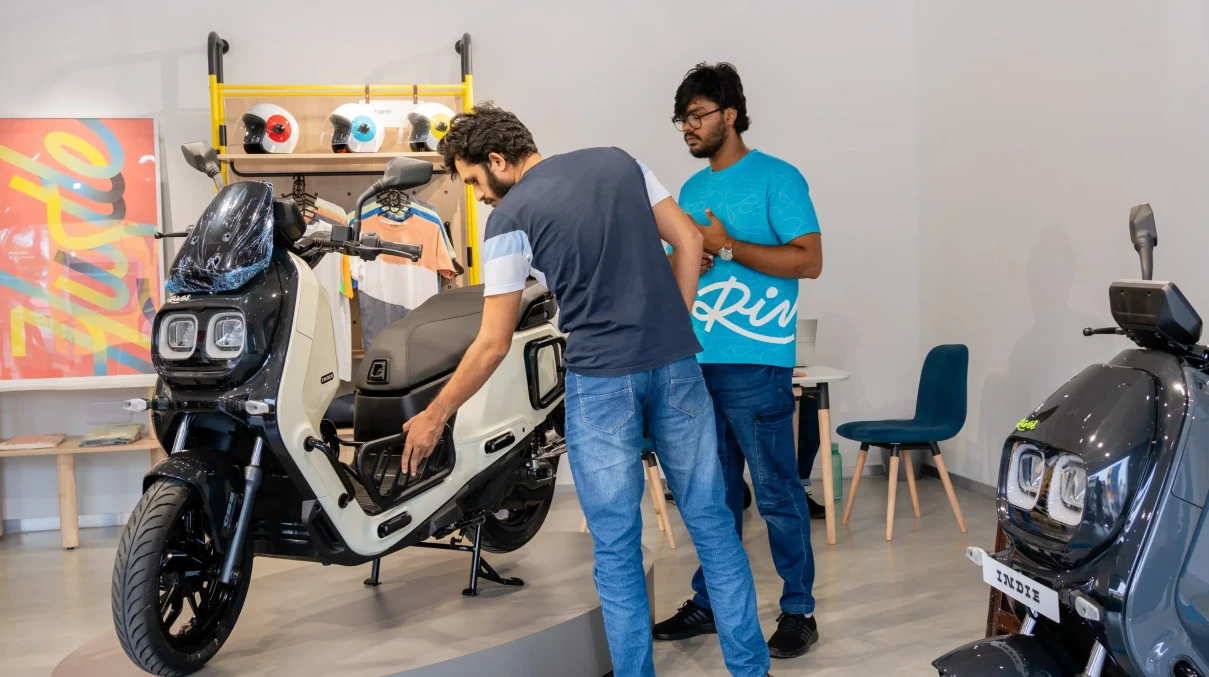
Bengaluru-based EV startup River Mobility has reached a massive manufacturing landmark by rolling out the 50,000th unit of its flagship River Indie electric scooter. While the figure itself is highly impressive for a young company, the bigger story is what it says about India’s rapidly evolving electric two-wheeler market. As competition fiercely intensifies with heavyweights like Ola Electric, Ather Energy, TVS, and Bajaj, River’s production milestone proves that consumers are responding to specialized, utility-focused products. It signals the brand’s clear ambition to become a major, long-term player in the premium electric scooter segment.
River Mobility’s 50,000 Production Milestone: Key Highlights
- 50,000 units produced in less than three years since manufacturing began.
- Manufactured at a 120,000 sq. ft. facility in Hoskote, Karnataka, which features an annual capacity of 100,000 units.
- A single, highly focused product portfolio featuring only the River Indie Gen 3.
- Retail and service network rapidly expanding to over 75 stores across India.
- Positioned purely around utility and practicality rather than outright speed.
- Recorded highest-ever monthly retail sales of 4,436 units in June 2026.
Why This Milestone Is Important
Reaching 50,000 units is the ultimate acid test for a startup. It matters because it demonstrates absolute production stability and supply chain maturity. Scaling manufacturing is notoriously difficult in the EV space, where securing battery components and maintaining strict quality control often cripple young companies.
By hitting this number, River is officially transitioning from a promising startup to an established EV manufacturer. It builds immense confidence among suppliers and investors, while also proving to buyers that the brand is here to stay.
MotorFuturist Insight: Many EV startups struggle to scale production past early batches. Reaching 50,000 units reflects serious operational maturity rather than just initial sales hype.
River Indie: The Scooter Behind the Success
The engine behind this growth is the River Indie. Instead of building just another sleek, sporty scooter, River aggressively positioned the Indie as the “SUV of scooters.”
It boasts a massive 43 litres of under-seat storage combined with a 12-litre front glovebox—making it one of the most spacious electric two-wheelers in India. It features incredibly rugged styling, a wide floorboard, crash guards, and pannier mounting options. Powered by a 4 kWh battery and a 6.7 kW motor (9 bhp), it delivers a claimed IDC range of 163 km and a top speed of 90 km/h. It handles daily commutes effortlessly while doubling as a heavy-duty cargo hauler for weekend errands.
Production Growth Timeline
- August 2023: River Indie production officially begins at the Hoskote facility.
- Late 2023: Initial customer deliveries commence in Bengaluru.
- 2024–2025: Rapid expansion into multiple tier-1 and tier-2 cities.
- October 2025: River introduces the Gen 3 Indie, adding a new digital display, improved smartphone connectivity, and hill-hold assist.
- June 2026: Brand hits a record 4,436 monthly retail sales.
- July 2026: The 50,000th River Indie rolls off the production line.
Expansion Plans
Production milestones like this almost always precede wider market expansion. Currently operating over 75 stores, River is heavily investing in opening new dealerships and dedicated service centers across previously untapped tier-2 cities. Furthermore, to support the growing fleet, we can expect the brand to forge deeper charging ecosystem partnerships to give Indie owners better public charging access.
River vs Competitors
Rather than competing strictly on spec sheets, River has carved out a unique identity against its rivals.
| Brand | Key Strength |
| River | Unmatched utility, massive storage, and rugged practicality |
| Ola Electric | Sheer scale, aggressive pricing, and touchscreen tech |
| Ather Energy | Riding dynamics, performance, and UI software |
| TVS iQube | Proven reliability and conventional family appeal |
| Bajaj Chetak | Legacy brand trust and premium metal body |
| Hero Vida | Removable batteries and massive dealer network |
What Makes River Different?
While other brands obsess over 0-40 km/h acceleration times and gaming features on digital dashboards, River’s philosophy is refreshingly grounded. They prioritize durability and carrying capability. By offering features like pannier mounts, extra-wide floorboards, and a combined 55 liters of storage, they cater specifically to small business owners, freelancers, and families who need their scooter to work hard, not just look fast.
Challenges Ahead
Despite the celebrations, River faces a steep uphill climb.
- Expanding the Service Network: Selling 50,000 scooters means 50,000 scooters need regular maintenance. The service network must scale identically to avoid bottlenecking.
- Competing with Giants: Brands like TVS and Bajaj have bottomless R&D budgets and thousands of showrooms.
- Pricing Pressure: Priced at ₹1.55 lakh (ex-showroom), the Indie operates in a premium bracket. Keeping costs competitive amidst shifting government subsidies will require tight financial discipline.
What This Means for the Indian EV Market
River’s success proves that India’s EV market is maturing. Buyers are no longer blindly flocking to just one or two dominant brands. More competition forces the entire industry to innovate faster, improve build quality, and lower prices. The 50,000-unit milestone reflects surging consumer confidence in trusting newer, specialized manufacturers with their money.
What’s Next for River Mobility?
With the Hoskote plant capable of churning out 100,000 units annually, River has plenty of headroom for its current lineup. However, reports suggest the brand is currently developing a new utility-lifestyle vehicle to expand the portfolio beyond a single scooter. Whether that means a more affordable entry-level variant, a higher-performance model, or even export opportunities to Southeast Asian markets remains to be officially confirmed.
MotorFuturist Verdict
Crossing the 50,000-production milestone is far more than just a manufacturing achievement for River Mobility—it is a concrete sign that India’s EV ecosystem is becoming increasingly diverse. While established legacy players and heavily funded giants continue to dominate raw sales volumes, River has successfully proved that there is massive demand for practicality, durability, and everyday usability. The next great challenge will be scaling its retail presence without losing the build quality that got it here.
FAQ
What is River Mobility’s 50,000 production milestone?
River Mobility has successfully produced 50,000 units of its flagship Indie electric scooter in less than three years, marking a significant milestone in the startup’s manufacturing journey.
Which scooter does River currently sell?
River Mobility currently offers a single product: the River Indie Gen 3, a highly utility-focused premium electric scooter designed for heavy-duty everyday commuting.
Where are River scooters manufactured?
River manufactures its electric scooters at its 120,000 sq. ft. production facility in Hoskote, Karnataka, just outside Bengaluru.
Who are River Mobility’s biggest competitors?
River directly competes with Ola Electric, Ather Energy, TVS Motor, Bajaj Auto, and Hero MotoCorp in India’s highly competitive premium electric scooter segment.
What makes the River Indie different?
Unlike performance-focused scooters, the River Indie focuses purely on practicality. Often called the “SUV of scooters,” it offers a massive 55 litres of combined storage space, rugged styling, and heavy-duty utility features.
