


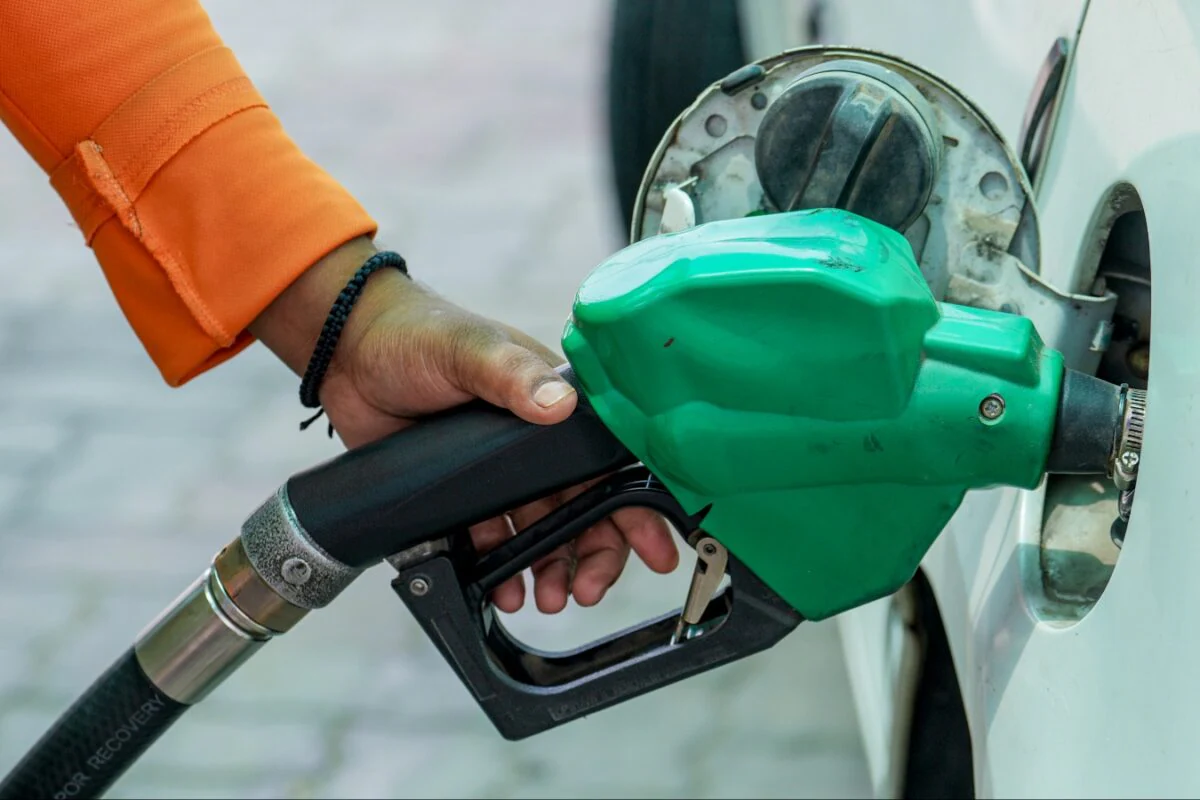
The Ministry of Law and Justice, alongside the Office of the Attorney General for India, has officially quashed rumors regarding the status of the country’s flagship green energy transition. Issuing an urgent, comprehensive briefing directly following proceedings in the Supreme Court, the central government explicitly clarified that India’s 20 percent Ethanol-Blended Petrol (E20) program is an absolute national policy mandate—completely rejecting false claims labeling it as an “ongoing experiment.”
The issue erupted after widespread, incorrect media reports alleged that Attorney General R. Venkataramani had told a Supreme Court bench that the full mechanical and economic impact of E20 was still under evaluation as a temporary trial. Denying the claims in absolute terms, the government verified that the legal matter was purely a contractual supply dispute between Oil Marketing Companies (OMCs) like BPCL and multi-regional distilleries regarding localized ethanol allocation quotas for the 2025–26 Ethanol Supply Year (ESY).
Dispelling Public Misconceptions Around Engine Safety
The central government’s proactive clarification serves as a powerful reassurance to millions of vehicle owners across the country. Over the past year, misinformation circulating across social media platforms has sparked public anxiety, with unsubstantiated claims suggesting that E20 fuel causes severe engine corrosion, voids standard manufacture warranties, or invalidates motor insurance claims.
The Ministry of Petroleum and Natural Gas has aggressively dismissed these concerns. Ethanol blending is a highly standardized, globally recognized engineering practice relied upon by major global economies, including the United States, Brazil, and Japan.
To ensure seamless integration, the Indian government coordinated with automakers years in advance. Consequently, all vehicles manufactured in India from April 2023 onward are fully optimized at the factory level with updated fuel lines, modified ECU maps, and corrosion-resistant seals specifically engineered to run on E20 fuel without any long-term mechanical degradation.
Comparative Overview of India’s Ethanol Blending Evolution
To understand the scale of this green energy transition, it is helpful to look at how the country’s fuel standards have evolved alongside global benchmarks:
| Fuel Blend Classification | Ethanol to Petrol Ratio Matrix | Primary Vehicle Compatibility Window | Real-World Operational Status | Major Macroeconomic Impact Vector |
| E5 / E10 Blends | 5% to 10% Ethanol / 90% Petrol | Pre-2023 Legacy Vehicles & Older Engines | Phase-Out Nearing Completion Globally | Initial Reduction in Hydrocarbon Emissions |
| E20 Petrol | 20% Bio-Ethanol / 80% Fossil Fuel | Post-April 2023 / BS6 Phase 2 Compliant | Active Nationwide Standard Baseline | Saves ₹1 Lakh Crore in Import Bills Annually |
| E30 Framework | 30% Bio-Ethanol / 70% Fossil Fuel | Future Flexible-Fuel Vehicles (FFVs) Only | Under Active BIS Notification Review | Boosts Domestic Sugarcane & Grain Markets |
| E85 (Flex-Fuel) | 85% Bio-Ethanol / 15% Fossil Fuel | Dedicated Flex-Fuel Engines & Powertrains | Specialized Pilot Corridors Active | Drastic ~80% Drop in Net Tailpipe Carbon |
The Macro Economics Behind the Green Energy Push
From a national perspective, the shift toward higher bio-ethanol concentration is a critical pillar of India’s long-term strategy for energy independence and economic sustainability. By producing ethanol domestically using agricultural feedstocks—such as sugarcane molasses, broken rice, and surplus food grains—the policy directly supports rural farming communities while creating an insular circular economy.
The Supreme Court has continuously supported this national objective. In a milestone ruling rejecting a previous Public Interest Litigation (PIL) that sought to stop the rollout of blended fuel, a top-court bench observed that the E20 policy was backed by thorough scientific research from elite expert panels.
The court made it clear that decisions regarding alternative fuel mandates are the exclusive domain of the executive branch’s national priorities. With the Bureau of Indian Standards (BIS) already drawing up the preparatory infrastructure for E30 fuel parameters by 2030, the government’s message remains clear: E20 is not a temporary experiment, but the permanent, definitive future of Indian mobility.
