


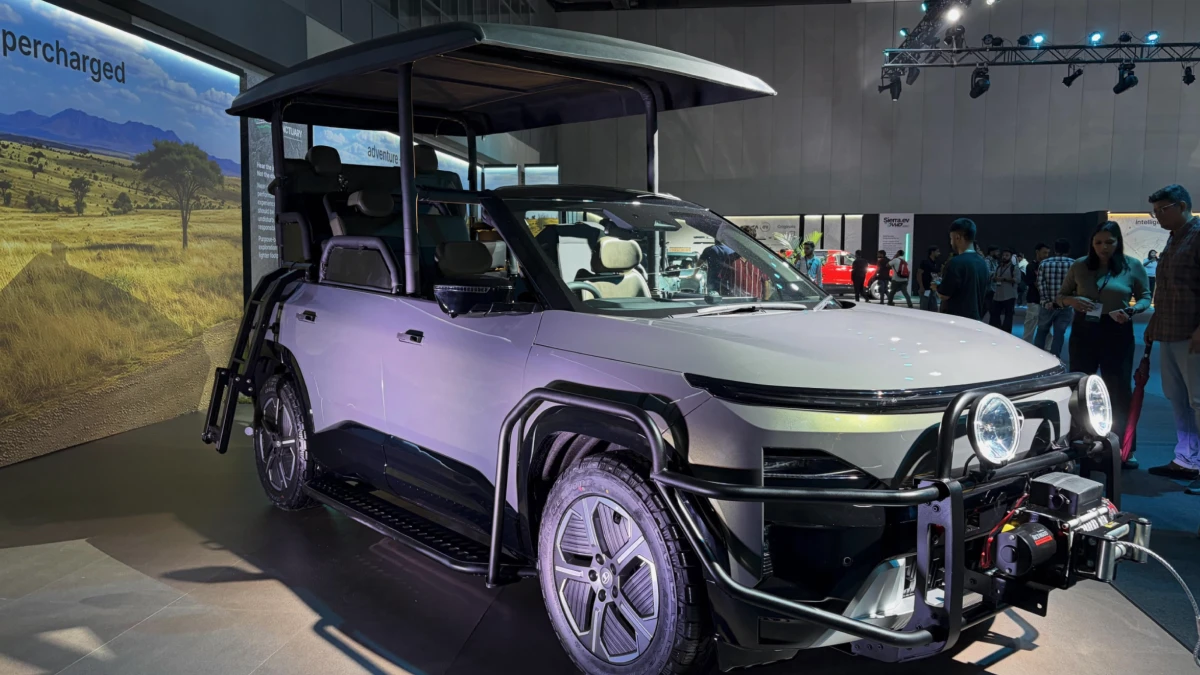
The legendary Sierra badge has officially taken a bold, eco-conscious step into the wild. Alongside the highly anticipated consumer launch of the standard Sierra EV, Tata Motors has surprised the automotive world by pulling the wraps off a highly specialized, purpose-built machine: the Tata Sierra EV Sanctuary Edition.
This is not your average showroom passenger car. Developed from the ground up for eco-tourism and intense wildlife conservation operations, the Sanctuary Edition completely skips the retail market. You cannot walk into a dealership and buy one. Instead, Tata Motors is positioning this rugged, open-top vehicle exclusively for official deployment across India’s premier national parks, tiger reserves, and bird sanctuaries.
Engineered for Minimal Interruption in Delicate Ecosystems
The single greatest hurdle for traditional jungle safari vehicles—such as modified diesel or petrol off-roaders—is their harsh NVH (Noise, Vibration, and Harshness) signatures. Loud internal combustion engines create substantial acoustic stress, routinely startling wildlife and disrupting fragile habitats.
The Sierra EV Sanctuary Edition completely flips this dynamic. Utilizing a highly refined 234 bhp single-motor Rear-Wheel Drive (RWD) electric powertrain supplied by a 63 kWh battery pack, the SUV glides through dense brush in near-absolute silence.
This silent operation allows rangers, naturalists, and photographers to navigate wilderness trails seamlessly, enabling close-range observation without causing defensive flight responses in animals. Additionally, the zero-emission architecture guarantees that pristine reserve air remains totally free from localized carbon monoxide or particulate exhaust soot.
Specialized Safari Drivetrain & Architecture Comparison
To effectively navigate extreme wilderness terrain, the Sanctuary Edition undergoes major structural overhauls, separating itself entirely from standard road-going SUVs:
| Structural & Tactical Metric | Tata Sierra EV Sanctuary Edition | Standard Retail Sierra EV | Typical Legacy Safari Vehicle (Gypsy/Sumo) |
| Body Roof Architecture | Open-Top with Heavy-Duty Roll Cage | Fully Enclosed Monocoque Steel Roof | Open Soft-Top Canvas Layout |
| Cabin Seating Layout | 3-Row Elevated Theatre Seating | 2-Row Executive Lounge / 5-Seater | Side-Facing Rear Bench Seating |
| Door Handle Mechanism | Mechanical Exterior Grab Handles | Touch-Capacitive Flush Handles | Basic Flap Mechanical Locks |
| Tactical Front Accessories | Front & Rear Bull Bars + Electric Winch | Clean Aero Bumper Array | Minimal Steel Protection Bumpers |
| Acoustic Noise Signature | Near-Zero dB Silent Electric Drive | Standard Low-Frequency Electric Hum | High-dB Diesel/Petrol Exhaust Note |
| Reserve Range Potential | Up to 565 km (Claimed MIDC) | 535 km to 665 km (Dual Battery Pack Options) | Variable Based on Auxiliary Fuel Cans |
A Purposely Stripped and Toughened Eco-Tourism Cabin
To transition the Sierra EV into a true safari vehicle, Tata’s engineering team actively chopped away the metal roof, alongside the structural B, C, and D pillars. In their place sits a robust, structural steel roll cage system topped by a durable, flat canopy shade featuring built-in rainwater drainage channels and drop-down transparent storm curtains for heavy monsoon tracking.
Inside, passenger accessibility and vision take center stage. The second and third rows are configured in a unique, highly staggered theatre seating format. By placing the rear seats noticeably higher than the front row, every occupant gets an unobstructed, panoramic view over the driver’s head—critical for spotters trying to track camouflaged fauna. Backseat entry is simplified via robust side running boards and a rear-mounted retractable ladder.
Crucially, the interior relies strictly on water-resistant, ultra-durable washdown vinyl upholstery, completely eliminating delicate electronic switchgear or plush fabrics that would quickly succumb to dust, mud, or moisture.
Even the exterior handles have been modified; the sleek, flush-fitting electronic door handles found on the retail Sierra EV have been swapped for heavy-duty, fixed mechanical grab handles. In high-stakes wilderness environments, rangers need immediate, foolproof cabin access without waiting for electronic sensors to wake up.
Tactical Upgrades for Unforgiving Forest Trails
Ground clearance is substantially raised, allowing the SUV to straddle deep ruts and boulder-strewn dry riverbeds easily. The vehicle rides on rugged 18-inch wheels wrapped in thick all-terrain safari tires with reinforced sidewalls to prevent puncture failures from sharp rocks or thorns.
The front fascia receives an integrated steel bull bar housing an industrial electric recovery winch, allowing the vehicle to pull itself or stuck convoy partners out of heavy mud traps. Lighting is also tailored for nocturnal tracking; high-intensity lower bumper fog lights supplement the main beam, while a pair of rear-mounted floodlights illuminate dark trails while reversing.
Combined with an advanced 360-degree camera system featuring a transparent under-body view, the Sierra EV Sanctuary Edition sets a new benchmark for low-impact, high-efficiency wildlife conservation tracking.
For a visual breakdown of how this specialized open-top canopy and roll cage layout look in real-world environments, you can check out this Tata Sierra EV Sanctuary Edition overview. This brief walkthrough highlights the unique exterior modifications, the rugged mechanical door handles, and the tactical recovery winch mounted directly to the front bull bar.
