


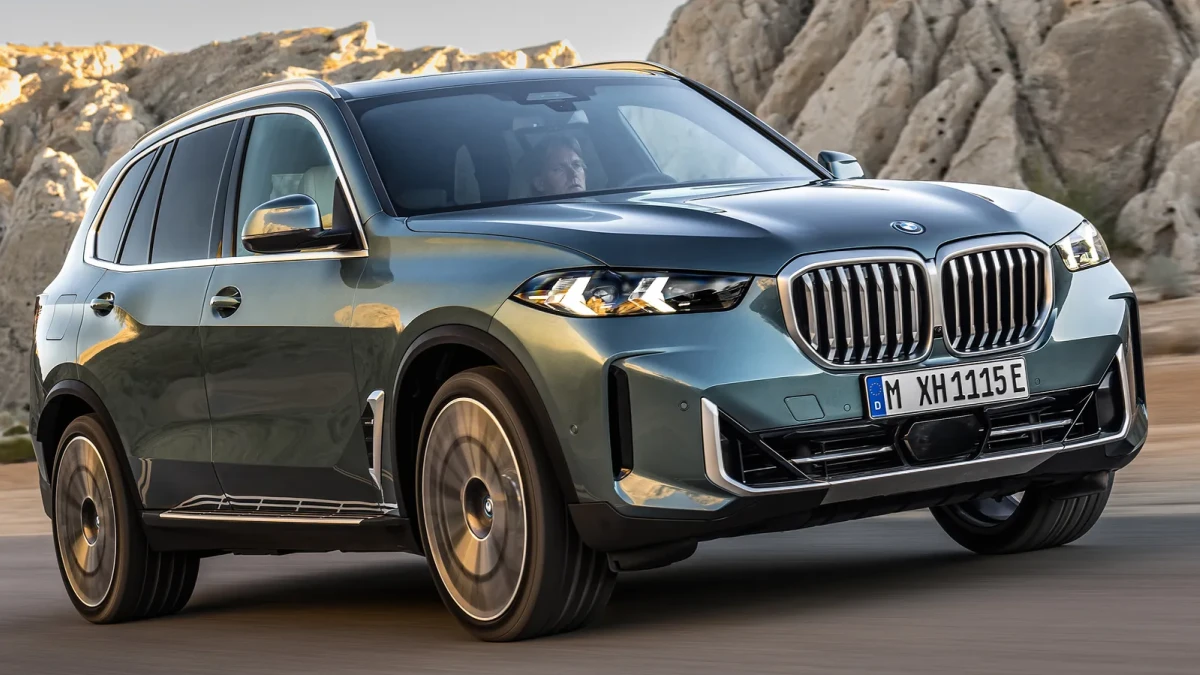
The Indian luxury car buyer is unlike almost any other in the world. While North American and European owners prefer to spend their time in the driver’s seat, premium car buyers in India are overwhelmingly chauffeur-driven. This single cultural preference has completely shifted product strategies for global luxury brands.
Recognizing that rear-seat real estate is the ultimate luxury currency, BMW India is officially expanding its stretched footprint. The German automaker has confirmed that the upcoming, fifth-generation 2028 BMW X5 will launch in India exclusively in Long Wheelbase (LWB) form.
Borrowing China’s Secret Weapon for Indian Chauffeurs
Stretching an SUV’s wheelbase is a complex engineering challenge, but BMW is saving massive research and development time by looking eastward. India will receive the heavily modified variant originally engineered exclusively for the Chinese market.
Historically, the standard wheelbase version of the X5 has faced criticism from Indian buyers for its remarkably stiff, upright second-row bench, which completely lacks backrest recline functionality and offers mediocre under-thigh support.
The upcoming LWB variant completely addresses this flaw. By stretching the wheelbase by an expected 130 mm, the additional length is entirely used to expand second-row knee room. The extra structural space allows BMW to install much deeper, plushly padded executive seats that recline dynamically, feature extended under-thigh support extensions, and feature longer rear door openings for effortless ingress and egress.
The Stretched Executive SUV Segment Comparison
By moving to a dedicated long-wheelbase platform, the next-gen X5 alters the competitive dynamics of the mid-size luxury SUV class:
| Luxury SUV Contender | Platform Wheelbase Setup | Core Infotainment & AI Tech | Standard Rear Seat Highlights | Estimated Price Range (Ex-Showroom) | Expected Launch Window |
| BMW X5 LWB (Next-Gen) | Stretched (China-Spec) | Panoramic Vision, OS 9 | Power Recline, Extended Cushion | ₹1.05 Crore – ₹1.25 Crore | H2 2027 |
| Mercedes-Benz GLE | Standard Long Wheelbase | MBUX Twin Screens | Power-Adjustable Outer Seats | ₹1.00 Crore – ₹1.17 Crore | Available Now |
| Audi Q7 (Facelift) | Standard Global Platform | Triple-Screen Virtual Cockpit | 7-Seat Layout, Sliding Row | ₹87.20 Lakh – ₹96.15 Lakh | Available Now |
| Volvo XC90 | Standard Global Platform | Portrait Google-Native Display | Fixed 3rd Row, Orthopedic Seats | ₹1.01 Crore – ₹1.10 Crore | Available Now |
Neue Klasse Styling and a Minimalist Cabin
Visually, the next-generation X5 represents a massive departure from the current model’s evolutionary look. It will stand as one of the first internal combustion engine (ICE) models to adopt BMW’s highly futuristic “Neue Klasse” design philosophy.
Up front, the traditional large vertical grilles are replaced by a wide, horizontally integrated front fascia that houses both the iconic kidney elements (complete with “Iconic Glow” illumination) and a striking, multi-layered X-shaped LED headlamp signature. The side profile loses its traditional split-tailgate rear hatch arrangement, moving to a cleaner single-piece power tailgate beneath wide, wraparound digital LED light bars.
Inside, the physical cabin undergoes a complete digital cleaning. Following design trends set by the upcoming iX3 electric vehicle, the traditional driver instrument cluster dashboard housing is gone.
Instead, essential driving data is handled by BMW Panoramic Vision—a sharp, full-width heads-up display projecting directly onto a dark-tinted strip at the absolute base of the front windshield. This is accompanied by a massive central touchscreen running BMW Operating System 9 and a unique, chunky quad-spoke steering wheel.
Five Powertrains on a Unified Platform
Underneath the Neue Klasse sheet metal, the next-gen X5 breaks records by becoming the first BMW model architecture engineered to handle five distinct powertrain types: petrol, diesel, plug-in hybrid (PHEV), battery-electric (badged as the iX5), and eventually hydrogen fuel cell.
For the Indian market, BMW will rely heavily on local assembly via the Completely Knocked Down (CKD) route at their factory in Chennai. The core mechanical lineup will feature heavily updated iterations of their beloved 3.0-litre twin-scroll turbocharged inline-six petrol (B58) and 3.0-litre inline-six turbodiesel engines, both reinforced with 48V mild-hybrid integration and paired with an 8-speed Steptronic gearbox and xDrive all-wheel drive.
Given the massive corporate focus on luxury amenities, there is also a strong possibility that a high-range Plug-in Hybrid (PHEV) version will make its way to local showrooms to offer whisper-quiet, zero-emissions urban city commuting.
