


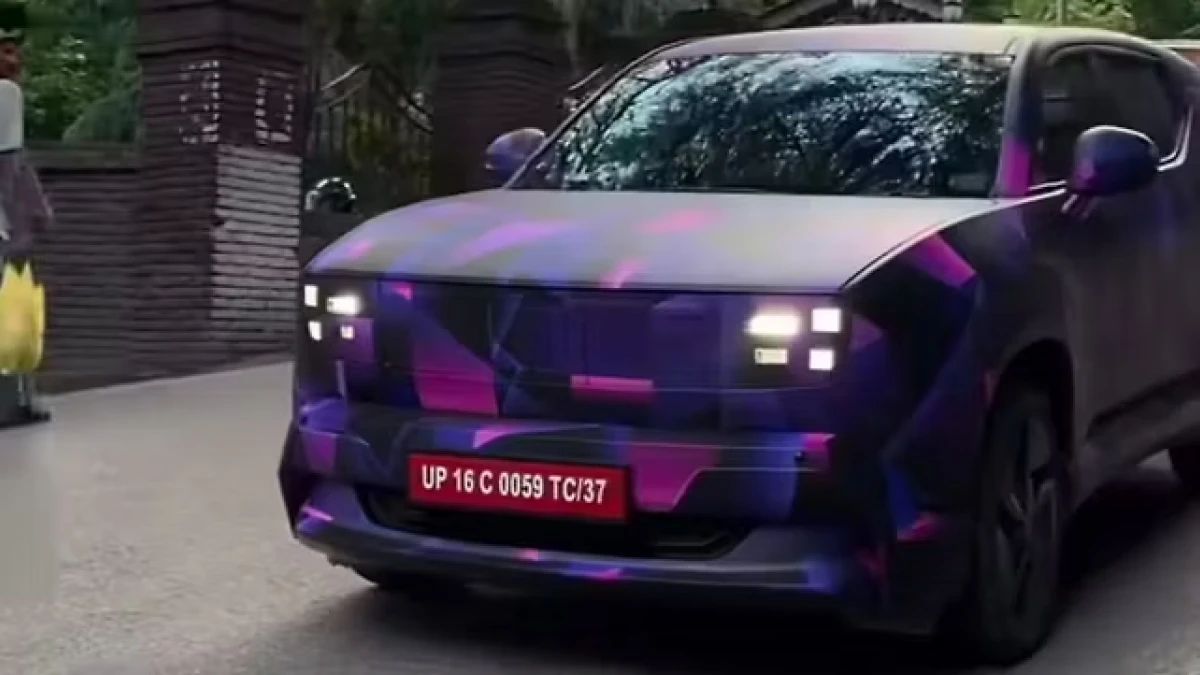
The electric vehicle segment is rapidly shifting from early-adopter novelty to mass-market warfare. While Honda has traditionally taken a measured, deliberate approach to absolute electrification, the Japanese automaker is preparing a significant product offensive. Based on the futuristic concept showcased at the 2025 Japan Mobility Show, the production-bound Honda 0 Alpha (Zero Alpha) electric SUV has been spotted undergoing high-altitude road testing in Manali.
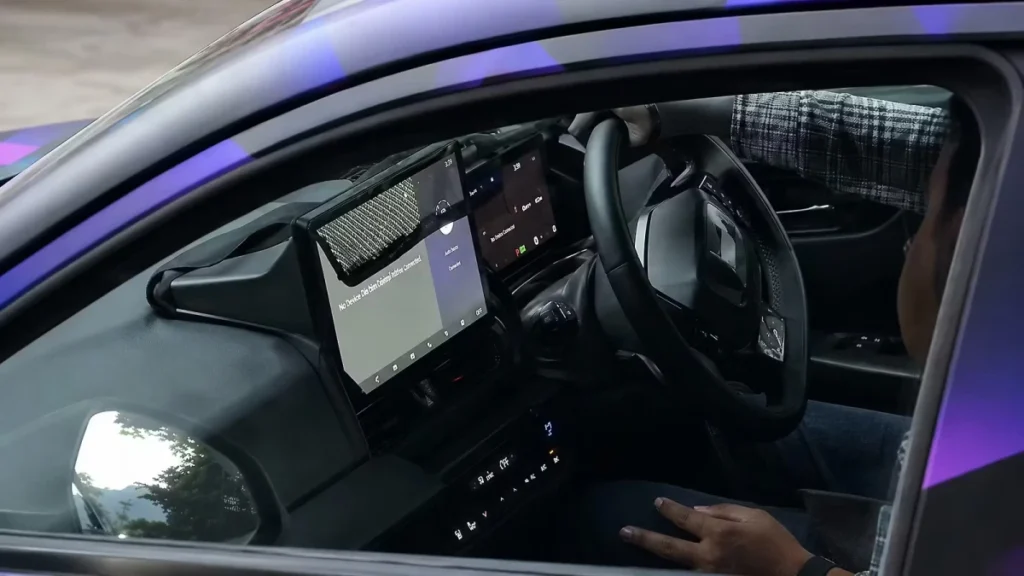
While previous sightings kept observers guessing about the vehicle’s cabin layout, these latest, unrestricted spy shots give us our absolute clearest look yet at Honda’s next-generation interior design language. The leaked images reveal a cabin that is a massive, tech-focused departure from anything currently sitting in Honda’s global or domestic showrooms.
Digital Dominance Meets Physical Usability
The undisputed centerpiece of the Honda 0 Alpha’s cabin is a colossal, landscape-oriented floating touchscreen infotainment system that dominates the upper half of the dashboard. Estimated to measure well over 14 inches, the freestanding display runs an entirely new user interface. Early indicators suggest the operating software is heavily customized with slick, responsive graphics and a layout optimized for real-time EV telemetry, wireless smartphone mirroring, and cloud-based connected car applications.
However, rather than falling into the industry trap of burying essential cabin operations deep within digital sub-menus, Honda’s interior designers have balanced technology with real-world usability. Directly beneath the massive screen sits a dedicated row of mechanical toggle switches and physical buttons.
These hard controls are specifically mapped to operate critical functions like the dual-zone climate control system, defrosters, and ventilated seats. This smart design choice allows drivers to adjust core cabin environments purely by muscle memory without taking their eyes off the road.
A Driver-Centric Cockpit
Behind the newly designed, chunky three-spoke flat-bottom steering wheel, the driver-centric theme continues. Instead of utilizing a single massive panoramic screen that stretches across the entire dash, Honda has opted for a split dual-display system. The driver receives a dedicated, vertically-oriented digital instrument cluster positioned tightly within their primary line of sight, keeping track of vehicle speed, battery state-of-charge (SoC), and real-time navigation cues.
The steering wheel itself features a clean layout with multi-function capacitive controls flanking both sides. Notably, the test mule retains physical paddle shifters mounted to the steering column. Given the pure-electric nature of the 0 Alpha, these paddles are engineered to dynamically alter the vehicle’s regenerative braking intensity on the fly, allowing drivers to toggle effortlessly between free-wheeling highway cruising and aggressive, one-pedal urban driving.
Premium Midsize Electric SUV Segment Matrix
When the production-spec Honda 0 Alpha hits the market in early 2027, it will enter a fiercely contested C-segment electric SUV space. Here is how its projected positioning stacks up against its core upcoming rivals:
| Upcoming EV Competitor | Expected Battery Pack Capacity | Estimated Real-World Range | Interior Infotainment Philosophy | Core Structural Design |
| Honda 0 Alpha (2027) | 60 kWh – 70 kWh | ~450 Kilometers | 14-Inch+ Floating Screen + Physical Toggles | Boxy, Upright Crossover Silhouette |
| Tata Sierra EV | 60 kWh | ~450 Kilometers | Dual Integrated Screens + Minimalist Dash | Iconic Curved Glass, Classic Retro Stance |
| Hyundai Creta EV | 45 kWh – 50 kWh | ~400 Kilometers | Connected Twin-Screen Panoramic Panel | Traditional Midsize Monocoque SUV |
| Maruti Suzuki e Vitara | 49 kWh – 61 kWh | ~400 to 500 km | Floating Integrated Digital Cockpit | Rugged, Flared Muscular Stance |
| Mahindra BE 6 | 60 kWh – 79 kWh | ~450 to 550 km | Edge-to-Edge Triple Display Cockpit | Aggressive, Low-Slung Coupe-SUV |
Boxy Exterior Form Fact Maximizes Cabin Volume
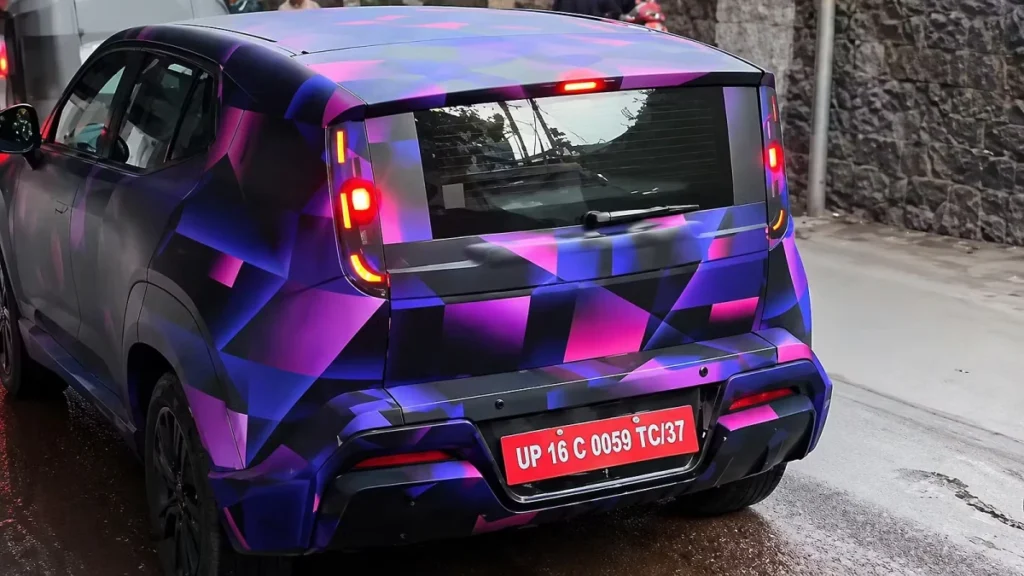
The minimalist, all-black theme of the dashboard is closely tied to the vehicle’s striking exterior layout. The spy images confirm that the 0 Alpha retains the unique, highly practical boxy profile of the original concept. By utilizing short overhangs, a flat roofline, and an almost completely vertical tailgate, Honda has effectively maximized interior passenger volume.
The vehicle’s wide glass area ensures excellent all-around visibility from the cabin, while the flat floorboard architecture inherent to dedicated electric platforms translates to expansive legroom for both front and rear passengers.
Strategic Market Takeaway
The leaked interior of the Honda 0 Alpha proves that the brand is ready to confidently step into the software-defined vehicle era without sacrificing its historic commitment to ergonomic perfection.
Expected to debut with an estimated entry price of approximately ₹20 lakh (ex-showroom), the 0 Alpha balances bleeding-edge screen real estate with traditional physical controls. This combination offers a deeply compelling alternative for mainstream buyers who are hesitant to adopt the completely buttonless, screen-only layouts favored by many modern EV startups.
