


Nostalgia is a powerful currency in the automotive world, but relying on heritage alone rarely guarantees success in the modern market. Tata Motors understands this balance perfectly. Following years of intense speculation, public concept showcases, and heavily camouflaged road testing, the Indian automaker is officially reviving its most iconic nameplate for the electric era. The production-ready Tata Sierra EV is officially scheduled to make its global market debut on June 30, 2026.
Positioned strategically right between the stylistic Curvv EV and the upcoming flagship Harrier EV, the Sierra EV isn’t just another product launch. It represents Tata’s definitive play to dominate the rapidly growing ₹18 lakh to ₹25 lakh premium electric crossover space.
Aesthetic Execution: Modern Cleanliness Meets Nostalgic Lines
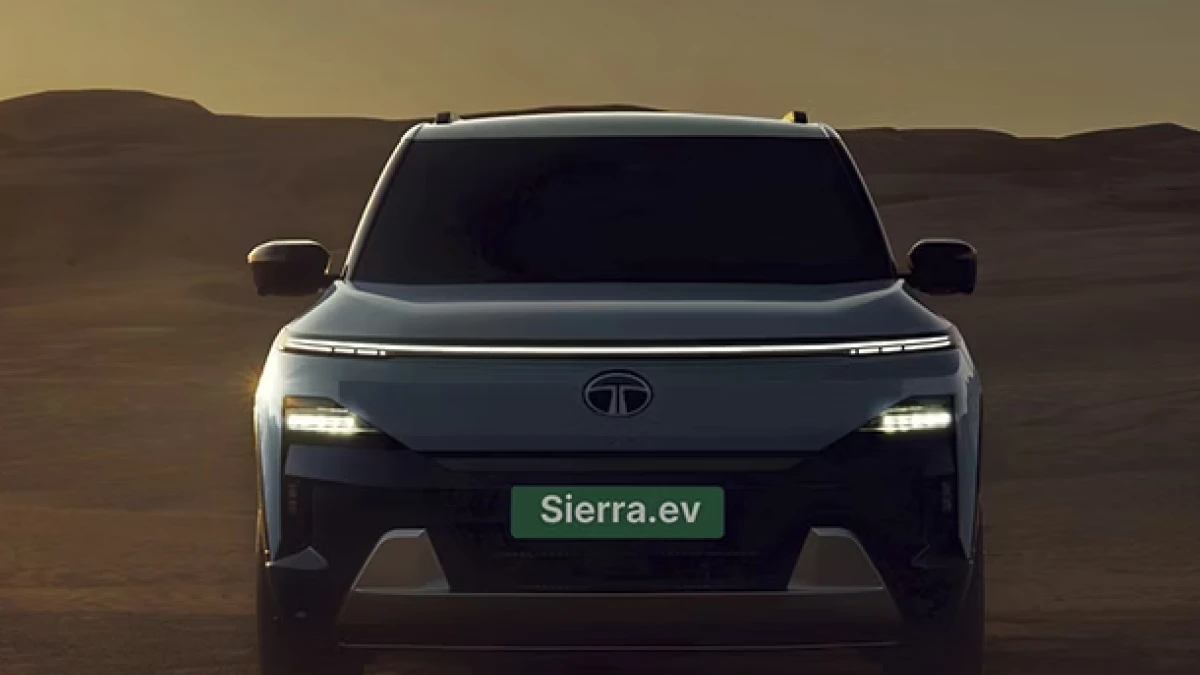
The latest official teaser images released by Tata Motors reveal a design that honors the legendary alpine-window silhouette of the original 1990s three-door Sierra while adapting seamlessly to modern, minimalist EV styling cues. Upfront, the SUV abandons traditional cooling mesh for a completely smooth, blanked-off, body-colored faux grille engineered to minimize high-speed aerodynamic drag.
A sharp, full-width connected LED daytime running light strip stretches across the nose, linking neatly with lower-mounted primary projector headlamp pods housed within a aggressively sculpted front bumper.
The side profile is where the heritage truly comes alive. The production vehicle retains a unique, dark-tinted rear glass canopy that mimics the wrap-around roof aesthetic of its ancestor, paired with modern flush-fitting door handles to keep air flowing smoothly along the body panels. Large, aerodynamically optimized 18-inch alloy wheels fill out the squared-off wheel arches, contributing significantly to a commanding 200mm+ ground clearance stance.
Inside, the cabin completely shifts away from utilitarian roots to create a highly premium, lounge-like tech environment. High-spec variants are set to debut an immersive triple-screen dashboard layout. This includes a 10.25-inch fully digital driver’s instrument cluster, a massive 12.3-inch central floating touchscreen running next-generation connected car software, and a dedicated 12.3-inch display panel integrated directly in front of the co-passenger.
The cabin experience is rounded out by a sprawling panoramic glass sunroof, multi-color ambient lighting, four-zone climate control, ventilated powered seats, and a comprehensive Level 2+ Advanced Driver Assistance Systems (ADAS) safety suite.
Performance Foundation: Dual Motors and Extended Range Capability
Mechanically, the Sierra EV is built upon Tata’s highly advanced, native electric acti.ev+ architecture. This structural layout allows the vehicle to offer multiple drivetrain configurations and battery configurations tailored to different driving preferences.
The standard volume variants will utilize a robust 65 kWh battery pack paired with a single electric motor driving the rear wheels (RWD), offering an estimated real-world driving range of roughly 450 km on a single charge.
For driving enthusiasts and overland buyers, the flagship trims will feature a massive 75 kWh battery pack linked to a high-performance, dual-motor All-Wheel Drive (AWD) configuration. This dual-motor setup is expected to pump out an impressive combined output approaching 220 hp, enabling an effortless 0-100 km/h sprint time of under 7 seconds while keeping a claimed MIDC driving range of up to 550 km.
Premium Midsize EV Segment Competitor Breakdown
When it officially hits the showrooms at the end of June, the Sierra EV will face intense competition from both domestic rivals and major global manufacturers.
| Vehicle Model Alternatives | Underpinning Architecture Base | Available Battery Capacity Options | Drivetrain & Motor Layouts | Claimed Certified Range | Target Price Range (Ex-Showroom) |
| Tata Sierra EV | Tata acti.ev+ Platform | 65 kWh & 75 kWh | Rear-Wheel Drive (RWD) / Dual-Motor AWD | 500 km – 550 km | ₹18.00 Lakh – ₹25.00 Lakh |
| Mahindra XEV 9e | Mahindra INGLO Platform | 59 kWh & 79 kWh | Rear-Wheel Drive (RWD) Only | 490 km – 560 km | ₹21.90 Lakh – ₹31.25 Lakh |
| Hyundai Creta EV | Modified K2 EV Architecture | 45 kWh & 50 kWh | Front-Wheel Drive (FWD) Only | 400 km – 450 km | ₹18.00 Lakh – ₹22.00 Lakh |
| Maruti Suzuki e Vitara | Suzuki YY8 Dedicated EV | 49 kWh & 61 kWh | Front-Wheel Drive (FWD) / e-AWD | 410 km – 500 km | ₹20.00 Lakh – ₹25.00 Lakh |
Strategic Market Takeaway
The upcoming launch of the Sierra EV is a highly calculated business maneuver by Tata Motors. Instead of launching a generic midsize family crossover, Tata is leveraging the deep emotional connection of the Sierra nameplate to create an aspirational lifestyle flagship.
By offering optional dual-motor AWD performance alongside premium lounge tech and an accessible sub-₹20 lakh starting price threshold, the Sierra EV possesses all the necessary ingredients to become the benchmark premium electric vehicle launch of 2026.
