


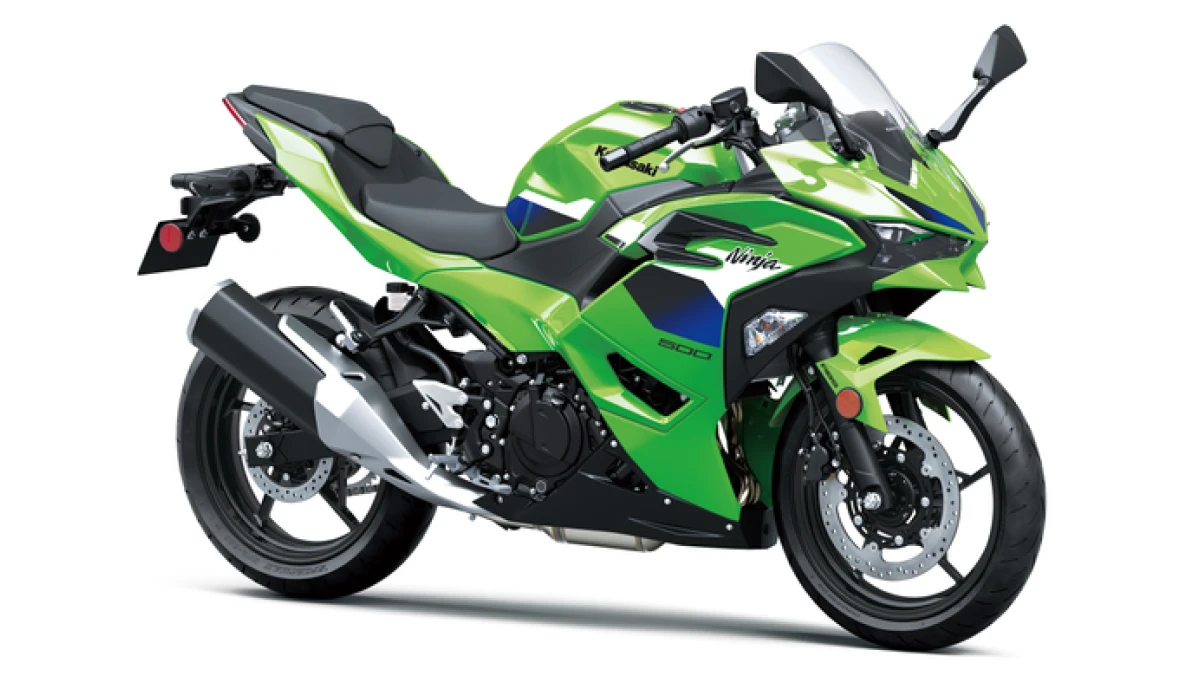
For decades, the sub-500cc sportbike category in India served as a predictable stepping stone. Riders looking for track-focused dynamics or highway-cruising stability knew exactly where to look. However, recent market structural shifts have made the landscape incredibly cutthroat. Stepping directly into this crossfire is the newly launched 2026 Kawasaki Ninja 500, hitting Indian showrooms at a standalone entry point of ₹5.76 lakh (ex-showroom).
While recent internet rumors hinted that this model might be phased out due to tightening environmental compliance, India Kawasaki Motors has officially silenced speculation. This updated iteration brings essential modern fuel compliance and a signature visual overhaul, though it maintains its premium pricing structure.
Visual Maturity: The Ageless Ninja Silhouette
At first glance, the 2026 model makes its identity immediately clear. This year’s release welcomes the return of the iconic, track-inspired Lime Green livery, a colorway that instantly connects this middleweight street machine to its larger World Superbike siblings.
The front fascia is noticeably sharp, discarding the dated design elements of the old Ninja 400 in favor of an aggressive, layered front cowl. This setup features slim dual-LED projector headlamps that give the bike a predatory stance even when parked.
The fairing panels flow seamlessly into a sculpted 14-litre fuel tank, providing excellent knee-grip recesses for aggressive cornering.
Despite its supersport appearance, the ergonomics are surprisingly real-world friendly. Kawasaki has deliberately engineered a relaxed riding triangle. By balancing an elevated clip-on handlebar position with slightly forward-set footpegs and a deeply cushioned 785 mm saddle, the bike accommodates daily city commuting without causing the severe wrist ache typically associated with dedicated track machinery.
The technological suite sees a modern update with an integrated 5-inch LCD instrument console. While it avoids the flashy full-color TFT units found on some competitors, it offers full Bluetooth connectivity via Kawasaki’s Rideology application, delivering real-time call notifications, mail alerts, and detailed telemetric trip logs right to your smartphone.
Mechanical Balance: The Heart of the 451cc Twin
Beneath the signature lime green bodywork sits the primary reason for this motorcycle’s legendary reputation for smoothness: a refined 451cc liquid-cooled parallel-twin engine.
This powerplant utilizes a longer piston stroke to prioritize immediate low-to-mid-range torque rather than forcing riders to chase high RPMs near the redline. It produces a healthy 45 HP at 9,000 RPM and 42.6 Nm of peak torque at 6,000 RPM, transferring power to the rear wheel through a slick 6-speed gearbox equipped with an assist and slipper clutch.
Crucially, the 2026 update introduces full E20 fuel compatibility, allowing the engine to run seamlessly on a 20% ethanol-gasoline blend to meet strict national green mandates.
What truly transforms the riding experience is the bike’s weight distribution. Built on a high-tensile steel trellis frame, the Ninja 500 tips the scales at a remarkably light 157 kg wet curb weight. This featherweight footprint makes it incredibly nimble, turning standard mountain switchbacks or tight city lanes into an absolute breeze.
Suspension duties are handled by dependable 41mm telescopic front forks and a bottom-link rear monoshock with preload adjustability. Braking performance is anchored by a massive 310mm front disc and a 220mm rear disc, managed by a non-switchable dual-channel ABS system.
Segment Performance Comparison
Because it arrives in India via the premium Completely Built Unit (CBU) import channel, the Ninja 500 faces stiff competition from both locally manufactured single-cylinder track tools and twin-cylinder segment leaders.
| Middleweight Contender | Engine Configuration | Peak Power & Torque | Wet Curb Weight | Essential Electronics | Base Ex-Showroom Price |
| Kawasaki Ninja 500 | 451cc Parallel-Twin | 45 HP / 42.6 Nm | 157 kg | LCD, Bluetooth, Dual ABS | ₹5.76 Lakh (CBU) |
| Aprilia RS 457 | 457cc Parallel-Twin | 46.9 HP / 43.5 Nm | 175 kg | TFT, Ride-by-Wire, TC | ₹4.22 Lakh (Local) |
| Yamaha YZF-R3 | 321cc Parallel-Twin | 42 HP / 29.5 Nm | 169 kg | LCD, USD Forks, Dual ABS | ₹4.65 Lakh (CBU) |
| KTM RC 390 | 373cc Single-Cylinder | 43.5 HP / 37 Nm | 172 kg | TFT, Cornering ABS, TC | ₹3.23 Lakh (Local) |
Market Position
The 2026 Kawasaki Ninja 500 occupies an incredibly unique space in the premium motorcycling landscape. On paper, there is no denying that its CBU import status demands a significant financial premium over locally assembled alternatives like the feature-packed Aprilia RS 457.
However, looking past the price tag reveals a highly compelling argument for mechanical refinement. The linear power delivery of the parallel-twin engine, combined with an exceptionally agile 157 kg chassis and comfortable daily ergonomics, makes it a highly usable everyday sports bike.
For riders who value long-term Japanese mechanical reliability, signature styling, and smooth power delivery over maximum tech features, this updated Ninja remains an incredibly premium, character-rich choice.
