


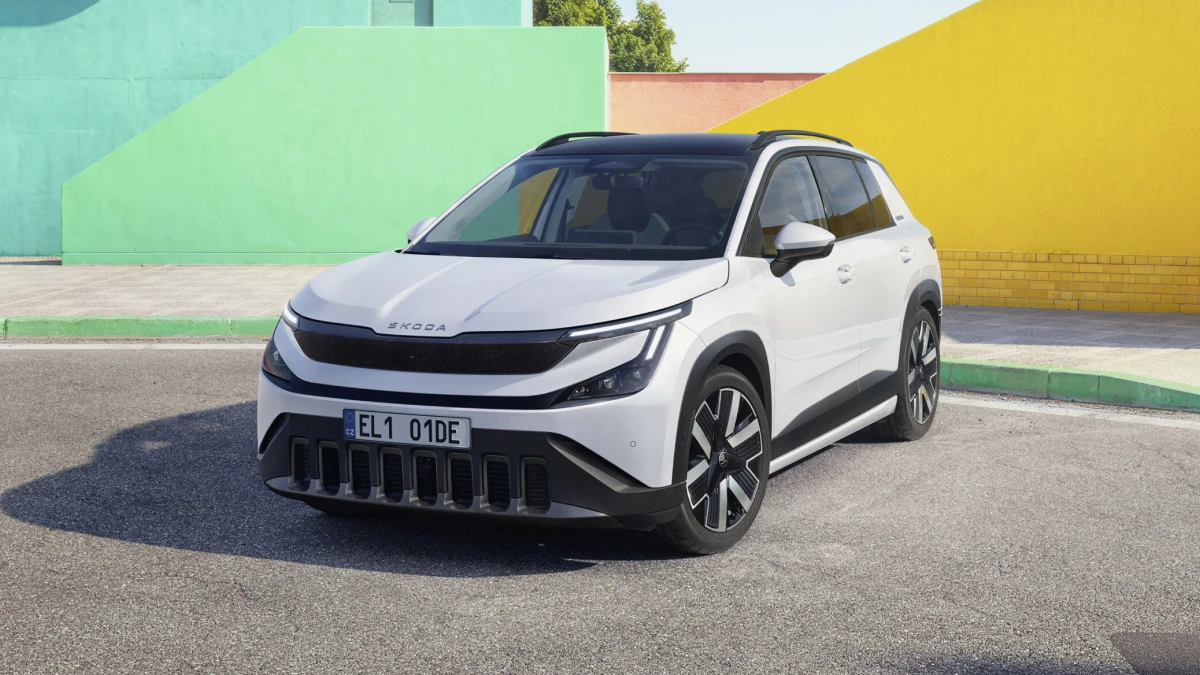
The Indian automotive manufacturing ecosystem is transitioning from a regional supplier to a central node in global vehicle export strategies. In a move that highlights this shift, Skoda Auto is openly evaluating the feasibility of exporting its highly successful, India-made sub-4-meter compact SUV, the Skoda Kylaq, to European markets.
If given the green light by the board, this strategy could position the Pune-built subcompact crossover as one of the most affordable new vehicles available on the European continent, serving as a weapon to counter the aggressive influx of budget Chinese vehicles.
                  Skoda Entry-Level Price Comparison
┌────────────────────────────────────────────────────────────────────────┐
│ 🚗 India-spec Skoda Kylaq (Base Trim)       👉  ~€6,800 ($7,900)       │
├────────────────────────────────────────────────────────────────────────┤
│ 🇪🇺 European Skoda Fabia (Current Entry)    👉  ~€20,000 ($21,500)     │
└────────────────────────────────────────────────────────────────────────┘
*Note: Direct currency conversions. European pricing would rise due to logistics & safety upgrades.
The Business Rationale: A Massive Pricing Vacuum
The driving force behind this potential export plan is pure economics. In Europe, Skoda’s current entry-level model is the Fabia hatchback, which starts just under the €20,000 mark. Meanwhile, the Kylaq retails in India for a starting price of ₹7.59 lakh, which roughly translates to an astonishingly low €6,800.
Skoda Chief Executive Klaus Zellmer recently noted that even when factoring in the inevitable financial burdens of shipping, import duties, and mandatory regulatory compliance, a massive pricing gap remains between the two vehicles. This delta provides a compelling business case to see if selling the vehicle in Europe makes logistical sense.
Production Milestone: The Foundation for Global Scale
Any ambitious export strategy requires a rock-solid, high-volume production foundation, and the Kylaq has already proven its manufacturing viability.
- Production Hub: Skoda Auto Volkswagen India’s cutting-edge facility in Chakan, Pune.
- Volume Milestones: The model crossed the 50,000-unit production milestone within its first year, driving nearly 40% of the entire Skoda-VW Group’s domestic Indian volume.
- Plant Expansion: To accommodate this massive demand, the manufacturing facility’s annual capacity was bumped up by 30% to 255,000 units.
This hyper-localized scale, achieved through deep integration with domestic component suppliers, gives Skoda the exact cost competitiveness needed to make international export margins highly lucrative.
Technical Snapshot: What Europe Would Get
The Kylaq is underpinned by the Volkswagen Group’s MQB-A0-IN platform—a cost-optimized architecture engineered specifically for high-volume markets but built with the core engineering principles of its European counterparts.
                             Powertrain Setup
┌──────────────────────────────────────┐┌──────────────────────────────────────┐
│        1.0L TSI Turbo-Petrol         ││         Transmission Options         │
│     113 hp  |  178 Nm of Torque      ││  6-Speed Manual / 6-Speed Automatic  │
└──────────────────────────────────────┘└──────────────────────────────────────┘
Measuring just 3,995 mm in length, the Kylaq is exceptionally pocket-sized—even shorter than a standard Fabia hatchback—making it highly suited for tight European urban environments. Despite its compact footprint, it boasts a class-leading boot capacity of 446 litres.
The Hurdles: Homologation and Euro 7 Norms
While the economic incentives are clear, moving the Kylaq from the streets of Mumbai to the highways of Munich is not a simple copy-and-paste job. A standard export shipment will require significant engineering upgrades to pass strict European regulatory frameworks:
- Safety Upgrades: While the Indian-spec model secures a strong safety reputation with standard 6 airbags and a robust structural shell, it would require additional active safety systems to clear rigorous Euro NCAP crash testing.
- Emissions Compliance: The 1.0-litre three-cylinder engine would need modifications to meet strict Euro 7 emissions standards.
- Fleet Carbon Balances: Skoda would need to balance the internal combustion engine emissions of the imported Kylaq by scaling up sales of its successful electric vehicles in Europe, such as the Elroq and Enyaq.
To visually underscore the vehicle’s structural endurance, Skoda recently flagged off an ambitious 18,000-kilometre overland expedition dubbed #KylaqP2P, driving a series-production Kylaq directly from the factory gates in Pune all the way to Skoda’s global headquarters in Prague.
If the exploratory phase transitions into an official product launch, the Kylaq will join an elite club of India-made global vehicles, proving that the Indian automotive ecosystem can engineer cars that meet the stringent demands of mature Western markets without losing their structural or economic edge.
