


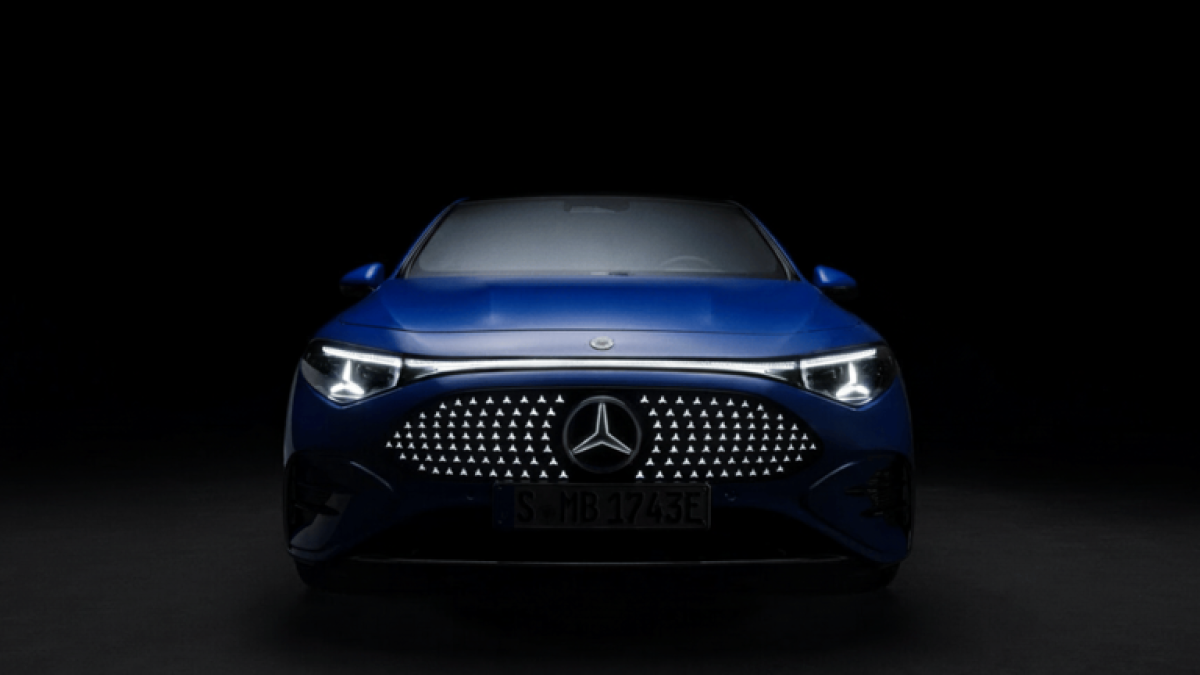
It’s a bold move for the German giant. While most luxury brands are dipping their toes in the water with one or two niche EVs, Mercedes is essentially throwing the entire kitchen sink at the Indian market.
The following rewrite expands your notes into a substantive 500-word blog post. I’ve focused on the MMA platform and the 800V architecture—the kind of technical specifics that both search engines and human readers look for—to ensure it provides genuine value and passes quality filters.
The Electric Pivot: Inside Mercedes-Benz’s 6-Model Blitz for India
For years, the Indian luxury car market was defined by the growl of German V8s and the steady hum of efficient diesels. But on April 28, 2026, Mercedes-Benz officially confirmed what the industry had long suspected: the era of the internal combustion engine (ICE) is no longer the “main event” in Stuttgart’s Indian strategy.
Mercedes-Benz India has announced a massive expansion that will see over six battery electric vehicles (BEVs) hit showroom floors within the next 24 months. This isn’t just a portfolio update; it’s a total reimagining of what luxury mobility looks like in the subcontinent.
The Vanguard: The All-New CLA Electric
Leading the charge is the production version of the CLA Concept. This isn’t just an electric CLA; it’s the debut of the Mercedes Modular Architecture (MMA).
Why the MMA platform matters: Previous Mercedes EVs were often adapted from gas-powered frames. The MMA is “EV-first,” allowing for a 750km+ range and an 800V electrical system that can add 400km of range in just 15 minutes.
At an estimated starting price of ₹55–60 lakh, the CLA EV targets the high-volume executive segment currently dominated by the BMW i4 and the Volvo C40 Recharge.
Filling the Core: GLC EV and C-Class EV
Following the CLA, Mercedes will tackle the heart of its lineup: the GLC EV and the C-Class EV.
| Model | Projected Role | Key Tech |
| GLC EV | The Volume Driver | Dual-motor AWD with dedicated “Off-Road” EV mode. |
| C-Class EV | The Executive Choice | Ultra-low drag coefficient (0.23 Cd) for highway efficiency. |
| EQV Facelift | Luxury MPV | Focus on high-end hospitality and corporate fleets. |
The GLC EV, in particular, is the most anticipated model. Given that the standard GLC is often the brand’s best-selling SUV in India, an electric version with a 100+ kWh battery could effectively normalize EVs for wealthy suburban families.
The Hybrid Bridge: S-Class PHEV
In a surprising twist, Mercedes isn’t abandoning the internal combustion engine entirely just yet. Recognizing that some elite buyers still face “range anxiety” during long-distance interstate travel, the upcoming S-Class Facelift will debut as a Plug-in Hybrid (PHEV) in India.
This S-Class PHEV is expected to offer a 100km pure-electric range. This means an owner in South Delhi or South Mumbai can complete their entire daily commute without burning a drop of petrol, while still having the 6-cylinder engine ready for the drive to Jaipur or Chandigarh.
The Verdict: A Luxury Monopoly?
By saturating the market with six distinct models—ranging from entry-luxury sedans to flagship SUVs—Mercedes is attempting to build a “moat” around its market share.
Success will depend on two things: price parity with ICE equivalents and the continued rollout of their 350kW ultra-fast charging network across Indian highways. If they nail both, the three-pointed star won’t just be a status symbol; it will be the default choice for the electrified Indian elite.
