


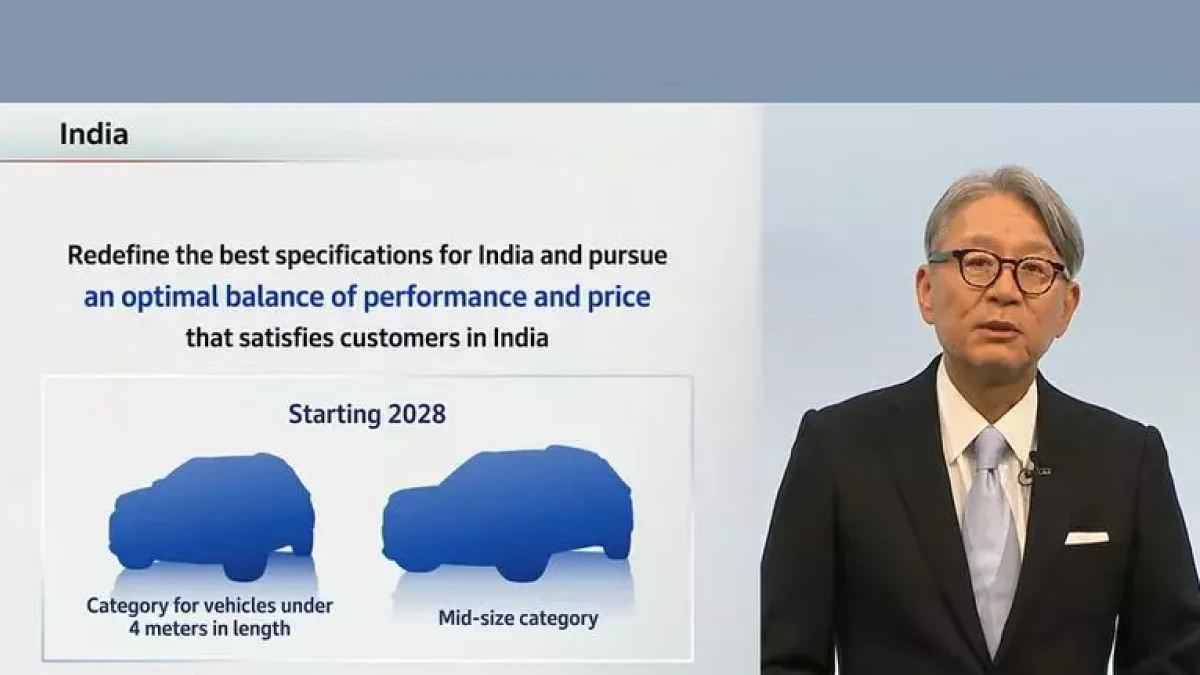
For the past few years, Honda’s presence in India’s most explosive automotive segment—the sub-4 meter SUV—has been noticeably absent. After the departure of the WR-V, the Japanese automaker focused its energy on the mid-size Elevate. However, during a global financial briefing in Tokyo on May 14, 2026, Honda CEO Toshihiro Mibe officially confirmed that the wait for a compact Honda SUV is almost over.
Scheduled for a 2028 launch, this new model marks a definitive shift in Honda’s strategy. No longer relying on global adaptations, Honda is developing this vehicle specifically for the Indian consumer, aiming to regain the volume it once enjoyed during the peak of the Jazz and City era.
Bridging the Gap: Why 2028?
The 2028 timeline might seem distant, but it signifies a fundamental “ground-up” development approach. Honda is currently engineering a brand-new modular architecture, internally referred to as the PF2 platform. Unlike the previous WR-V, which was a crossover derivative of a hatchback, the upcoming SUV will be a “purpose-built” machine.
This new platform is designed to be future-proof, allowing Honda to offer multiple powertrain options, including high-efficiency internal combustion engines (ICE) and self-charging hybrids. By the time it launches, the PF2 platform will be the backbone of Honda’s Indian lineup, supporting everything from this compact SUV to a future 7-seater flagship.
The Battle of the Titans: Rivals in Sight
When it arrives, the Honda compact SUV will step into the most crowded ring in the Indian market. It is set to challenge a legendary roster of incumbents:
- Tata Nexon: The safety benchmark and EV leader.
- Maruti Suzuki Brezza: The king of reliability and fuel efficiency.
- Kia Sonet & Hyundai Venue: The tech-heavy Korean duo.
Honda’s “secret weapon” in this fight will likely be its packaging. Following the “Man Maximum, Machine Minimum” philosophy, the new SUV is expected to offer the best-in-class cabin space and ergonomics—areas where the current competition often feels cramped.
The Powertrain Strategy: Efficiency is Key
While technical specifics remain under wraps, industry insiders suggest a two-pronged engine strategy. To keep entry-level pricing competitive (estimated to start around ₹8.99 lakh), Honda will likely utilize a refined version of its 1.2L i-VTEC petrol engine.
However, the real excitement lies in the potential for a strong hybrid variant. With India’s fuel prices remaining high and the push for green mobility intensifying, a “small-format” hybrid system could give Honda a unique selling point that neither the Nexon nor the Brezza currently offers in a self-charging format.
The Verdict: A New Chapter
Honda’s commitment to a 2028 launch is a clear signal to Indian buyers: the brand is not going anywhere. By focusing on localization and affordability through the PF2 platform, Honda is preparing to reclaim its status as a premium yet accessible choice for the Indian middle class.
Will the promise of Honda’s legendary reliability and a new modular platform be enough to sway you away from the current segment leaders? Let us know your thoughts in the comments!
Quick Comparison: The 2028 Landscape
| Feature | Honda Compact SUV (Est.) | Current Segment Average |
| Platform | New PF2 Modular | Mixed (Legacy/Global) |
| Safety | Aiming for 5-Star BNCAP | 3 to 5 Stars |
| Powertrain | i-VTEC / HEV Hybrid | Petrol / Diesel / CNG |
| Launch | Early 2028 | Available Now |
