


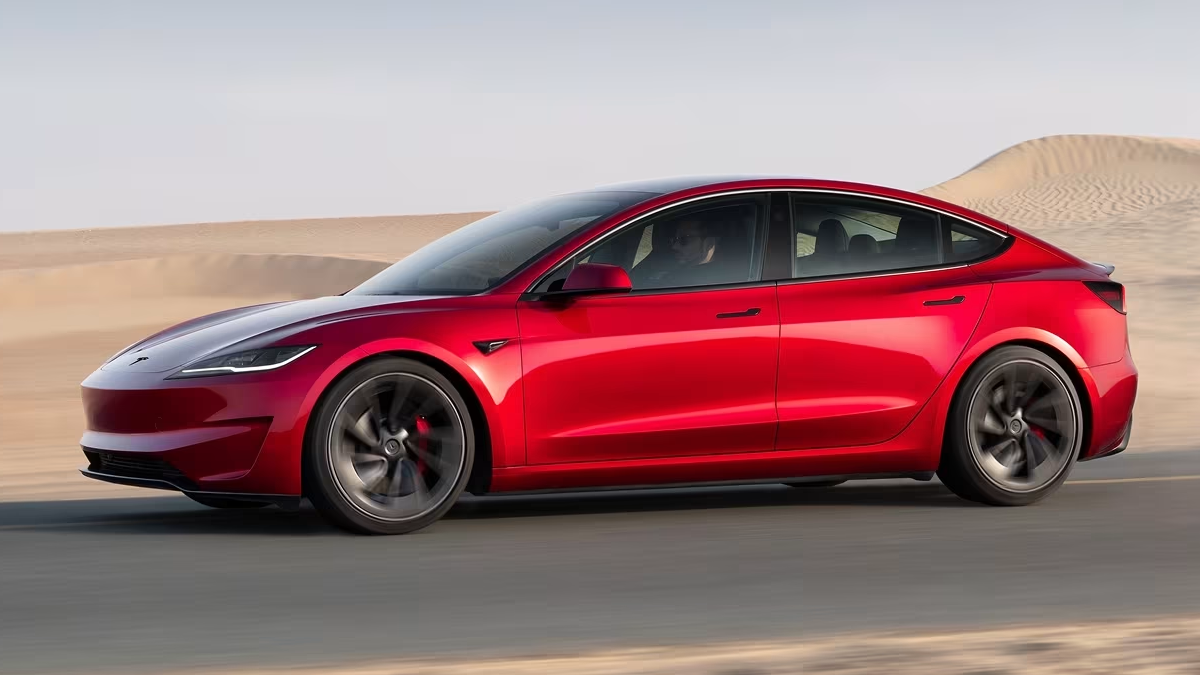
The battle for global electric vehicle (EV) supremacy has taken another dramatic turn. After losing its title as the world’s top battery-electric vehicle (BEV) seller to China’s BYD in late 2025, Tesla has officially reclaimed the throne in the first quarter of 2026. While the broader automotive market has faced a cooling “hype cycle,” Tesla managed to navigate the headwinds more effectively than its closest rival. This shift signals a new phase of the “EV War”—one defined not just by who can build the most cars, but who can maintain demand amid shifting government policies and intense price competition.
The Numbers Behind the Comeback
In the first three months of 2026, Tesla reported global deliveries of 358,023 vehicles. This represents a modest but critical 6.5% year-on-year increase compared to Q1 2025. As has been the case for several years, the “entry-level” duo—the Model 3 and Model Y—continued to do the heavy lifting, accounting for roughly 95% of total sales.
In contrast, BYD saw a significant cooling of its record-breaking momentum. The Shenzhen-based giant reported 310,389 pure battery-electric sales for the same period. While BYD’s total “New Energy Vehicle” (NEV) numbers—which include plug-in hybrids—remain massive at over 700,000 units, their pure BEV sales plummeted by more than 25% year-on-year. This allowed Tesla to open up a lead of roughly 47,600 units, firmly re-establishing its dominance in the pure-electric segment.
Why the Sudden Shift?
The reversal of fortunes in Q1 2026 can be attributed to two major factors: Chinese policy changes and Tesla’s supply chain resilience.
- China’s Tax Reality Check: A major headwind for BYD came from its home turf. Starting January 1, 2026, the Chinese government phased out several long-standing EV tax breaks. The previous 10% sales tax exemption was slashed to 5%, effectively raising the price of a mid-range EV by thousands of yuan overnight. This led many consumers to “pull forward” their purchases into late 2025, leaving Q1 2026 relatively dry.
- Tesla’s Strategic Trimming: Tesla recently discontinued the ageing Model S and Model X lines to focus production capacity on its higher-margin “Juniper” Model Y refresh and the upcoming Cybercab robotaxi. By streamlining its portfolio, Tesla improved its manufacturing “days-of-inventory” and focused on global markets where BYD has yet to establish a deep footprint, such as Japan and parts of Europe.
The Road Ahead: 2026 and Beyond
Despite reclaiming the lead, Tesla isn’t out of the woods. The Q1 results were slightly below some analyst expectations, reflecting a global market that is becoming more price-sensitive.
As we move into the second half of the year, the focus for both companies will shift toward affordability. Tesla is prepping for its next-generation “Redwood” platform, while BYD is aggressively expanding its manufacturing presence in Hungary and Brazil to circumvent Western tariffs.
The Verdict: Tesla has proven it still has the brand pull to lead the pack, but with BYD’s massive production scale, the crown could easily change hands again by year-end.
Is Tesla’s lead sustainable, or will BYD’s hybrid-heavy strategy eventually win the long game? Share your thoughts in the comments!
