


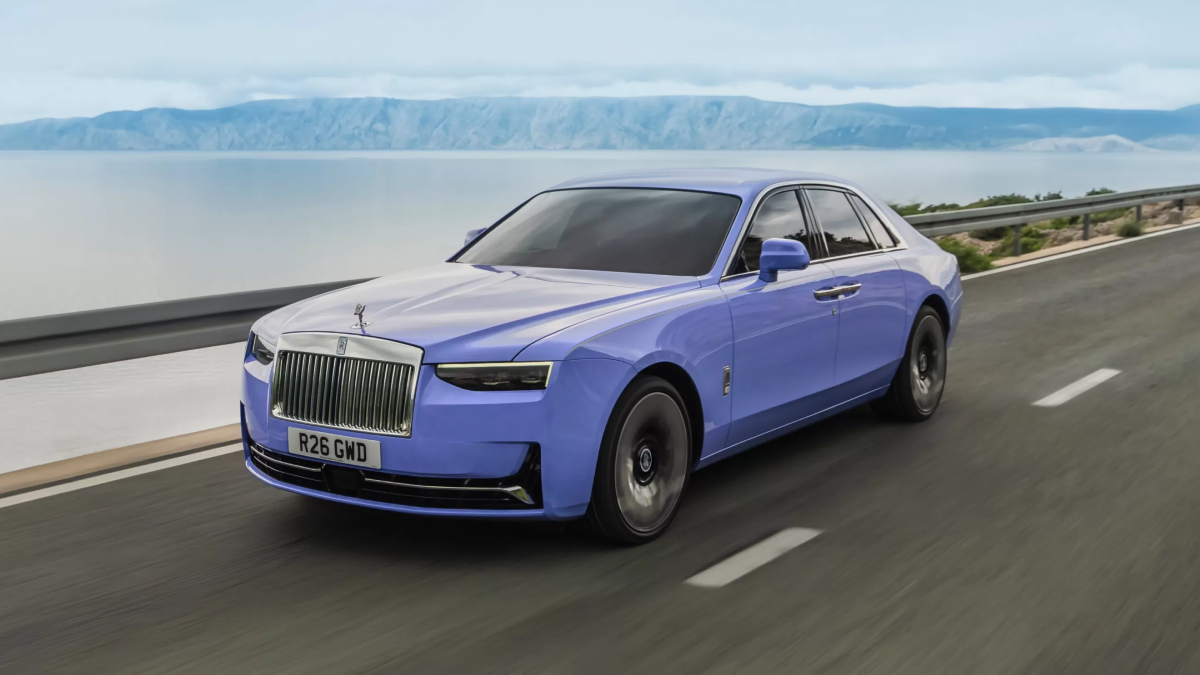
In a move that has sent shockwaves through the ultra-luxury automotive sector, Rolls-Royce Motor Cars has officially scrapped its high-profile pledge to become a fully electric brand by 2030. The announcement, made by CEO Chris Brownridge on March 18, 2026, marks a dramatic U-turn for a brand that, only four years ago, claimed it would leave the internal combustion engine (ICE) behind forever.
For the world’s most elite car buyers, this isn’t just a corporate strategy shift; it’s the preservation of a mechanical legacy. The iconic 6.75-litre twin-turbocharged V12—the silent, effortless “heart” of the Phantom and Cullinan—has been granted a reprieve for the foreseeable future.
The “Spectre” Effect: Hard Data Behind the Reversal
The decision to abandon the 2030 deadline wasn’t made in a vacuum. It was driven by the cold reality of the sales charts. When the Rolls-Royce Spectre (the brand’s first EV) launched in late 2023, initial interest was sky-high. However, the momentum has cooled significantly.
According to the latest BMW Group annual report, Spectre deliveries in 2025 fell to just 1,002 units—a staggering 47% drop compared to the 1,890 units moved in 2024. While the Spectre remains a technical marvel, it seems the “first-mover” enthusiast demand has been satisfied, leaving a core audience that remains deeply attached to the V12’s character. As Brownridge succinctly put it: “For every client that loves an electric vehicle, there is one who does not.”
Why the Strategy Shift?
Rolls-Royce cited two primary pillars for this recalibration:
- Legislative Softening: Since the original pledge was made in 2021, global regulations have shifted. The European Union has effectively relaxed its 2035 combustion engine phase-out, and the U.S. federal government has pulled back on several EV-only mandates. This has given luxury manufacturers the breathing room to prioritize flexibility over rigid deadlines.
- The “V12” Factor: For many Rolls-Royce clients, the V12 engine is more than just a power source; it is a symbol of engineering pedigree. Unlike mass-market buyers, ultra-high-net-worth individuals aren’t concerned with fuel costs or public charging infrastructure. They value the mechanical “soul” of the engine, and Rolls-Royce has realized that forcing a transition could alienate its most loyal patrons.
What Happens to the Electric Lineup?
Don’t expect the Spectre to disappear. Rolls-Royce is not “anti-EV”; it is simply “pro-choice.” The Spectre will continue to be a flagship offering, and work is already underway on the brand’s first electric SUV, which is currently undergoing winter testing in Sweden.
However, rather than replacing the current lineup, these electric models will exist alongside the V12-powered Ghost, Phantom, and Cullinan. The goal is now to “build what is ordered,” allowing the customer—not a calendar—to dictate the transition.
The Bigger Picture: A Luxury Retreat
Rolls-Royce is not alone in this retreat. In early 2026, Lamborghini canceled its plan for its first series-produced EV (the Lanzador), and Bentley pushed its EV-only target from 2030 to 2035 before abandoning the fixed date entirely. The industry consensus is clear: in the ultra-luxury world, the era of the internal combustion engine isn’t over—it’s entering a new, exclusive chapter.
