


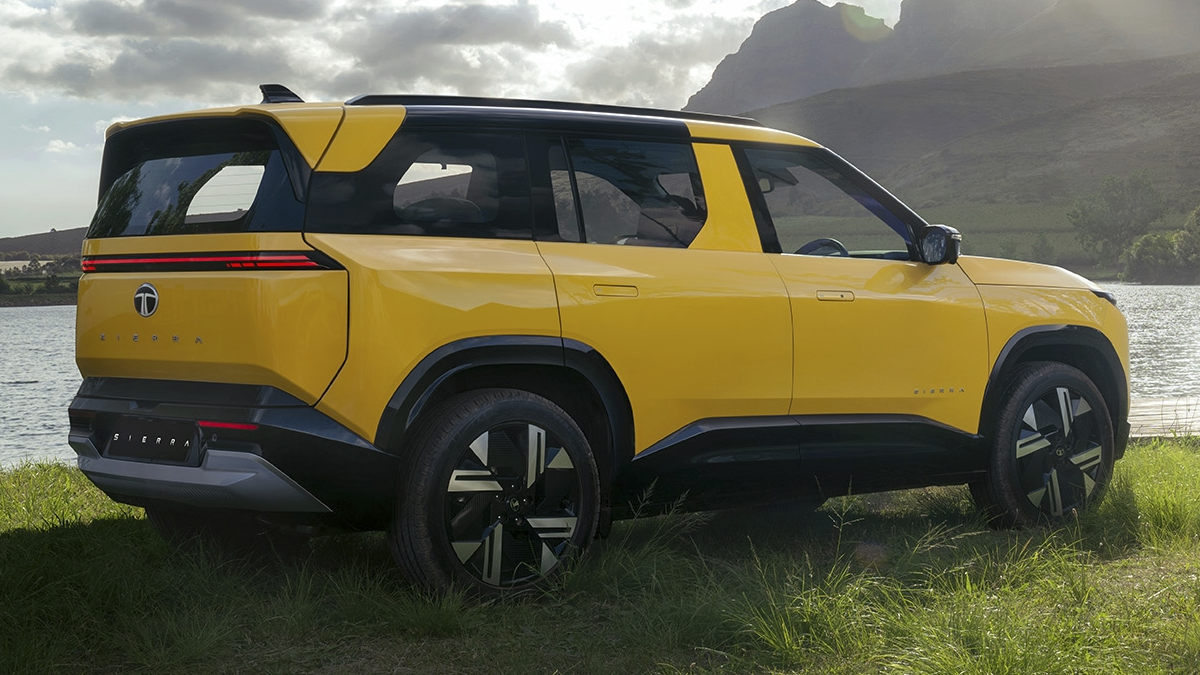
Tata Motors has officially confirmed that deliveries of the reincarnated Sierra SUV have crossed the 10,000-unit milestone in the Indian market. This achievement, announced on March 2, 2026, is particularly significant as it covers a span of just six weeks since official handovers commenced on January 15. The rapid scale-up underscores the massive pent-up demand for one of India’s most nostalgic automotive nameplates.
While the “Born Electric” Sierra.ev is the subject of much global speculation, it is the internal combustion engine (ICE) version—available in 1.5L GDI turbo-petrol and 1.5L diesel variants—that is currently driving these volume records.
Decoding the 100,000 Booking Surge
The 10,000-delivery mark is only a small fraction of the Sierra’s total order bank. Within 24 hours of bookings opening in late December 2025, Tata Motors recorded over 70,000 reservations. As of late February, that number has surged past 100,000 units.
The primary driver for this demand is the Sierra’s unique “Lifestyle SUV” positioning. Unlike the more traditional boxy silhouettes of its rivals, the 2026 Sierra utilizes a wraparound rear glass design—a direct homage to the 1990s original—while sitting on the sophisticated ARGOS (All Terrain Ready Omni Geometry Scalable) platform. This architecture allows the Sierra to offer a refined ride quality that bridges the gap between the urban-centric Curvv and the rugged, heavy-duty Safari.
Production Challenges and the Sanand Ramp-Up
Despite the delivery milestone, Tata Motors is navigating a complex supply chain environment. During a recent investor interaction, Shailesh Chandra, Managing Director of Tata Motors Passenger Vehicles, noted that the industry is facing “general capacity constraints” due to a sudden surge in monthly passenger vehicle volumes across India.
To address the backlog, which currently stands at a six-to-seven-month waiting period for popular trims, Tata has prioritized the Sierra at its Sanand II facility. The company aims to ramp up production to 15,000 units per month by the end of March 2026. This expansion is critical, as the market is about to get even more crowded with the arrival of the new-generation Renault Duster on March 17.
Technical Innovations: TiDAL 2.0 and 5G Connectivity
A key reason for the Sierra’s high conversion rate from bookings to deliveries is its technological edge. It marks the Indian debut of the TiDAL 2.0 electrical architecture. This ethernet-based system supports data speeds of up to 1 Gbps, enabling the Sierra to be the first vehicle in its segment to offer:
- Native 5G Connectivity: Allowing for high-speed streaming and real-time cloud gaming on the triple-screen dashboard.
- Over-the-Air (OTA) Updates: Capable of updating up to 10 Electronic Control Units (ECUs) simultaneously, ensuring the vehicle’s software evolves post-purchase.
- Level 2+ ADAS: Featuring 22 distinct assistance functions, including a specialized “Traffic Jam Pilot” tuned for Indian metropolitan congestion.
Looking Toward the Sierra.ev
As the ICE models establish a strong foothold, the focus is now shifting to the Sierra.ev, which is confirmed for a Q2 2026 launch (April–June). Built on the Acti.ev+ dedicated electric platform, it is expected to offer an AWD (All-Wheel Drive) option and a range exceeding 500 km. For now, the success of the petrol and diesel Sierra has proven that nostalgia, when paired with genuine technical innovation, remains a winning formula for the Indian buyer.
