


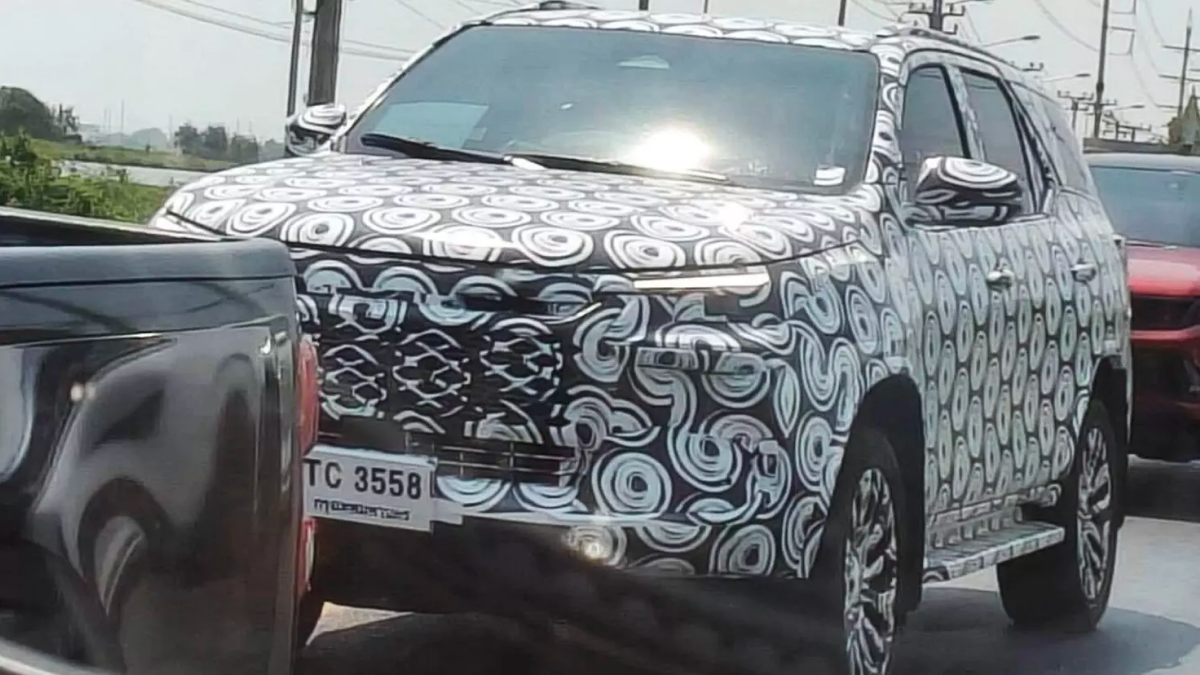
The Toyota Fortuner has long been the undisputed leader of India’s full-size SUV segment, maintaining its dominance through sheer mechanical reliability rather than cutting-edge technology. However, as of February 24, 2026, fresh evidence suggests that Toyota is finally closing the gap between rugged utility and modern safety. New spy photographs of a heavily camouflaged prototype have surfaced from Thailand, confirming that a next-generation Fortuner is currently undergoing advanced road testing.
The most significant takeaway from these sightings is the visible integration of advanced sensor hardware, signaling the long-awaited arrival of Level 2 Advanced Driver Assistance Systems (ADAS).
The Technical Evolution: ADAS and Toyota Safety Sense
The leaked images clearly show a radar module integrated into the lower front bumper, complemented by a camera unit mounted behind the upper windshield. This hardware confirms that the 2026 Fortuner will feature a comprehensive suite of “Toyota Safety Sense” technologies.
For the first time in the nameplate’s history, Indian buyers can expect factory-fitted features such as Adaptive Cruise Control, Autonomous Emergency Braking, and Lane Keep Assist. While rivals like the Mahindra XUV700 and MG Gloster have offered these for years, Toyota’s implementation is expected to be specifically tuned for the heavier IMV ladder-frame chassis to ensure safety does not compromise the vehicle’s off-road articulation.
Design Shift: The “Cyber Sumo” Aesthetic
The 2026 model appears to borrow heavily from the design language of the ninth-generation Hilux, which debuted globally last year. Despite the camouflage, several “human-verified” design changes are apparent:
- Split-Lighting Signature: The SUV moves away from the traditional single-unit headlamps toward a sharper split-LED setup. Slim DRLs sit high near the bonnet line, while the primary headlamp clusters are positioned lower in a more sculpted front bumper.
- Upright Stance: The bonnet line is noticeably flatter and higher than the current model, creating a broader, more vertical nose that enhances its road presence.
- Rear Profile: The tailgate has been squared off, and early indicators suggest a connected LED light bar may bridge the slimmer, wraparound tail-lamps.
Interior and Powertrain Expectations
While interior images remain elusive, the 2026 Fortuner is expected to adopt the dashboard layout of the new Hilux. This would mean a transition from the dated 8-inch screen to a massive 12.3-inch touchscreen infotainment system and a fully digital driver’s display.
Mechanically, Toyota is expected to stick with its proven 2.8-litre turbocharged diesel engine, though it will likely feature the 48V mild-hybrid system (Neo Drive) as standard to improve city fuel efficiency and smoother torque delivery. This setup ensures that the Fortuner retains its “bulletproof” reputation while meeting increasingly stringent emissions norms.
Market Outlook and Launch Timeline
With testing now in an advanced stage, a global debut is anticipated in mid-2026. Given the Fortuner’s critical importance to the Indian market, a domestic launch is likely to follow by late 2026 or early 2027.
By finally incorporating ADAS and a modernized cabin, Toyota is not just refreshing a model—it is future-proofing its most profitable asset against a new wave of technologically superior competitors. For the loyal Fortuner buyer, the wait for a “modern” behemoth appears to be nearly over.
