


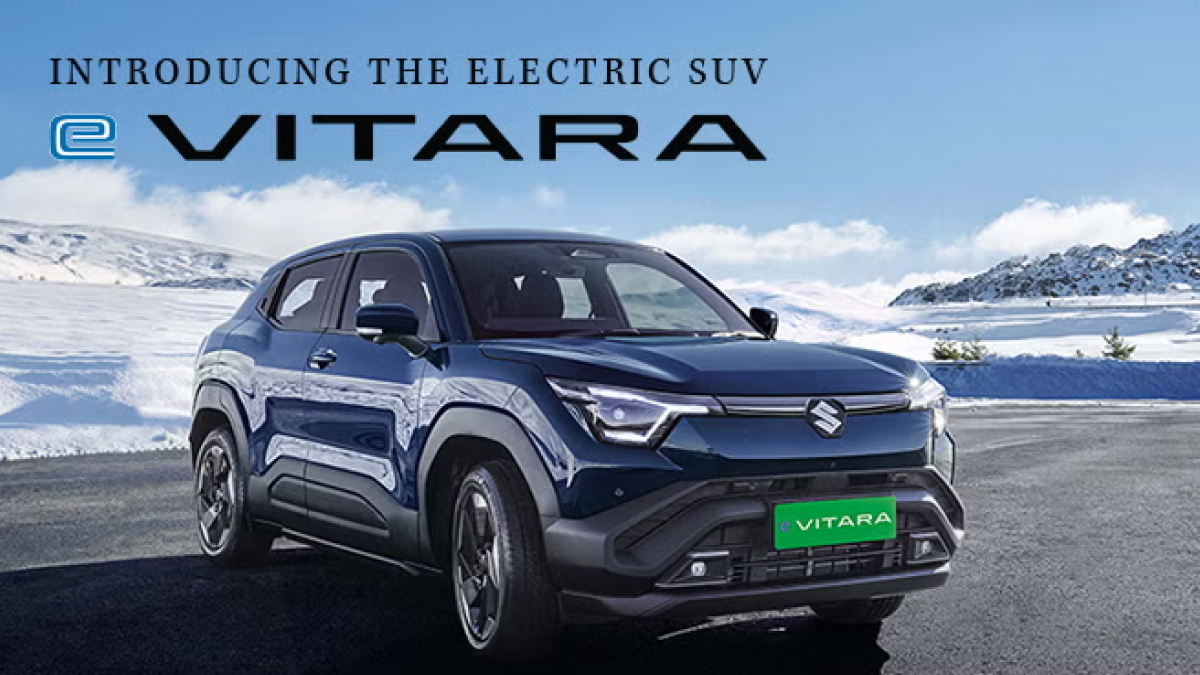
The Indian electric vehicle market has officially graduated from niche to mainstream. With Maruti Suzuki finally entering the ring with the eVitara, the battle for the mid-size SUV crown has shifted from “range anxiety” to “ownership flexibility.”
For 2026, the question for buyers isn’t just which car to buy, but how to pay for it. Here is how the Maruti eVitara stacks up against the Tata Curvv.ev, Hyundai Creta EV, and MG Windsor.
1. Maruti eVitara: The Ownership Disruptor
Maruti isn’t just selling an SUV; they are selling a new financial model. Built on the global HEARTECT-e platform, the eVitara is the first Maruti to offer Battery-as-a-Service (BaaS).
- The Math: You can drive home for ₹10.99 lakh (plus a ₹3.99/km battery rental), or buy it outright for ₹15.99 lakh – ₹20.01 lakh.
- The Hardware: It offers a 49kWh or 61kWh LFP battery. The 543 km ARAI range is backed by a 174 PS motor in the top-spec Alpha trim.
- Killer Feature: The 40:20:40 rear seat split and a massive 2,700mm wheelbase that beats the competition for legroom.
2. Tata Curvv.ev: The Performance Stylist
The Curvv remains the “enthusiast’s choice” with its striking coupe-SUV silhouette and a focus on V2L (Vehicle-to-Load) technology.
- Price: ₹17.49 lakh – ₹22.24 lakh (Outright purchase).
- Performance: A punchy 215 Nm of torque makes it significantly quicker off the line than the eVitara.
- The Edge: If you value aesthetics and “gadgetry” like the 12.3-inch Cinematic touchscreen and gesture-controlled tailgate, Tata still leads the tech race.
3. Hyundai Creta EV: The Premium Benchmark
Hyundai has leveraged the Creta’s legendary brand equity. It is the most expensive in this group but offers a level of cabin “plushness” the others struggle to match.
- Price: ₹17.99 lakh – ₹24.70 lakh.
- Strategy: It utilizes a 42kWh or 51.4kWh pack. While its 510 km range is slightly lower than Maruti’s, its Level 2 ADAS (Smartsense) is widely considered the most refined for Indian road chaos.
- The Edge: Unmatched service network and resale value confidence.
4. MG Windsor EV: The Space Specialist
The Windsor occupies a unique spot, leaning more toward a “Crossover-MPV” vibe with its “Business Class” rear seating.
- Price: Starts at ₹9.99 lakh (BaaS) or ₹14.00 lakh (Full purchase).
- Comfort: The 135-degree reclining rear seats and the “Infinity View” glass roof make it the best chauffeur-driven EV.
The Trade-off: With a max range of 449 km, it’s an urban specialist rather than a long-distance tourer.
| Feature | Maruti eVitara | Tata Curvv.ev | Hyundai Creta EV | MG Windsor |
| Full Price | ₹15.99L – 20.01L | ₹17.49L – 22.24L | ₹17.49L – 22.24L | ₹14.00L – 18.39L |
| Max Range | 543 km | 502 km | 510 km | 449 km |
| Battery Tech | LFP (Prismatic) | LFP | NMC / LFP | LFP |
| Best For | Lower Upfront Cost | Performance/Style | Premium Comfort | Rear Seat Space |
Final Verdict: Which One Should You Pick?
The Maruti eVitara is the most balanced choice for the average family, specifically because the BaaS model mitigates the high entry cost of electric power. However, if you want a car that turns heads at every signal, the Tata Curvv.ev is your winner. For those who want “car-as-an-appliance” reliability, stick with the Hyundai Creta EV.
