


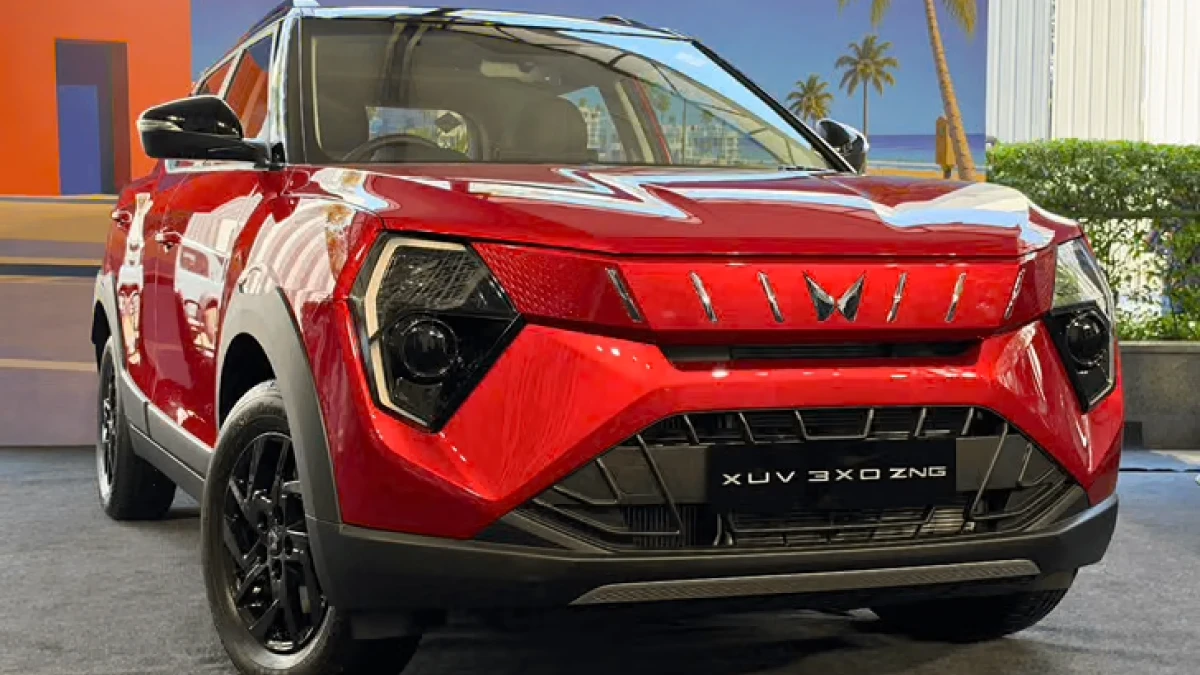
The compact SUV segment has just witnessed a massive shakeup. For months, the Tata Nexon iCNG enjoyed an uncontested monopoly as the only turbocharged, twin-cylinder CNG SUV on the market. That monopoly has officially ended with Mahindra aggressively entering the fray, launching the factory-fitted XUV 3XO ZNG.
Mahindra XUV 3XO ZNG Launched at ₹9.99 Lakh: 24.7km/kg
This isn’t just a casual addition to the Mahindra lineup; it is a direct, calculated strike at Tata Motors. While the Nexon iCNG relies on a broader choice of variants and highly desirable special editions, the XUV 3XO ZNG counters with a devastating specification sheet, boasting significantly stronger CNG-mode power output and a higher claimed mileage figure.
If you are looking to escape volatile petrol prices without sacrificing the punch of a turbocharger or the practicality of a usable boot, your decision has just become much harder. Here is a comprehensive breakdown of how the Tata Nexon iCNG and the Mahindra XUV 3XO ZNG stack up against each other.
Tata Nexon CNG vs Mahindra XUV 3XO CNG — Price Comparison
When cross-shopping these two, pricing strategy reveals their different market approaches. Mahindra has kept the ZNG lineup highly focused, while Tata spreads its net as wide as possible.
Mahindra XUV 3XO ZNG Launch Prices:
| Variant | Ex-showroom Price |
| MX Edge ZNG | ₹9.99 lakh |
| REVX Edge (O) ZNG | ₹10.79 lakh |
| AX5 ZNG | ₹11.19 lakh |
| REVX A ZNG | ₹12.27 lakh |
Mahindra strategically undercuts the ₹10 lakh barrier with the MX Edge ZNG, capping the range at a highly competitive ₹12.27 lakh.
In contrast, the Tata Nexon iCNG is offered across a sprawling array of trims (Smart, Pure, Creative, and Fearless).While its entry-level pricing is highly competitive, fully loaded top-spec Nexon iCNG variants push considerably higher into the ₹14 lakh+ territory, offering features and aesthetic packages that Mahindra simply doesn’t match at this specific price point.
Buyer Advice: Do not blindly compare the base Nexon against the top-spec XUV 3XO. You must align similar-priced variants (around the ₹11–12 lakh mark) to determine which manufacturer is genuinely offering more hardware for your money.
Engine and Performance — XUV 3XO Has the Advantage
This is the most critical battleground. Both manufacturers have achieved the impressive engineering feat of adapting a 1.2-litre turbocharged petrol engine to run seamlessly on compressed natural gas. However, their tuning philosophies are radically different.
The Power Deficit: When running purely on CNG, engine output naturally drops.
- According to reports, the Tata Nexon iCNG produces a modest 74bhp and 170Nm of torque when operating in gas mode.
- The Mahindra XUV 3XO ZNG absolutely crushes these figures, delivering a reported 110bhp and 200Nm of torque in CNG mode.
Mahindra claims this power allows the XUV 3XO ZNG to dispatch the 0–100km/h sprint in roughly 11.8 seconds. On paper, the Mahindra holds a massive, undeniable performance advantage, promising far superior highway overtaking ability and better load-lugging capacity on steep inclines.
The Editorial Angle: Both SUVs currently utilize a six-speed manual gearbox for their CNG variants (neither offers an automatic yet). While the XUV 3XO boasts superior numbers, real-world driveability depends heavily on gear ratios,clutch weight, and how that turbo torque is delivered in stop-and-go traffic.
Mileage — Which CNG SUV Is More Efficient?
The entire premise of buying a CNG vehicle is lowering your running costs.
- Mahindra XUV 3XO ZNG: Mahindra claims an impressive, ARAI-certified fuel efficiency of 24.70km/kg.
- Tata Nexon iCNG: Official certified figures for the Nexon are somewhat inconsistent across published listings,generally hovering around 17.44km/kg. However, independent real-world testing by publications like CarWale recorded an urban efficiency of 11.65km/kg and a highway figure of 17.5km/kg.
Crucial Context: You cannot directly compare Mahindra’s laboratory-certified ARAI claim against Tata’s independent real-world test results. While the Mahindra appears significantly more efficient on paper, actual mileage for both vehicles will fluctuate wildly based on your driving aggression, passenger load, AC usage, and the quality of gas at local stations.
Boot Space and Twin-Cylinder CNG Technology
Historically, buying a CNG car meant completely sacrificing your boot to a massive steel cylinder. Both Tata and Mahindra have elegantly solved this problem.
The Packaging Approach:
- Tata Motors pioneered the twin-cylinder technology in India, splitting the large 60-litre tank into two smaller 30-litre cylinders.
- Mahindra has adopted an identical philosophy for the XUV 3XO ZNG.
- In both SUVs, these twin cylinders are packaged neatly beneath the boot floor, preserving a flat, genuinely usable luggage area for weekend bags or airport runs.
While the layout is identical in concept, buyers must inspect both boots in person. The loading lip height, the intrusion of the suspension towers, and the exact placement of the spare wheel (often relocated underneath the chassis) will dictate which SUV actually swallows more luggage in the real world.
Features Comparison — Which SUV Offers More?
At comparable price points, both compact SUVs are incredibly well-equipped, sharing essential premium features such as:
- Large touchscreen infotainment systems
- Automatic climate control with dedicated rear AC vents
- Height-adjustable driver’s seats
- Electric sunroofs
- LED lighting and premium leatherette upholstery
However, as you move up the trim ladder, their distinct personalities emerge.
Mahindra XUV 3XO ZNG Advantages: Depending on the variant, Mahindra offers serious segment-first hardware,including a massive panoramic sunroof, dual-zone climate control, a 360-degree surround-view camera, a Tyre Pressure Monitoring System (TPMS), and a premium audio setup. Crucially, the XUV 3XO also offers disc brakes on all four wheels for superior stopping power.
Tata Nexon iCNG Advantages: Tata’s primary advantage is choice. The Nexon iCNG is available across a much wider range of trims, allowing buyers to fine-tune their exact feature requirements. Furthermore, Tata offers the highly desirable ‘Dark’ and ‘Red Dark’ special editions, catering to buyers who prioritize stealthy, aggressive aesthetics straight from the factory.
Safety — What Should Buyers Check?
Both manufacturers have built their reputations on robust crash safety, but you must look closely at the variant-level equipment.
Both SUVs offer six airbags as standard, alongside Electronic Stability Control (ESC), ABS with EBD, and ISOFIX child seat mounts. The XUV 3XO holds a slight mechanical advantage with standard all-wheel disc brakes.
Buyer Advice: Do not assume that because the petrol version of a car scored five stars in a crash test, the CNG version automatically inherits that rating. The added weight of the gas cylinders significantly alters crash dynamics. Always verify if the specific CNG-equipped chassis has been independently tested and rated.
Which CNG SUV Should You Buy?
Your final decision should be dictated entirely by your personal driving priorities and budget:
- Choose the Mahindra XUV 3XO ZNG if: You frequently drive on highways and prioritize the stronger 110bhp CNG-mode performance, you want the higher advertised mileage figure, and you desire premium features like a panoramic sunroof and all-wheel disc brakes at a highly competitive price point.
- Choose the Tata Nexon iCNG if: You want a broader spectrum of variants to choose from, you prefer the aggressive styling of the ‘Dark’ editions, and you value the proven, established track record of Tata’s twin-cylinder CNG ecosystem.
Note: Both of these CNG SUVs are currently restricted to manual transmissions. If you absolutely require an automatic gearbox, you will need to look at non-turbo alternatives like the Tata Punch CNG AMT or standard petrol-automatic compact SUVs.
MotorFuturist Verdict
The Mahindra XUV 3XO ZNG is a brilliant, highly calculated disruption. By combining a turbocharged engine with significantly higher reported CNG-mode power (110bhp) and a claimed 24.70km/kg efficiency figure, it has immediately put the Tata Nexon iCNG on the defensive.
However, Tata’s advantage lies in its vast variant spread and its established, proven presence in the CNG sector. For buyers who demand outright performance and the latest feature set, the XUV 3XO ZNG is currently the more compelling paper specification. But before handing over a booking cheque, you must compare equivalent variants around the ₹11–12 lakh mark, demand written on-road quotations from both dealerships, and test-drive both SUVs back-to-back to determine which engine tuning best suits your daily commute.
FAQs
1. Which is better: Tata Nexon CNG or Mahindra XUV 3XO CNG?
The XUV 3XO offers superior CNG-mode power (110bhp) and a higher claimed mileage, making it better for performance-oriented drivers. The Nexon iCNG offers a wider variety of trims and special aesthetic editions, making it better for buyers seeking specific feature combinations.
2. What is the price of the Mahindra XUV 3XO ZNG?
The Mahindra XUV 3XO ZNG is priced highly aggressively, starting at ₹9.99 lakh for the MX Edge trim and going up to ₹12.27 lakh for the REVX A trim (ex-showroom).
3. What is the claimed mileage of the XUV 3XO CNG?
Mahindra claims an ARAI-certified fuel efficiency of 24.70km/kg for the XUV 3XO ZNG.
4. How much power does the Nexon iCNG produce in CNG mode?
When running on CNG, the Tata Nexon’s 1.2-litre turbo-petrol engine produces a reported 74bhp and 170Nm of torque.
5. Do the Nexon iCNG and XUV 3XO ZNG have automatic gearboxes?
No. Currently, both the Tata Nexon iCNG and the Mahindra XUV 3XO ZNG are exclusively available with six-speed manual transmissions.
6. Which CNG SUV has better boot practicality?
Both SUVs utilize an identical philosophy, placing two smaller CNG cylinders beneath the boot floor to preserve a flat,usable luggage area. Buyers should inspect both boots in person to compare the actual loading height.
7. Which features are available on the top-spec Nexon CNG and XUV 3XO ZNG?
Both offer large touchscreens, climate control, and sunroofs. The top-spec XUV 3XO distinguishes itself with a panoramic sunroof and all-wheel disc brakes, while the Nexon offers unique ‘Dark’ interior and exterior aesthetic themes.
