


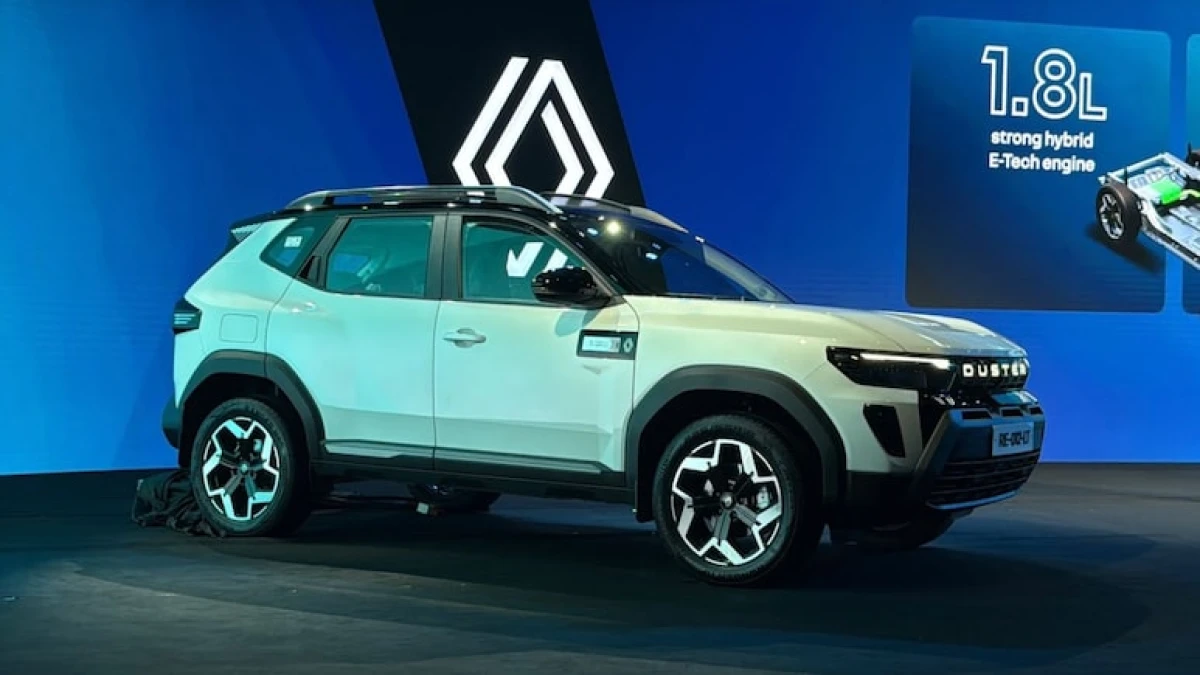
Renault has officially thrown down the gauntlet in the Indian strong-hybrid SUV market with the launch of the highly anticipated Duster Hybrid. By introducing a highly sophisticated electrified powertrain, Renault is no longer just competing on rugged charm; it is directly challenging the established Japanese dominance in the segment.
Launched with an aggressive introductory price spanning from ₹16.99 lakh to ₹19.49 lakh (ex-showroom), the Duster Hybrid enters the fray armed with two massive headline claims: a combined power output of 160hp and an ARAI-certified mileage of 29kmpl.
However, the path to market leadership is heavily guarded. Its direct rivals—the exceptionally popular Maruti Suzuki Grand Vitara, its corporate twin the Toyota Urban Cruiser Hyryder, and the aggressively priced Maruti Suzuki Victoris—already command immense consumer loyalty.
To determine which strong-hybrid SUV truly deserves your money, we must look beyond the brochures and conduct a forensic comparison across pricing, powertrain architecture, real-world efficiency, dimensions, and practical ownership features.
Renault Duster Hybrid vs Rivals — Price Comparison
In the incredibly price-sensitive Indian market, the entry threshold often dictates a vehicle’s success.
- The Budget Champion: The Maruti Suzuki Victoris currently holds the distinct advantage of offering the lowest entry price among these four strong-hybrid SUVs.
- The Duster’s Positioning: The Duster Hybrid’s starting price of ₹16.99 lakh sits carefully above the base hybrid variants of the Victoris and the Grand Vitara, but crucially undercuts the starting price of the Toyota Hyryder hybrid.
- Top-End Value: Interestingly, the Duster’s fully-loaded flagship variant tops out at a lower price point than the listed top-tier trims of all three Japanese rivals.
Buyer Advice: Do not automatically assume the Duster is the absolute cheapest or most expensive option overall. The Victoris retains the lowest starting price. Furthermore, the Duster’s current pricing is explicitly marked as “introductory.” Buyers must confirm the final, applicable on-road price and the validity of these introductory offers directly with Renault dealerships.
Engine and Performance — Duster Has the Power Advantage
The fundamental difference between these vehicles lies in how their hybrid powertrains are engineered.
The Renault Approach:
The Duster Hybrid utilizes a much larger 1.8-litre, four-cylinder naturally aspirated petrol engine paired with two distinct electric motors (a primary traction motor and a starter-generator). Drawing from a 1.4kWh battery, this complex system generates a massive combined output of 160hp. Renault claims this propels the SUV from 0–100km/h in a brisk 9.61 seconds via an innovative multi-mode automatic gearbox.
The Japanese Approach:
Conversely, the Grand Vitara, Hyryder, and Victoris all share the same Toyota-derived hybrid architecture. They utilize a smaller 1.5-litre, three-cylinder petrol engine paired with a single electric motor and a slightly smaller battery pack, resulting in a modest combined output of 116hp managed by an e-CVT gearbox.
The Editorial Takeaway:
On paper, the Duster possesses a devastating power advantage. However, horsepower isn’t everything in a family SUV. While the Duster will undoubtedly feel punchier during highway overtakes, the Japanese trio’s three-cylinder setup is incredibly refined at low city speeds. A higher power rating does not automatically make the Duster the better choice for every buyer; low-speed driveability and transmission smoothness require a back-to-back test drive.
Mileage Comparison — Which Hybrid SUV Is Most Efficient?
If you are buying a strong hybrid, you are buying it to avoid the petrol pump. Here is how the manufacturer-claimed figures stack up:
- Renault Duster Hybrid: 29.00 kmpl
- Maruti Suzuki Victoris Hybrid: 28.65 kmpl
- Maruti Suzuki Grand Vitara Hybrid: 27.97 kmpl
- Toyota Urban Cruiser Hyryder Hybrid: 27.97 kmpl
The Duster currently claims the crown for the highest certified mileage in this specific comparison. However, buyers must remain pragmatic. The mathematical differences between 29kmpl and 27.97kmpl are relatively minuscule. In the real world, your actual fuel economy will be dictated far more heavily by your personal driving style, the density of your city traffic, the terrain, and your reliance on air-conditioning rather than slight variations in laboratory testing.
Dimensions, Ground Clearance and Boot Space
For many buyers, a true SUV must feel substantial on the road. This is where the Duster flexes its European muscles.
- The Footprint: Based on reported dimensions, the Duster is among the longest models in this group and stands visibly wider and taller than its Japanese counterparts.
- The Stance: It boasts a lengthy 2,657mm wheelbase and an imperious 212mm of ground clearance, outclassing the others for rough-road capability. It also rolls on massive 18-inch wheels with wide 225-section tyres.
- Boot Space: Packaging a hybrid battery usually destroys boot space (a known weakness of the Grand Vitara and Hyryder). Renault claims a massive 544 litres of boot capacity measured up to the roofline, or a highly usable 372 litres measured up to the parcel shelf.
Cautionary Note: When comparing boot figures across different brands, be aware that manufacturers often use different measurement standards (VDA blocks vs. liquid volume). Always verify the physical luggage space in the showroom.
Features — Where the Duster Hybrid Stands Out
The Duster has completely abandoned its previously spartan interior philosophy.
Duster Equipment Advantages:
- A sophisticated, built-in Google infotainment system.
- A crisp 10.25-inch digital driver display featuring full-screen navigation support.
- Advanced Qi2 wireless smartphone charging with magnetic alignment.
- The rare luxury of powered adjustment for both the driver and front passenger seats.
- Dual-zone automatic climate control.
- Rain-sensing wipers and blind-spot monitoring alerts.
- Advanced frequency-dependent dampers for superior ride quality.
- A highly convenient powered tailgate.
The Limitations:
No vehicle is perfect. The Duster Hybrid noticeably misses out on an integrated 360-degree surround-view camera and Level 2 ADAS (Advanced Driver Assistance Systems)—features that are available on the top-spec petrol variants of the Duster and on select trims of its hybrid rivals. Always confirm the exact variant-wise equipment brochure before finalizing your booking.

Renault Duster Hybrid vs Grand Vitara
This is the ultimate battle: the aggressive newcomer versus the established heavyweight.
- Duster Advantages: It offers significantly higher claimed power (160hp vs 116hp), a larger battery pack, a slight edge in claimed mileage, and far more muscular, traditional SUV proportions.
- Grand Vitara Advantages: It benefits from massive, established market presence, sky-high resale predictability, and the unmatched penetration of Maruti Suzuki’s Nexa service network.
- What to Check: Compare the exact equipment offered at your specific budget, evaluate the dealer support in your specific pin code, and take a long test drive to compare real-world efficiency.

Renault Duster Hybrid vs Toyota Hyryder
Because the Hyryder shares its fundamental strong-hybrid architecture with the Grand Vitara, the comparison remains similar.
- Duster Advantages: More horsepower and a fractionally higher claimed mileage rating.
- Hyryder Advantages: Offers an established, ultra-reliable Toyota hybrid alternative backed by excellent warranty packages and prestige brand perception.
- What to Check: Do not assume the Grand Vitara and Hyryder offer identical ownership experiences. Compare equivalent variants for specific equipment inclusions and the final on-road cost, which can vary between Maruti and Toyota dealerships.

Renault Duster Hybrid vs Maruti Victoris
This comparison requires careful financial analysis because the Victoris alters the segment’s pricing floor.
- The Price Gap: The Victoris holds the trump card of a lower entry price compared to the base Duster Hybrid.
- The Power Gap: The Duster counters with vastly superior claimed power and slightly better mileage.
- Shared Tech: Interestingly, both SUVs offer a powered tailgate.
- The Tech Gap: The Duster’s integration of the built-in Google OS and the full-screen navigation display gives its cabin a more modern, premium edge.
- What to Check: Do not judge these two on their entry prices alone. You must meticulously compare actual variant prices and standard safety equipment to determine true value.
Which Strong-Hybrid SUV Should You Buy?
Your final decision should be dictated entirely by your personal driving priorities:
- Choose the Renault Duster Hybrid if: Outright power, maximum claimed mileage, high ground clearance, and a commanding, substantial SUV feel matter more to you than having a 360-degree camera.
- Consider the Maruti Victoris Hybrid if: Securing strong-hybrid technology at the absolute lowest entry price is your primary objective.
- Consider the Maruti Grand Vitara Hybrid if: You prefer a sleeker design, want access to features like a 360-degree camera, and demand the peace of mind offered by the vast Maruti ownership ecosystem.
- Consider the Toyota Hyryder Hybrid if: Its specific styling appeals to you, and Toyota’s legendary dealer support and hybrid reliability track record align with your long-term ownership goals.
MotorFuturist Verdict
The Renault Duster Hybrid has executed a brilliant, highly aggressive entrance into a segment previously monopolized by Maruti Suzuki and Toyota. By combining a larger 1.8-litre engine with two electric motors, its 160hp combined output and claimed 29kmpl mileage grant it a definitive, undeniable specification advantage on paper.
However, specifications don’t tell the whole story. The Maruti Suzuki Victoris remains fiercely competitive due to its lower starting price, while the Grand Vitara and Hyryder remain highly credible, proven alternatives. The Duster’s ultimate value proposition will be determined by how buyers weigh its missing ADAS features against its superior power, real-world efficiency, and the final on-road price in their city.
The key takeaway? The Duster Hybrid is the strongest choice for buyers prioritizing horsepower, claimed efficiency, and rugged SUV proportions. However, buyers focused strictly on budget or long-term ownership convenience must test-drive all four models at the exact same price point before signing a cheque.
FAQs
What is the price of the Renault Duster Hybrid in India?
The Duster Hybrid features an introductory ex-showroom price ranging from ₹16.99 lakh for the base variant up to ₹19.49 lakh for the top-spec model.
What is the claimed mileage of the Renault Duster Hybrid?
Renault claims an ARAI-certified fuel efficiency of 29kmpl for the Duster Hybrid.
Is the Renault Duster Hybrid more powerful than the Grand Vitara?
Yes. The Duster Hybrid produces a combined 160hp from its 1.8-litre engine and dual motors, whereas the Grand Vitara produces a combined 116hp from its 1.5-litre setup.
Which hybrid SUV has the highest claimed mileage?
On paper, the Renault Duster Hybrid claims the highest mileage at 29kmpl, narrowly beating the Maruti Victoris (28.65kmpl) and the Grand Vitara/Hyryder twins (27.97kmpl).
What is the difference between the Duster Hybrid and Toyota Hyryder?
The Duster utilizes a more powerful 1.8L engine (160hp) and a multi-mode stepped automatic, while the Hyryder uses a 1.5L engine (116hp) and an e-CVT. The Duster offers more power and higher ground clearance, but the Hyryder offers established Toyota reliability and features like a 360-degree camera.
Is the Maruti Suzuki Victoris Hybrid cheaper than the Duster?
Yes. Currently, the entry-level strong-hybrid variant of the Maruti Victoris carries a lower starting price than the base Renault Duster Hybrid.
Does the Renault Duster Hybrid get ADAS and a 360-degree camera?
No. While the top-spec turbo-petrol Duster models offer these features, the Duster Hybrid currently misses out on Level 2 ADAS and a 360-degree camera.
