


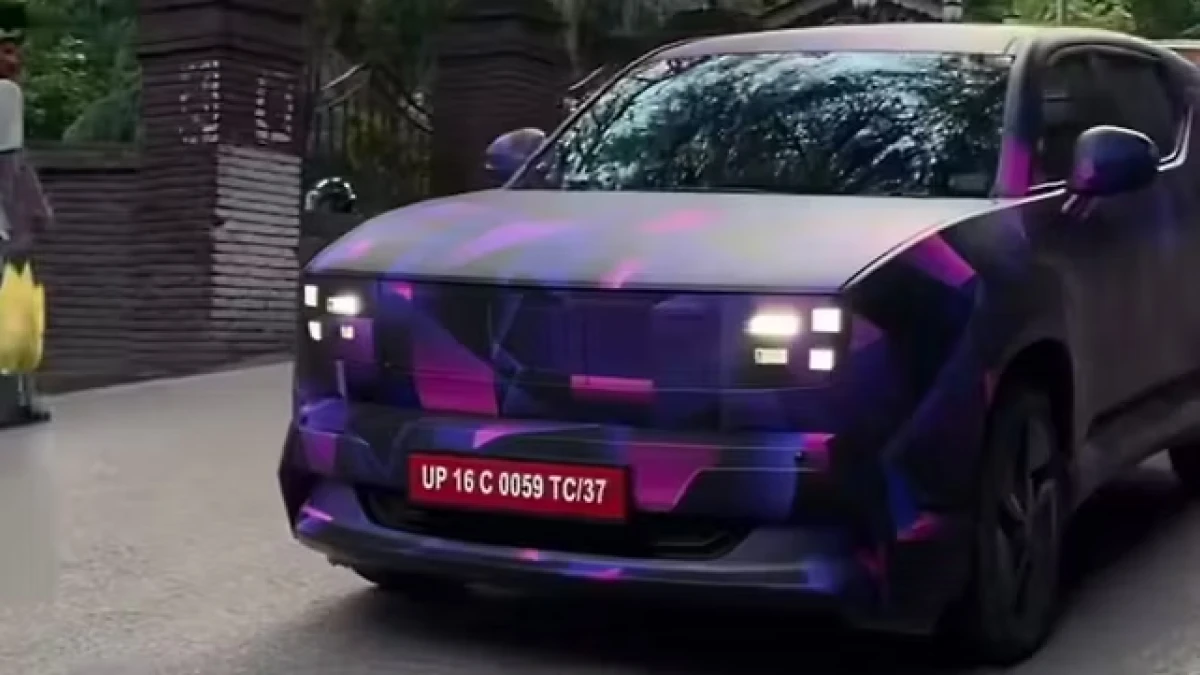
The Indian electric vehicle ecosystem is gearing up for a significant entry. Honda Cars India has officially confirmed that its highly anticipated 0 Alpha electric SUV will make its premier India debut on December 2, 2026. Originally showcased as a forward-looking design prototype at the Japan Mobility Show, the production-intent model has entered advanced validation stages across domestic test tracks.
Engineered to serve both domestic buyers and international export hubs, the 0 Alpha will roll off production lines at Honda’s manufacturing facility in Tapukara, Rajasthan.As Honda’s first major step into the mass-market battery electric vehicle (BEV) space in India, this midsize crossover aims to challenge established players in the rapidly growing zero-emission segment. Below is an extensive analytical look at what to expect from Honda’s upcoming electric challenger.
Strategic Manufacturing and Rigorous Pan-India Testing
To ensure seamless adaptability to local driving conditions, Honda initiated an extensive real-world testing programme across India starting in March 2026.
- Diverse Climatic Evaluation: Prototypes have been spotted undergoing trials across severe summer heat, torrential monsoon downpours, and dusty highway corridors.
- Terrain Adaptability: Testing protocols evaluate suspension durability, structural rigidity, and thermal management across chaotic urban traffic lanes, broken rural roads, and high-speed expressways.
- Export Hub Strategy: Beyond fulfilling domestic demand, the Tapukara plant is designated as a mother manufacturing hub for global exports, reinforcing Honda’s long-term export ambitions from India.
Exterior Styling and Proportions: Futuristic Yet Practical
Spy shots of camouflaged test mules indicate that the production version will stay faithful to the upright stance and boxy silhouette of the original concept. Rather than adopting a low-slung hatchback profile, the vehicle prioritizes cabin headroom and cargo flexibility while maintaining modern aerodynamic efficiencies.
| Exterior Design Element | Anticipated Production Spec / Design Cue |
| Front Fascia | Clean, closed-off EV panel housing full-width horizontal LED light bars. |
| Wheel Architecture | Large 18-inch aerodynamic alloy wheels designed to lower drag coefficient. |
| Lighting Signature | Slim LED headlamps up front paired with vertically stacked rear LED tail-lamp clusters. |
| Body Silhouettes | Squared wheel arches, black protective cladding, and a flat, upright tailgate. |
| Greenhouse Area | Generous glasshouse and a full-length panoramic glass roof. |
Expected Interior Layout and Technology Suite
Built on a dedicated electric architecture with a flat floor structure, the interior maximizes legroom and shoulder space across both rows. The wheelbase is estimated to span between 2,700 mm and 2,800 mm, positioning it comfortably above traditional internal combustion compact crossovers in terms of interior volume.
Key Cabin and Tech Expectations
- Digital Cockpit: A sweeping dashboard featuring a large landscape-oriented central touchscreen paired with a slim digital driver’s display.
- Comfort Add-ons: Ventilated front seats, dual-zone automatic climate control, and rear AC vents.
- Connectivity: Wireless smartphone replication (Apple CarPlay and Android Auto), native connected-car apps, and over-the-air (OTA) update support.
- Active Safety: Integration of Honda Sensing Level 2 ADAS capabilities, including collision mitigation braking, lane keep assist, and adaptive cruise control.
Anticipated Powertrain, Battery, and Charging Specifications
While official technical datasheets will be unlocked during the December 2 debut, industry insights point toward a robust electrical configuration tailored for high efficiency and dependable daily usability.
| Technical Parameter | Projected Specifications (Unconfirmed Officially) |
| Battery Pack Options | Estimated 65 kWh to 75 kWh LFP battery packs |
| Drivetrain Layout | Single-motor Front-Wheel Drive (FWD) setup |
| Target Driving Range | 400 km to 500+ km on a single full charge |
| DC Fast Charging Support | High-rate DC fast-charging capability (15% to 80% in ~15 minutes) |
| Platform Architecture | Dedicated modular EV platform |
Market Positioning and Direct Rivals
When the production model goes on sale following its debut, it will enter one of the most competitive segments in the domestic automotive space. It will lock horns with established and upcoming electric SUVs designed specifically for Indian buyers.
| Electric SUV Rival Model | Expected Price / Market Position | Key Competitive Focus |
| Honda 0 Alpha EV | ₹18.00 Lakh – ₹24.00 Lakh | Local manufacturing, robust build, and advanced safety tech. |
| Tata Sierra EV | ₹18.79 Lakh – ₹25.99 Lakh | Iconic moniker, dual-motor AWD options, and spacious cabin. |
| Hyundai Creta Electric | ₹18.02 Lakh – ₹25.22 Lakh | Proven brand equity, comfort features, and widespread service network. |
| Mahindra BE 6 | Competitive Midsize EV Pricing | Born-EV styling, high performance, and athletic handling. |
| Maruti Suzuki e Vitara | Mass-market EV Segment | Global architecture, high energy efficiency, and dual-motor all-wheel drive. |
What to Look Forward to on December 2, 2026
The upcoming unveiling event on December 2 will transition the 0 Alpha from a global concept study into a market-ready reality. Attendees and automotive enthusiasts can expect a clear look at the final production body styling, finalized cabin configurations, and initial rollout milestones.
As Honda prepares to close out the year with a comprehensive portfolio spanning petrol, hybrid, and electric powertrains, the 0 Alpha stands as a pivotal product determining the brand’s electric trajectory in India for the decade ahead.
