


Tata Motors Passenger Vehicles has shattered its own internal benchmarks, surging past the 2-lakh sales barrier for the first time during the second quarter of FY2027. Moving 2,01,723 passenger vehicles across domestic and international markets between July and September 2026, the automaker secured a staggering 40% year-on-year growth trajectory compared to the 1,44,397 units sold in the corresponding period last year.
However, the sheer volume of metal moved isn’t the most significant takeaway from this quarter’s financial ledger. A profound shift has occurred within Tata’s underlying powertrain mix: Electric Vehicles (EVs) and Compressed Natural Gas (CNG) models have officially cornered 51% of total quarterly sales.
This statistic fundamentally alters how the industry must view the manufacturer. Traditional petrol and diesel vehicles combined no longer represent the majority of Tata’s quarterly passenger-vehicle volumes.
Tata Motors Q2 FY27 Sales: Key Numbers
The Q2 data provides a stark look at how rapidly Indian consumer preferences are evolving when provided with capable alternative fuel choices.
| Metric | Q2 FY27 Performance |
| Total sales | 2,01,723 units |
| Domestic sales | 1,96,674 units |
| International sales | 5,049 units |
| YoY growth | 40% |
| EV sales | 47,150 units |
| EV share | 23% |
| CNG share | 28% |
| EV + CNG share | 51% |
Breaking the 70,000 Monthly Milestone
September served as the capstone for this historic quarter. The company recorded 70,210 total sales in September alone (including 68,810 domestic units). This 15% year-on-year jump marked the very first time Tata Motors crossed the elusive 70,000-unit monthly sales threshold.
Crucially, this wasn’t a sudden, isolated spike driven by a single month of heavy discounting. The quarter demonstrated a steady, sustainable month-on-month volume climb.
| Month (2026) | Domestic Sales |
| July | 62,611 units |
| August | 65,253 units |
| September | 68,810 units |
Tata EV Sales Jump 90%
The heaviest gravitational pull shifting Tata’s sales mix originates from its battery-electric portfolio. Tata dispatched 47,150 EVs during Q2 FY27, a massive surge compared to the 24,855 units moved during the same quarter the previous year.
That represents a blistering 90% year-on-year increase.
EVs now command 23% of Tata’s entire quarterly volume. To put that into perspective, the automaker notes that this is substantially higher than the approximately 8% EV penetration rate currently witnessed across India’s broader passenger-vehicle market. Tata is not just participating in the EV transition; it is actively accelerating it far beyond the industry average.
| Month (2026) | Tata EV Sales |
| July | 15,217 units |
| August | 16,549 units |
| September | 15,384 units |
| Q2 Total | 47,150 units |
To keep pace with this surging demand, Tata actively scaled its production capabilities. Monthly EV manufacturing capacity expanded rapidly from roughly 9,000 units earlier in the year to over 16,000 units, resolving the supply-side bottlenecks that previously choked delivery timelines.
CNG Now Accounts for 28% of Tata Sales
Electrification isn’t the sole driver of this alternative-fuel boom. Tata’s twin-cylinder CNG portfolio recorded its strongest quarter to date, capturing a massive 28% of the company’s total volumes.
When you combine the 28% CNG share with the 23% EV share, the reality is stark: More than one in every two Tata passenger vehicles sold in Q2 FY27 was either an EV or a CNG model.
This marks a profound structural shift away from the traditional Indian passenger-vehicle market dynamics, where naturally aspirated petrol and heavy diesels have historically reigned supreme. Tata’s strategy of simultaneously offering Petrol, Diesel, CNG, and Electric across identical model lines is paying massive dividends. Buyers no longer have to compromise on the vehicle they want just to secure the powertrain they need.
The Volume Drivers: Punch, Nexon, and Sierra
Tata Punch Remains the Heavyweight
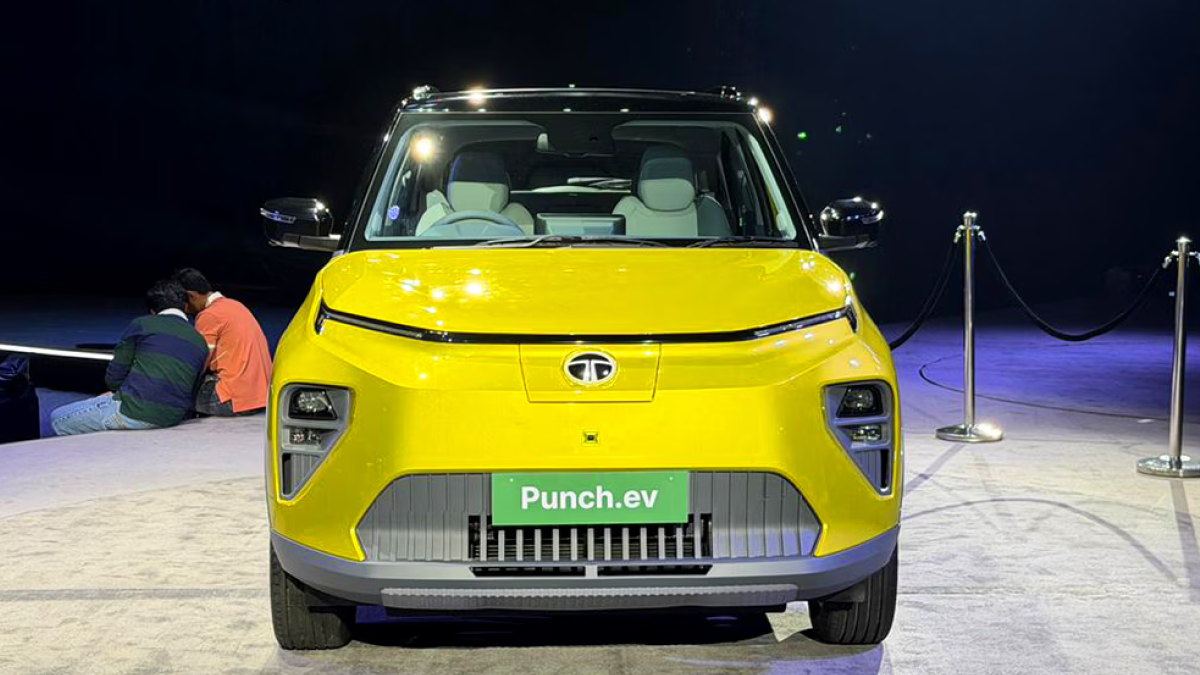
The micro-SUV continues its reign as the company’s most devastating volume generator. Tata sold 21,313 units in July and 21,320 units in August, comfortably maintaining a run rate well above the 20,000-unit mark. During this quarter, the Punch claimed the title of India’s highest-selling SUV.
Its dominance is directly tied to powertrain diversity. By offering the Punch in standard petrol, twin-cylinder CNG, and pure EV formats, Tata captures entirely different demographics without diluting the model’s core appeal.
Tata Nexon Holds the Line
The Nexon remains the other central pillar of Tata’s SUV strategy. The sub-4-metre SUV recorded 17,471 units in July and 18,431 units in August (figures combining both ICE and EV iterations). Much like the Punch, the Nexon’s ability to offer a specific powertrain for every conceivable buyer profile ensures it remains highly relevant despite intensifying competition.
Sierra Adds Fresh Volume
The newly resurrected Tata Sierra is beginning to contribute highly meaningful numbers to the spreadsheet, recording 6,327 units in July and 5,622 units in August. It successfully adds another premium layer to Tata’s already dense SUV lineup, bridging gaps and capturing buyers upgrading from smaller segments.
A Broader Portfolio Built on Existing Strengths
Tata did not achieve these numbers solely by launching new products at the last minute. While the quarter saw the introduction of the Curvv SeriesX, the Sierra Legend Series, and the highly anticipated Tata Aeris compact sedan (which arrived in late September with aggressive petrol and CNG pricing), these newer models launched too late in the quarter to artificially inflate the 2.01 lakh-unit result.
The growth was organic, driven relentlessly by existing high-volume nameplates and the massive mainstream acceptance of their EV and CNG variants.
What the 51% EV + CNG Share Means for Tata
These Q2 figures validate a highly complex, multi-pronged strategic gamble. Rather than betting the entire company exclusively on an immediate EV revolution, Tata built a multi-powertrain safety net.
- EVs: Actively target early adopters and urban buyers demanding zero-emission commuting and high-tech features.
- CNG: Captures extreme high-mileage drivers who demand ultra-low running costs today, without the higher initial purchase price of an EV.
- Petrol/Diesel: Remains readily available for traditionalists and long-distance highway tourers.
By refusing to wait for India’s EV charging infrastructure to mature completely, Tata captured the immediate demand for lower running costs via CNG, while simultaneously dominating the burgeoning electric sector.
Our Verdict: The Shift Is Permanent
Tata Motors’ 2,01,723-unit Q2 FY27 result is far more significant than a routine quarterly financial celebration. The manufacturer successfully obliterated three distinct milestones simultaneously: crossing the 2-lakh quarterly threshold, breaching the 70,000 monthly sales mark, and watching alternative powertrains consume a 51% majority share of its output.
That final metric is the most critical. Tata is no longer a legacy automaker merely experimenting with electric and gas-powered cars on the side. Electrified and CNG powertrains are now the undisputed center of gravity for the brand. With the Punch, Nexon, and Sierra driving heavy SUV volumes, and manufacturing capacity actively scaling to meet demand, Tata Motors enters the second half of the financial year from a position of overwhelming structural strength.
FAQ
How many cars did Tata Motors sell in Q2 FY27?
Tata Motors Passenger Vehicles sold 2,01,723 units across domestic and international markets in Q2 FY27, representing a 40% year-on-year increase.
How many EVs did Tata sell in Q2 FY27?
The company dispatched 47,150 electric vehicles during the quarter, marking a massive 90% jump from the same period last year.
What percentage of Tata sales are EVs?
Electric vehicles accounted for 23% of Tata’s total Q2 FY27 sales volume.
What percentage of Tata sales are CNG?
CNG models captured 28% of Tata’s quarterly sales.
What percentage of Tata sales are EV and CNG combined?
For the first time, EV and CNG models together accounted for a majority 51% of Tata Motors’ Q2 FY27 sales.
Which Tata model was the biggest volume driver?
The Tata Punch remained the undisputed volume leader, consistently selling over 21,000 units per month and retaining its title as India’s highest-selling SUV during the quarter.
