


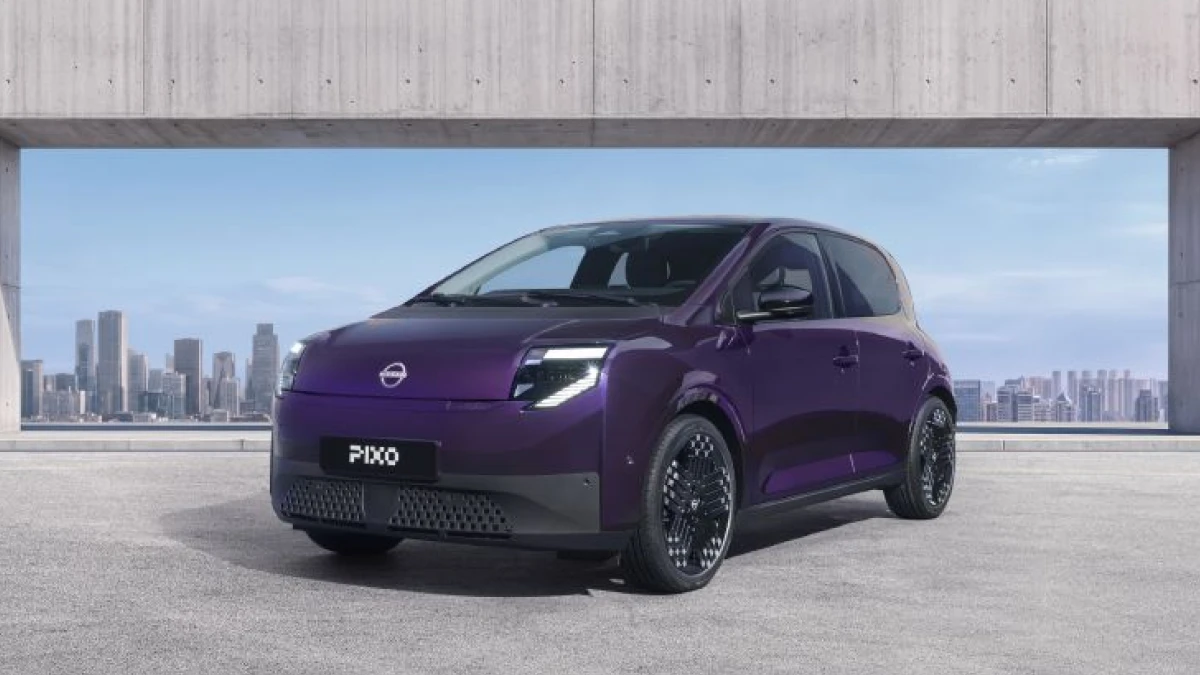
Tightening low-emission mandates, skyrocketing fuel prices, and narrow streets across European city centers are driving automakers to reconsider small electric vehicles. Nissan has officially revealed the all-new Pixo EV, a dedicated A-segment electric hatchback purpose-built for dense urban environments.
Developed through the Renault-Nissan Alliance and slated for production at Renault’s Novo Mesto manufacturing facility in Slovenia, the Pixo EV revives a classic city car nameplate with an ultra-modern, zero-emission architecture.European customer deliveries are scheduled to begin in early 2027, introducing an accessible entry point into Nissan’s expanding lineup of electric vehicles.
Key Technical Specifications
While engineered primarily as a lightweight city car, the Pixo EV integrates modern battery tech, rapid charging capabilities, and class-leading digital software to deliver strong everyday usability.
| Vehicle Parameter | Nissan Pixo EV Specification |
| Vehicle Segment | A-Segment Electric City Hatchback |
| Powertrain Layout | Single Electric Motor (Front-Wheel Drive) |
| Peak Power Output | 82 hp / 60 kW |
| Battery Chemistry | Lithium Iron Phosphate (LFP) |
| Pack Capacity | 27.5 kWh |
| WLTP Driving Range | Up to 259 km (161 miles) |
| DC Fast Charging Speed | 50 kW (15% to 80% in ~28 minutes) |
| AC Charging System | 11 kW Bidirectional |
| Turning Radius | 9.9 meters |
Exterior Packaging, Dimensions, and Geometric Styling
The Pixo EV departs from traditional rounded hatchback silhouettes in favor of a boxy, geometric stance with short overhangs.Nissan designers incorporated pixel-inspired lighting signatures, high-visibility glass surfaces, and a front bumper profile officially referred to as the “robot face”.
| Exterior Dimension | Measurement | Functional Real-World Benefit |
| Overall Length | 3,796 mm | Effortless parallel parking in tight urban parking spots |
| Overall Width | 1,790 mm | Generous shoulder room inside while staying nimble in traffic |
| Wheelbase | 2,492 mm | Extended cabin room relative to total bumper-to-bumper length |
| Overall Height | 1,512 mm | Upright seating orientation for improved head clearance |
| Ground Clearance | 140 mm | Low center of gravity for stable, predictable cornering |
Despite its compact exterior footprint, the Pixo EV safely and comfortably accommodates up to four adult passengers.
Cabin Layout, In-Car AI, and Connected Systems
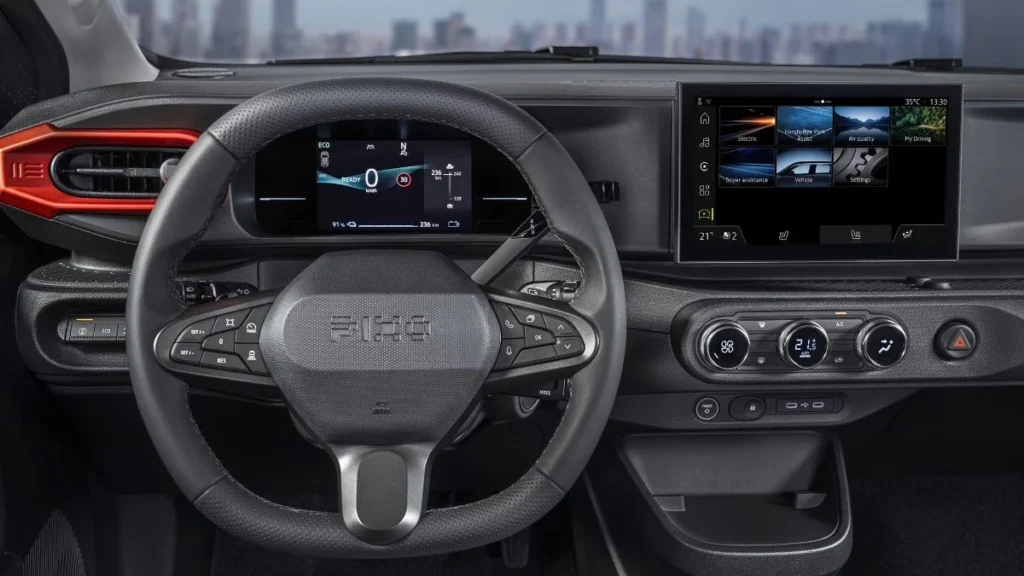
The dashboard layout prioritizes ergonomic clarity and minimal distraction.Vital driver metrics are presented through a 7-inch digital instrument cluster, complemented by a 10-inch central touchscreen running Google built-in software.
Primary Technology Features
- Google Gemini Integration:Marking a segment-first, the Pixo natively incorporates Google’s Gemini generative AI assistant.The system handles voice interactions across 16 different languages and regional dialects to control navigation, media, and vehicle settings hands-free.
- Biometric Face ID System:Integrated facial recognition sensors identify authorized drivers upon entry, restoring saved driver profiles, seat positions, mirror adjustments, and infotainment settings.
- MyNissan Mobile App: Enables remote connectivity to check battery charge states, trigger climate control pre-conditioning, and schedule off-peak charging sessions.
- e-Pedal One-Pedal Drive: Allows acceleration, regenerative deceleration, and complete stops using only the accelerator pedal, reducing foot fatigue during heavy urban stop-and-go driving.
- Advanced Driver Assistance:Equipped with lane-departure warnings, adaptive cruise control, and hands-free automatic parking assistance.
Practicality, Boot Volume, and Modular Seating
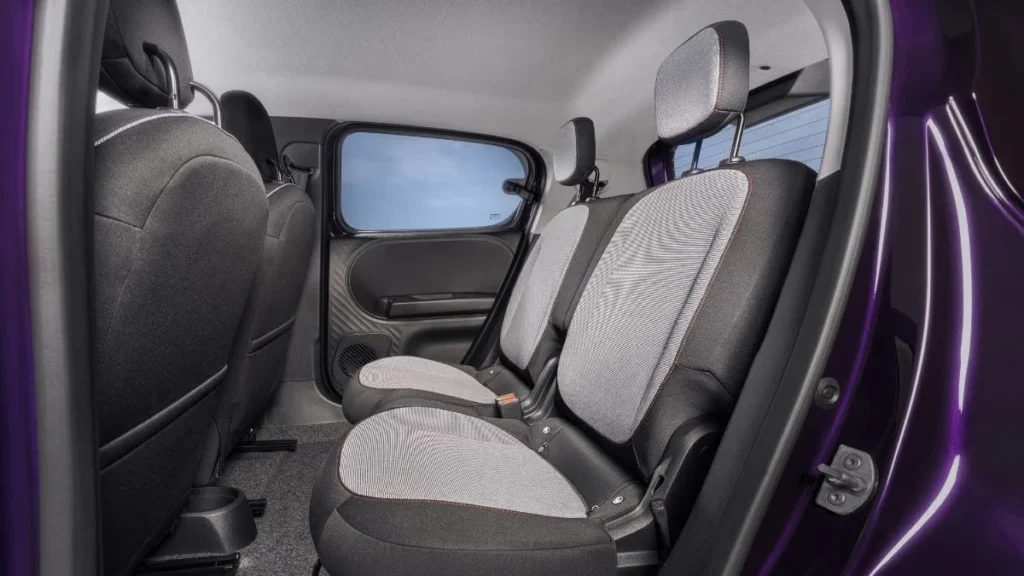
Small urban cars often compromise on boot capacity, but the Pixo EV remedies this limitation through independent sliding rear seats.Passengers can slide the rear bench forward or backward to prioritize legroom or cargo space depending on daily requirements.
| Storage Zone | Capacity Metric | Practical Application |
| Standard Boot Space | 356 Liters | Holds grocery bags, luggage, or daily equipment |
| Charging Cable Compartment | 50 Liters (Sub-Floor) | Conceals AC and DC charging cables out of the main luggage area |
| In-Cabin Cubby Space | 18 Liters | Door pockets, center console storage, and dashboard trays |
| Maximum Folded Cargo Volume | 1,221 Liters | Converts the rear passenger bay into a flat cargo surface |
LFP Battery Technology, Energy Efficiency, and Charging Speeds
The Pixo EV represents Nissan’s first European production vehicle to adopt Cobalt-free Lithium Iron Phosphate (LFP) battery technology. LFP chemistries offer superior thermal stability, extended charge cycle durability, and lower raw material overhead compared to standard Nickel Manganese Cobalt (NMC) battery packs.
Charging Architecture
- 50 kW DC Fast Charging:Replenishes the 27.5 kWh battery from 15 percent to 80 percent in approximately 28 minutes.
- 11 kW AC Wallbox Charging:Provides complete overnight or workplace replenishment via standard AC chargers.
- Bidirectional Power Capability: Supports vehicle-to-load (V2L) and vehicle-to-grid (V2G) systems, letting the car supply power to external electrical devices or feed energy back into home power systems during peak tariff hours.
Pricing, European Timeline, and Global Availability
Nissan will release regional market pricing, official variant trim levels, and European pre-order slots starting in December 2026, leading up to customer deliveries in early 2027.
Because the Pixo EV was specifically tailored to address European A-segment crash safety protocols and strict low-emission zones, Nissan currently has no plans to launch the model in India or North American markets. Placed below the Micra EV and Nissan Leaf in the company’s electric lineup, the Pixo EV strengthens Nissan’s strategy to make zero-emission urban transport widely accessible.
