


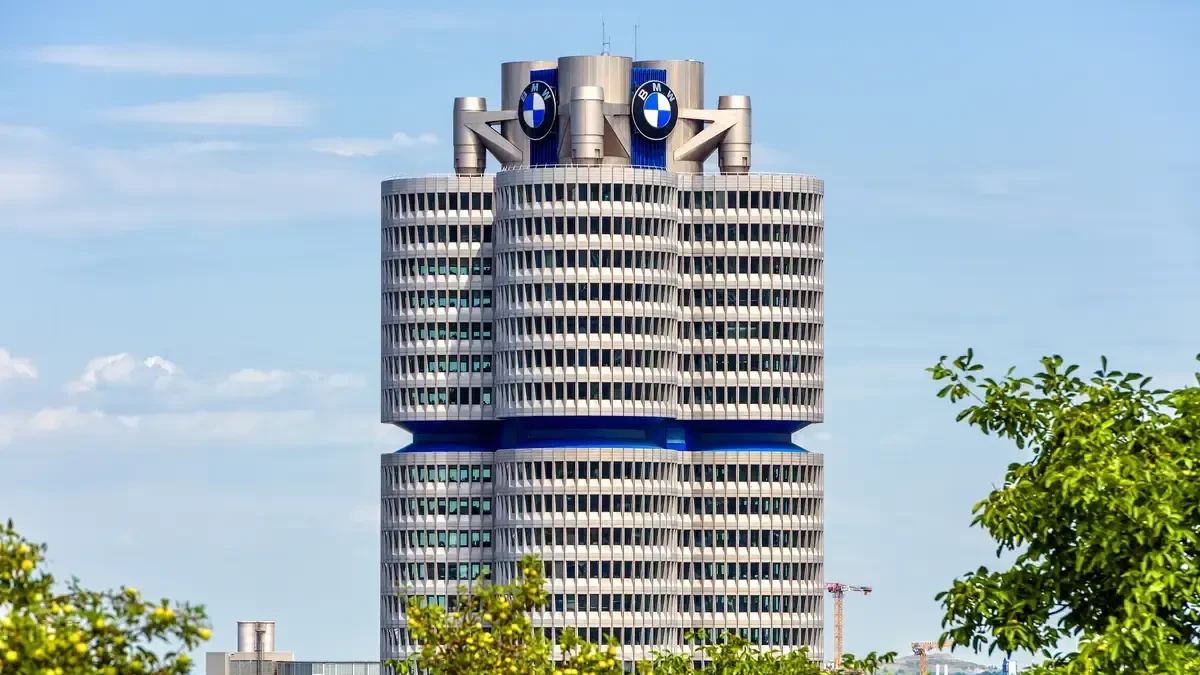
The BMW Headquarters, affectionately known worldwide as the “Four-Cylinder” building, is one of the most recognizable corporate headquarters on the planet. It perfectly symbolizes the brand’s deep-rooted engineering heritage and remains a major global tourist attraction today.
More than fifty years after its doors first opened, the tower remains a masterclass in modern corporate architecture. It perfectly bridges the gap between industrial design and artistic expression. But how did such an ambitious, gravity-defying project come to life? Who was the visionary who decided to shape a skyscraper like a car engine?
Here is the complete, fascinating story behind the BMW Headquarters, the architectural genius who designed it, and the engineering marvels that keep it standing today.
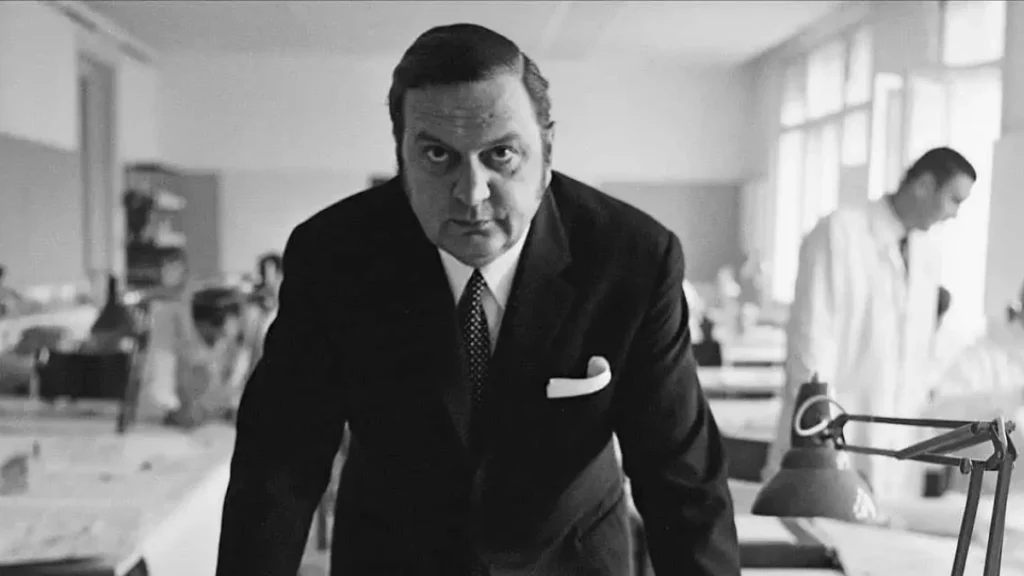
The Visionary: Who Designed BMW Headquarters?
In 1968, BMW’s management knew they needed a new administrative center. The company was experiencing explosive growth, and their existing offices simply couldn’t hold their expanding workforce. They organized an international architectural competition, inviting some of the world’s brightest minds to pitch their ideas. The brief was simple yet daunting: create a space that is highly functional, yet serves as a monumental symbol of BMW’s engineering prowess and forward-thinking philosophy.
Out of nearly 100 submissions, the winning design belonged to Karl Schwanzer, a highly respected Austrian architect and professor from Vienna.
Schwanzer did not want to build just another glass-and-steel rectangular box. His vision was to create an architectural metaphor for precision, motion, and automotive engineering. He presented a model that completely abandoned traditional skyscraper aesthetics, opting instead for a suspended, cloverleaf-like structure. Legend has it that to convince the BMW board of his radical idea, Schwanzer had a full-scale mock-up of a single floor built at a film studio so the executives could physically walk through the space and experience the unique lighting and layout.
The Inspiration: Why a Four-Cylinder Engine?
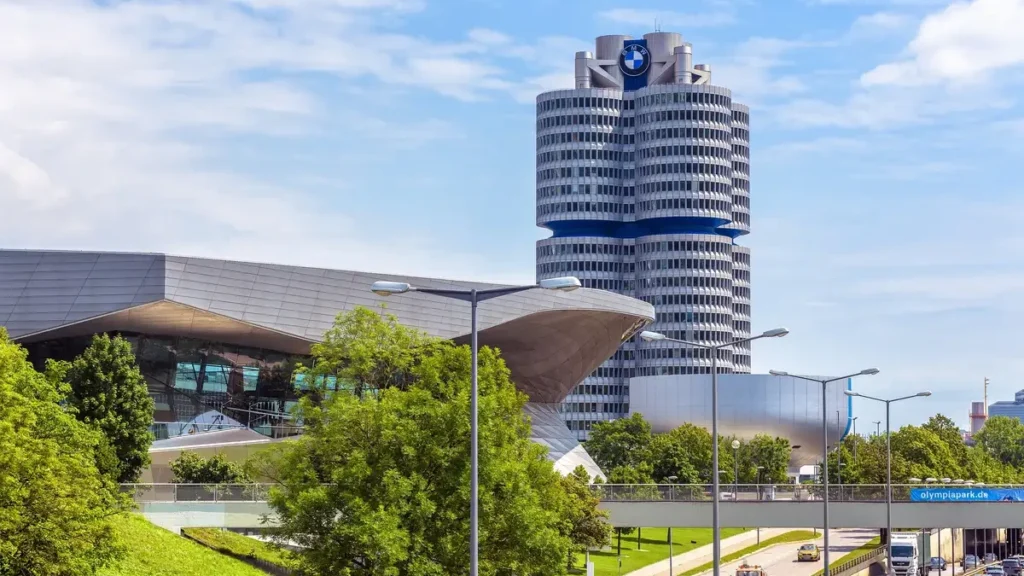
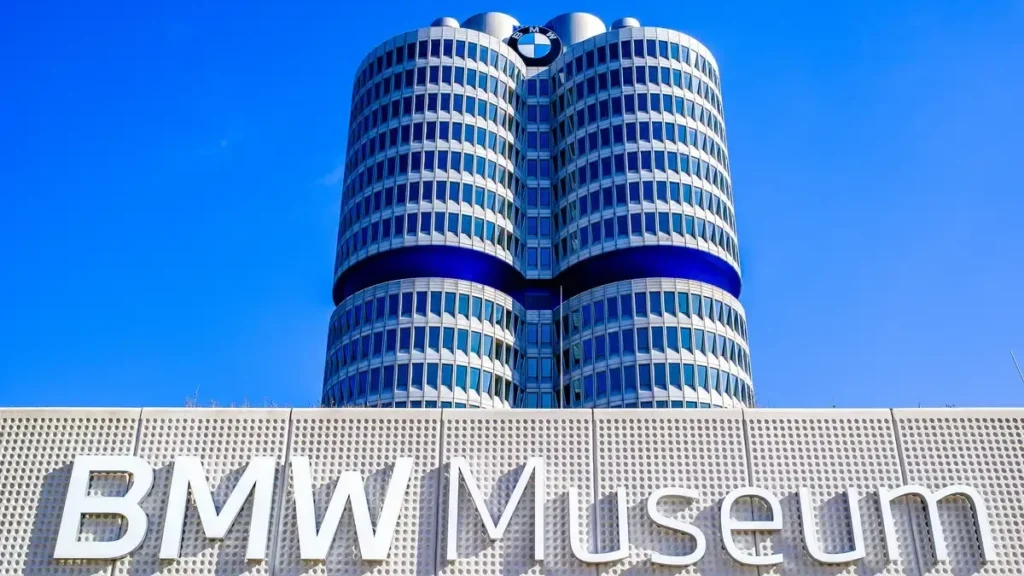
When you look at the BMW Headquarters, the inspiration is unmistakable. The building consists of four massive vertical cylindrical towers standing tightly together in a cloverleaf formation.
This distinct silhouette is a direct, deliberate homage to the four-cylinder engine. But why the four-cylinder, and not a V8 or an inline-six?
During the 1960s, BMW’s famous four-cylinder engine (specifically the M10 block) was the absolute backbone of the company’s success. It powered the legendary “New Class” vehicles, like the BMW 1500 and the iconic BMW 2002. These were the cars that quite literally saved BMW from financial ruin and established them as a premier builder of sporty, dynamic sedans. To Karl Schwanzer and the BMW board, memorializing the four-cylinder engine in the city’s skyline was the ultimate tribute to the engineering that built the brand.
An Engineering Marvel: Top-Down Construction
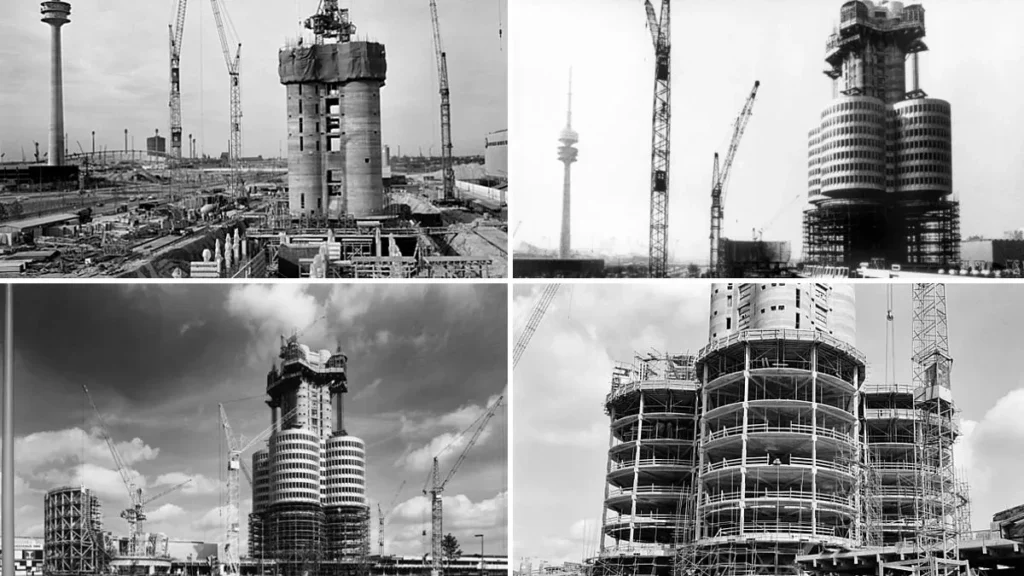
While the shape of the building is fascinating, how it was built is an absolute marvel of 1970s structural engineering.
Schwanzer and his engineering team utilized an incredibly rare and innovative technique known as “suspended-floor” or “top-down” construction. Traditional skyscrapers are built from the ground up, floor by floor. The BMW Headquarters was built in reverse.
First, the construction team poured a massive, central reinforced concrete tower (the core). Then, an enormous steel cross-beam was placed at the very top of this core. Instead of building the floors on top of each other, the individual floors were actually assembled on the ground level. Once a floor was finished, a powerful hydraulic system hoisted it up the central core, where it was permanently suspended from the steel cross at the top.
Because the four “cylinders” hang from the central core rather than resting on the ground, the building gives off a stunning visual illusion of weightlessness, as if this massive engine block is levitating just above the Munich streets.
| BMW Headquarters | Fast Architectural Facts |
| Lead Architect | Karl Schwanzer |
| Construction Period | 1968 – 1972 |
| Official Inauguration | May 18, 1973 |
| Total Height | 101 meters (331 feet) |
| Total Weight | Approx. 16,800 tons |
| Building Method | Hydraulic top-down suspension |
Racing the Clock: The 1972 Munich Olympics
Timing was everything for this project. BMW wanted the exterior of the building to be completed before the opening of the 1972 Summer Olympics, which were being hosted in Munich.
The Olympiapark was located right next to the construction site, meaning the eyes of the entire world—along with thousands of international cameras—would be pointed squarely at BMW’s backyard. The construction crews worked relentlessly, completing the exterior shell in exactly 26 months. When the Olympic games kicked off, the futuristic silver tower gleamed in the background, instantly becoming a symbol of a modern, rebuilt, and technologically advanced Germany.
The Surrounding Complex: The Museum and BMW Welt
The four-cylinder tower is the crown jewel, but it is supported by a sprawling, world-class automotive campus.
The BMW Museum (The Bowl):
Located right at the foot of the tower is the BMW Museum. Also designed by Karl Schwanzer, this windowless, silver, circular building is often referred to affectionately as the “Bowl” or the “Salad Bowl.” Just as the main tower represents an engine block, the museum’s shape is widely considered to represent a cylinder head. Inside, visitors navigate through a spiraling, Guggenheim-esque ramp system that showcases over a century of BMW’s motorcycles, motorsport legends, and classic cars.
BMW Welt (BMW World):
Directly across the street sits the futuristic BMW Welt, opened in 2007. Designed by the avant-garde architectural firm Coop Himmelb(l)au, this sprawling facility features a massive, cloud-like steel roof supported by a twisting double-cone structure. It serves as the ultimate brand experience center, functioning as an exhibition space, a culinary destination, and a grand delivery center where buyers from across the globe travel to receive the keys to their custom-ordered vehicles.
Cultural Impact and Historic Legacy
The BMW Headquarters has transcended its original purpose as a mere office building. It has become a global cultural icon. In 1999, recognizing its immense architectural significance, the German government officially declared the tower and the adjacent museum as protected historic monuments.
The building’s futuristic aesthetic has also caught the eye of Hollywood. It famously served as a primary filming location for the 1975 sci-fi cult classic film Rollerball, standing in for the headquarters of a dystopian global energy corporation.
Visiting the BMW Headquarters Today
If you are traveling to Germany, a trip to this automotive Mecca is highly recommended. Located right next to the Olympiapark, the complex is easily accessible via Munich’s U-Bahn (subway) system.
While the four-cylinder tower itself remains a secure, working corporate office for thousands of BMW Group employees, the surrounding areas are built for the public. You can spend an entire day exploring the deep history inside the BMW Museum, grabbing lunch at BMW Welt, and browsing the latest flagship vehicles. Guided architectural and plant tours are often available, offering deeper insights into the incredible engineering that keeps this historic campus running.
Friendly FAQ
Who designed BMW Headquarters?
The BMW Headquarters in Munich was designed by the acclaimed Austrian architect Karl Schwanzer. He won the design competition in 1968, proposing a radical, suspended building that mirrored the company’s engineering focus.
Why is BMW Headquarters shaped like an engine?
The building features four vertical cylindrical towers that symbolize the four-cylinder engines. Specifically, it pays homage to the M10 engine block, which was crucial to BMW’s massive success and financial turnaround in the 1960s.
When was BMW Headquarters built?
Construction began in 1968. The exterior shell was famously completed just in time for the 1972 Munich Olympics, and the building was officially inaugurated on May 18, 1973.
How was the BMW tower built?
It utilized an innovative “suspended-floor” or top-down construction method. The floors were built on the ground level and hydraulically hoisted up a central concrete core, where they were hung from massive steel cross-beams at the top.
Can visitors tour BMW Headquarters?
While the four-cylinder tower is an active office building and generally closed to the general public, visitors can freely explore the adjacent BMW Welt and purchase tickets to tour the historic BMW Museum located right next door.
Where is BMW Headquarters located?
The BMW Headquarters is located in the Am Riesenfeld district of Munich, Bavaria, Germany. It sits prominently adjacent to the historic Olympiapark complex.
More than just an office building, BMW Headquarters is a masterpiece of modern architecture that perfectly captures the brand’s engineering heritage. Designed by Karl Schwanzer, its iconic four-cylinder silhouette has become one of the most recognizable corporate landmarks in the automotive world, attracting enthusiasts and tourists alike.
