


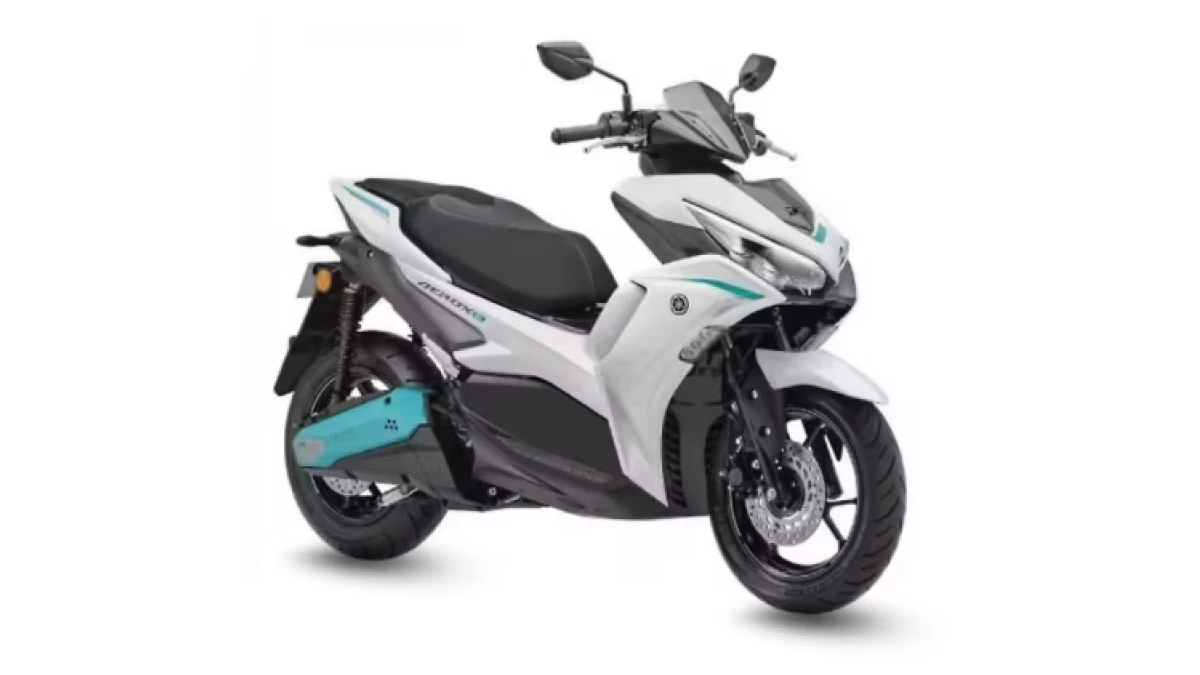
The premium electric two-wheeler market in India has just gained a highly aggressive, performance-focused contender. For years, the petrol-powered Yamaha Aerox 155 ruled its niche as a sharp, motorcycle-handling maxi-scooter designed strictly for enthusiasts who favor high-speed stability over simple utility. Now, Yamaha is leveraging that exact same performance DNA to make its entry into India’s high-end EV segment.
Officially launched at an introductory price of ₹2.82 lakh (ex-showroom), the new Yamaha Aerox-E completely bypasses the budget, mass-market commuter space. Instead, it aims straight for premium EV platforms, introducing an advanced high-performance powertrain while retaining the iconic, muscular design language of its internal combustion engine (ICE) sibling.
Dual Removable Batteries: Solving the High-Rise Charging Problem
The core foundation of the Aerox-E lies in its highly practical energy storage architecture. Rather than opting for a single, massive fixed battery pack that restricts users to ground-floor charging setups, Yamaha has equipped the maxi-scooter with two removable 1.5 kWh lithium-ion battery packs.
Combined, this 3 kWh high-energy system delivers a certified Indian Driving Cycle (IDC) riding range of up to 117 km on a single full charge. For urban flat-dwellers, these independent modules can be popped out under the seat and carried indoors for charging. Juicing up a single battery takes roughly 3 hours and 10 minutes, while a full 0 to 100% replenishment for both packs takes approximately 6 hours and 20 minutes via a standard home charger.
Standard WordPress Specification Matrix
To give your readers a transparent breakdown of how the Aerox-E matches up against India’s most popular premium sport-electric scooters, the detailed table below highlights the pricing, power metrics, and feature lists across the segment:
| Electric Scooter Model | Ex-Showroom Base Price | Peak Motor Power Output | Battery Setup / Capacity | Claimed Certified Range |
| Yamaha Aerox-E | ₹2.82 Lakh | 9.4 kW (PMSM Motor) | Dual Removable / 3.0 kWh | 117 km per Charge |
| TVS X | ₹2.64 Lakh | 11.0 kW (PMSM Motor) | Fixed Pack / 4.40 kWh | 140 km per Charge |
| Ather 450 Apex | ₹1.95 Lakh | 7.0 kW (PMSM Motor) | Fixed Pack / 3.70 kWh | 157 km per Charge |
| Ola S1 Pro (Gen 2) | ₹1.35 Lakh | 11.0 kW (Mid-Drive) | Fixed Pack / 4.00 kWh | 195 km per Charge |
| River Indie | ₹1.38 Lakh | 6.7 kW (Mid-Drive) | Fixed Pack / 4.00 kWh | 161 km per Charge |
Uncompromised Chassis Dynamics and the “Boost” Trigger
Powering the Aerox-E is a sophisticated swingarm-mounted Permanent Magnet Synchronous Motor (PMSM) generating a healthy 9.4 kW of peak power and 48 Nm of instant torque. On open stretches, the scooter features three distinct electronic maps: Eco, Standard, and Power. In Power mode, the maxi-scooter comfortably hits a top speed of 95.5 km/h.
What sets it apart from typical electric vehicles is the handlebar-mounted Boost button. Clicking this tactile switch triggers a 10-second surge of peak electrical discharge, providing rapid throttle response to execute swift overtakes in highway traffic. To balance this sudden rush of torque, Yamaha has carried over its safety-focused Traction Control System (TCS) and single-channel ABS acting on large 14-inch alloy wheels at both ends.
Premium Connected Cockpit and the Storage Trade-Off
The dashboard sees a significant evolutionary upgrade from the base petrol version. The older negative LCD panel is entirely replaced by a rich 5-inch full-colour TFT instrument console. Using the native Y-Connect Bluetooth application, riders can sync their smartphones to project real-time turn-by-turn navigation data, localized weather updates, and incoming notification alerts directly on screen.
The Practicality Trade-Off: Because the two heavy 1.5 kWh battery packs sit directly beneath the rider’s saddle, under-seat storage space takes a distinct hit. Storage drops from the petrol version’s generous 24.5 liters down to 15 liters on the electric model, meaning it will comfortably hold a half-face helmet or personal chargers, but not full-sized gear.
Final Thoughts
The arrival of the Yamaha Aerox-E represents a calculated gamble by the Japanese manufacturer. At ₹2.82 lakh, it demands a significant financial premium over mass-market electric options. However, Yamaha isn’t chasing raw volume here. By preserving the legendary handling, aggressive looks, and dual-shock architecture of the standard Aerox, they have created a highly desirable, zero-emission package for riding enthusiasts who want maximum cornering performance without sacrificing the daily flexibility of removable batteries.
