


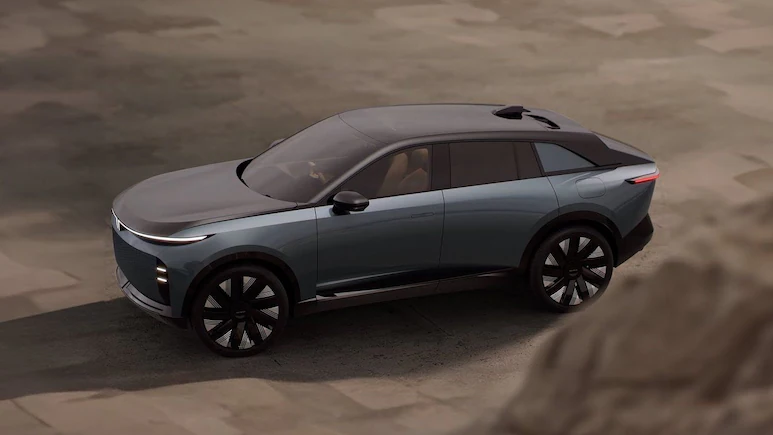
The Indian automotive landscape has officially witnessed a massive technological roadmap change for Tata Motors’ highly anticipated, ultra-premium Avinya electric vehicle sub-brand. In a major strategic course correction, the homegrown automaker is shifting away from its original blueprint to utilize Jaguar Land Rover’s (JLR) high-cost Electrified Modular Architecture (EMA). Instead, Tata will leverage the newly unveiled Freelander EV platform, born from the Chery-Jaguar Land Rover (CJLR) joint venture ecosystem.
This critical pivot marks a realistic, high-velocity approach by Tata to bypass sluggish development cycles. By plugging directly into a mature, cutting-edge EV architecture heavily backed by China’s hyper-advanced supply chains, Tata drastically cuts its time-to-market while sharpening its cost competitiveness against a fierce new wave of premium electric rivals.
The Architectural Pivot: JLR’s EMA vs. CJLR’s Freelander Platform
To fully grasp what this technology shift means for the upcoming flagship EV portfolio, here is a comparative breakdown of how the engineering foundations stack up:
| Core Engineering Metric | Original Blueprint (JLR EMA Platform) | Revised Strategy (CJLR Freelander Platform) |
| Primary Platform Origin | Jaguar Land Rover (UK Native Development) | Chery-JLR Joint Venture Ecosystem (China-sourced iMax/EOX) |
| Voltage Backbone | 800V High-Voltage Architecture | 800V Architecture with Ultra-Fast Charging Support |
| Peak DC Charging Speed | Globally benchmarked fast charging | Up to 350 kW DC Fast Charging capability |
| Powertrain Adaptability | Strictly Battery Electric Vehicles (BEV) only | Multi-energy support: BEV, Plug-in Hybrid (PHEV), and Range Extenders (EREV) |
| Projected Battery Sizes | High-density bespoke premium packs | 65 kWh to 80 kWh premium packs |
| Production Launch Window | Delayed beyond initial targets due to high costs | Firmly back on track for a definitive 2027 rollout |
Why the Tech Switch? Striking a Balance Between Cost and Speed
When Tata Motors initially showcased the gorgeous Avinya concept, the intent was to anchor it on premium JLR architecture. However, the raw commercial realities of scaling JLR’s ultra-premium EMA platform for the Indian and global mass-luxury brackets became mathematically difficult to justify.
By pivoting to the Freelander architecture, Tata avoids the massive capital expenditures and years of verification required to build an upscale platform from scratch. Furthermore, the Freelander platform’s inherent modularity provides a unique structural safeguard for India’s emerging charging landscape. Because the architecture natively supports Extended-Range Electric Vehicles (EREVs)—where a highly efficient petrol engine operates strictly as an onboard generator to charge the battery pack—Tata has the strategic flexibility to introduce range-extender options to combat highway charging anxiety.
Manufacturing Realities and the New Power Plant
Despite the platform being sourced via the global Chery-JLR joint venture pipeline, Tata Motors is taking deep measures to ensure the Avinya range retains its distinct identity while building a competitive domestic assembly operation.
Initial production batches will take the Completely Knocked Down (CKD) route, with vehicle kits imported and seamlessly assembled at the newly opened, state-of-the-art facility in Panapakkam, Tamil Nadu. This ultra-modern plant operates alongside localized supplier channels, allowing Tata to establish a high-quality production baseline with a 30,000-unit initial threshold. Over time, deep localization efforts will shift assembly entirely into domestic hands to keep component costs heavily optimized.
Revised Product Sequencing: The Avinya X Takes Point
The platform overhaul has directly reshaped the product pipeline, flipping internal project priorities to get rubber on the road as quickly as possible.
- Avinya X Coupe SUV (Codenamed P2): This premium 5-seat C-SUV coupe has officially leapfrogged the original hatchback/sedan concept (P1) to become the brand’s maiden commercial launch. Engineering prototypes will begin rigorous validation testing later this year, aiming for an official market debut in 2027.
- Three-Row Premium SUV: Following the Avinya X, Tata is already evaluating a sprawling, three-row luxury electric flagship designed to firmly solidify Avinya as a standalone premium brand, completely distinct from mainstream showrooms.
Targeted to slot comfortably into the ₹30 Lakh to ₹40 Lakh pricing spectrum, the Avinya range positions itself as a luxury tier above the Nexon EV and Curvv EV, ready to lock horns with Mahindra’s upcoming premium electric SUVs, JSW MG Motor, and entry-level global premium imports.
