


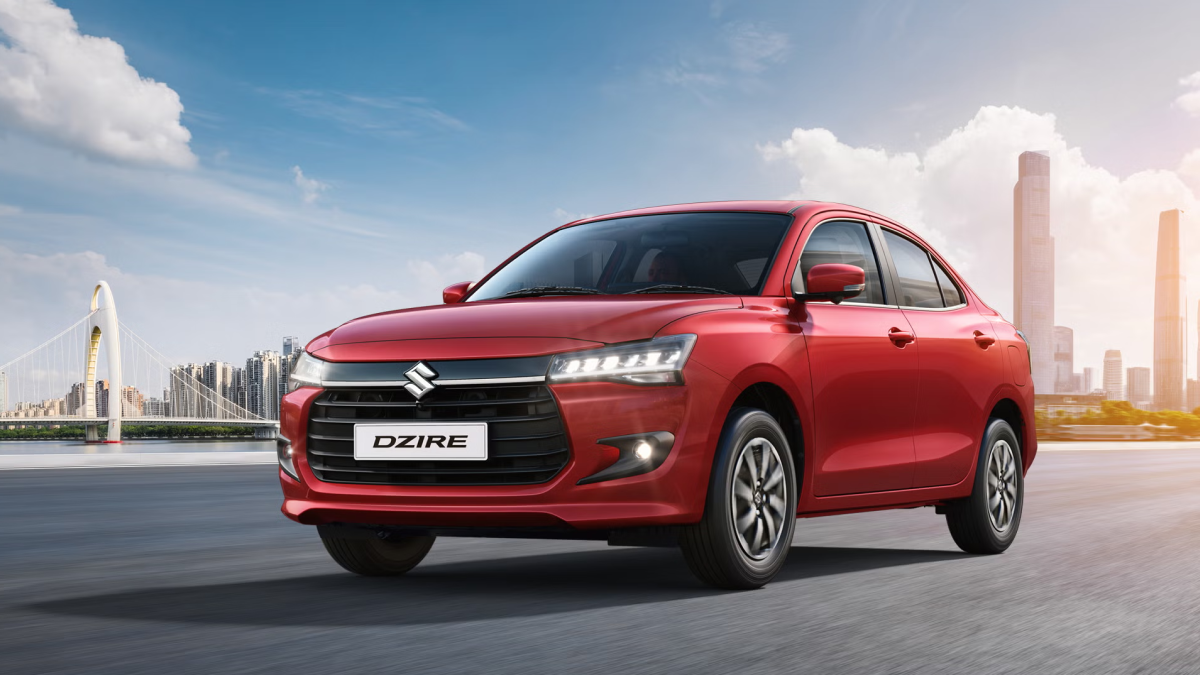
The global automotive hierarchy is witnessing a historic seismic shift. For the first time in history, Suzuki Motor Corporation is on the verge of overtaking Honda to become Japan’s second-largest automaker by global sales volume, trailing only Toyota. While this is a Japanese corporate milestone, the engine room of this success isn’t located in Hamamatsu, but in the industrial corridors of Haryana and Gujarat.
As of May 2026, the data is clear: Maruti Suzuki India has transformed from a subsidiary into the undisputed backbone of Suzuki’s global empire.
A Record-Breaking Performance in FY2026
The primary catalyst for this ascent was a blockbuster performance in Fiscal Year 2026 (FY26). Maruti Suzuki achieved a record-shattering production of 23.4 lakh vehicles. To put this in perspective, India now accounts for more than 60% of Suzuki’s worldwide sales and over 70% of its global profits.
While Honda has pivoted its focus toward high-margin premium EVs in North America and China, Suzuki has doubled down on the “mass-mobility” markets of the Global South, led by India. This strategic divergence has allowed Suzuki to capture a volume lead that was once thought impossible.
India: The Global Export Nerve Center
India is no longer just a “consumption market” for Suzuki; it has evolved into its most critical global export hub. In early FY2027, Maruti Suzuki’s domestic market share hovered near 42%, but its impact abroad is equally staggering. Vehicles manufactured in India are now being shipped to over 100 countries, including Latin America, Africa, and Southeast Asia.
To sustain this momentum, Suzuki is aggressively scaling its infrastructure:
- The Kharkhoda Expansion: The massive new facility in Haryana is being fast-tracked to add 2.5 lakh units in its first phase.
- The 4-Million Goal: Suzuki has confirmed plans to reach an annual production capacity of 4 million cars in India by the end of the decade.
- The “Made-in-India” EV: By 2025-26, Suzuki will begin exporting its first global electric SUV (the eVX) from India to Europe and Japan, marking the first time Indian engineering will lead Suzuki’s charge into the developed EV markets.
Why This Overtaking is a Watershed Moment
Honda has historically been the “prestige” brand of Japan, known for high-revving engines and premium sedans. However, the 2026 market dynamics favor Suzuki’s specialty: affordable, reliable, and fuel-efficient mobility.
By leveraging India’s low-cost manufacturing base and a supply chain that is nearly 95% localized, Suzuki can offer vehicles at price points that global competitors simply cannot match. In the battle for volume, Suzuki has effectively “Indianized” its corporate DNA to win.
Final Verdict: The Future is Bharat-Centric
The conclusion is inescapable: Suzuki’s potential rise to the #2 spot in Japan is an Indian success story. Maruti Suzuki has provided the scale, the profitability, and the manufacturing prowess required to challenge the global elite. As the “H” badge feels the heat from the “S” badge, the world is learning that the road to global automotive dominance now runs through New Delhi.
Do you think Honda can reclaim its position with its new India-focused SUV strategy, or has Suzuki already built an unshakeable lead? Share your thoughts below!
