


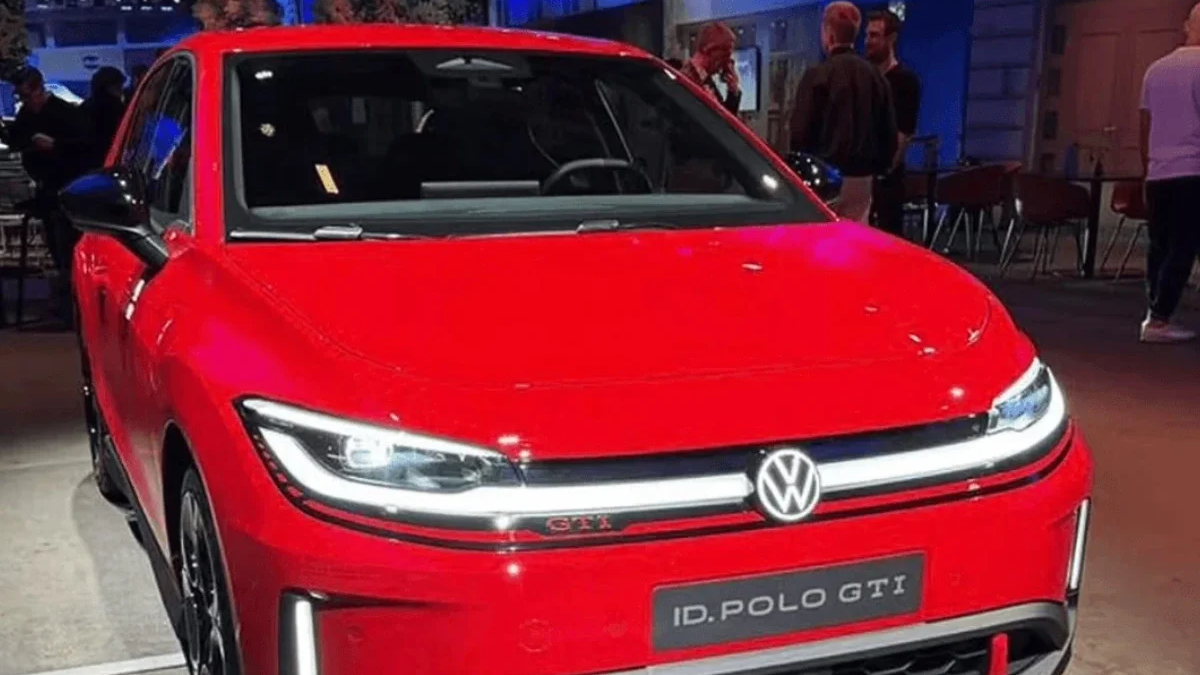
Volkswagen isn’t just swapping an engine for a battery; they are reimagining the Polo for a software-defined future. Launching at a starting price of €24,995 (approx. ₹22.5 lakh), the ID. Polo targets the heart of the mass-market EV segment, competing directly with the Renault 5 and the BYD Dolphin.
1. Design: “Pure Positive” and Nostalgia
The ID. Polo is the first model to debut Volkswagen’s new “Pure Positive” design language. It moves away from the somewhat polarizing “bubble” look of early ID models, returning to the timeless, stable proportions that made the original Golf and Polo famous.
- Classic C-Pillar: The thick C-pillar is a direct nod to the Mk1 Golf, giving the car a familiar, sturdy look.
- Compact yet Spacious: While it measures just 4,053 mm in length (nearly identical to the petrol Polo), the MEB+ platform allows for a 2,600 mm wheelbase. This translates to 19 mm more interior room and a massive 441-litre boot—nearly 25% larger than the current petrol model.
2. Powertrain and “Flash” Charging
Volkswagen is offering the ID. Polo with two distinct battery chemistries to balance cost and performance.
| Feature | Standard (LFP) | Long Range (NMC) |
| Battery Size | 37 kWh (Net) | 52 kWh (Net) |
| WLTP Range | Up to 329 km | Up to 454 km |
| Power Output | 116 hp / 135 hp | 211 hp |
| DC Fast Charge | 10–80% in 23 mins | 10–80% in 24 mins |
The inclusion of Vehicle-to-Load (V2L) technology as standard means your ID. Polo can act as a mobile power bank, capable of charging laptops, e-bikes, or even camping gear at up to 3.6 kW.
3. Interior: The Return of Real Buttons
In a significant win for usability, Volkswagen has listened to customer feedback. The ID. Polo features a 13-inch central touchscreen, but underneath it lies a dedicated row of illuminated physical switches for climate control and hazard lights.
- Retro Mode: The 10-inch driver’s display features a “Retro Mode” that can mimic the analog dials of a classic 1970s Golf or Polo.
- Connected Travel Assist: This new system is the first in its class to recognize traffic lights, allowing the car to automatically slow down and stop when it detects a red light during cruise control.
4. Why This Matters for India
While the ID. Polo is launching in Europe first, it is built on the same architecture that will eventually underpin Volkswagen’s “Entry EV” strategy for emerging markets. With its focus on localization and affordability, the ID. Polo provides the clearest look yet at what a future “Made in India” electric Volkswagen could offer.
The Verdict
The ID. Polo is the most important car Volkswagen has launched this decade. By combining a 450km range with a sub-€25,000 price and a return to user-friendly physical buttons, VW is proving that the transition to electric doesn’t have to mean losing the charm and practicality of a “classic” car.
Are you happy to see the Polo nameplate go electric, or will you miss the GTI’s turbo-petrol roar? Let us know in the comments!
