


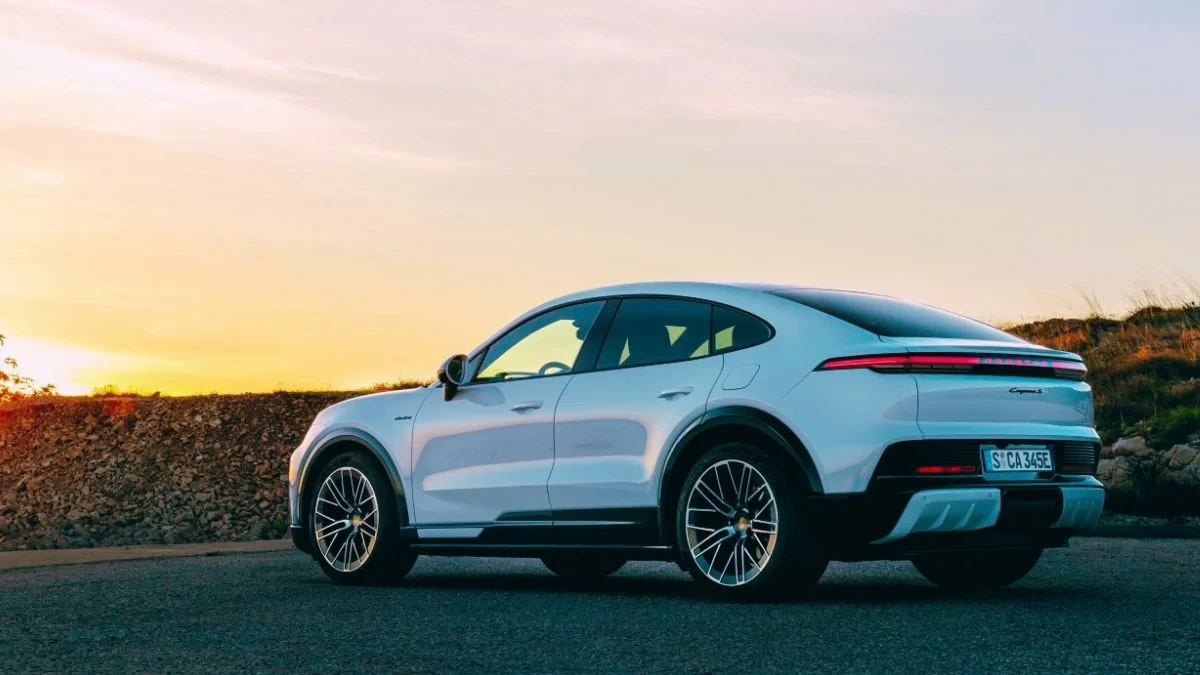
For many enthusiasts, the lack of a gearbox in an EV isn’t a technical advantage; it’s an emotional void. Porsche’s development—likely destined for the electric 718 Boxster and Cayman—aims to replicate the physical interruptions of a dual-clutch PDK system.
The Physics of the Fake: In a combustion car, a gear shift involves a momentary drop in torque and a change in engine pitch. Porsche’s system uses software to precisely modulate the electric motor’s power delivery, creating a “jolt” that mimics the inertia shift of a physical gear change.
Technical Pillars of Simulated Shifting
Porsche isn’t just adding a sound effect; they are engineering a haptic experience. Here are the three ways they’re making the “phantom” gearbox feel real:
- Torque Interruption: By momentarily cutting or surging power during a “shift,” the car creates the sensation of a gear engaging. This simulates the longitudinal G-force changes drivers associate with performance driving.
- Virtual Ratios: Porsche is experimenting with software-defined gear ratios. This means a driver could “downshift” into a virtual second gear to increase regenerative braking feel before a corner, just as they would use engine braking in a 911.
- Active Sound Synthesis: This is paired with an external and internal acoustic system that syncs the “revs” to the virtual gear, using frequency modulation to signal when it’s time to pull the paddle.
The Hyundai Connection: A Proof of Concept
Porsche isn’t the first to the party. The Hyundai Ioniq 5 N debuted a similar system called e-Shift. Hyundai proved that by simulating an 8-speed paddle-shift transmission, they could make an EV feel lighter and more intuitive on a track. Porsche’s version is expected to be even more sophisticated, potentially integrating with their Active Ride suspension to pitch the car’s body slightly during shifts, further selling the illusion of a mechanical gearbox.
Why It Matters: The “Manual” Future of EVs
Critics argue that adding simulated gears to an EV is like adding fake pedals to a bike. However, Porsche’s data suggests that for performance driving, sensory feedback is a safety and engagement tool. It helps a driver gauge speed by ear and feel rather than constantly glancing at a digital speedometer.
The Performance Comparison
| Feature | Standard EV | Porsche Simulated Tech |
| Power Delivery | Linear / Seamless | Interrupted / Rhythmic |
| Driver Feedback | Speedometer-based | Acoustic & Haptic-based |
| Braking Feel | Consistent Regen | “Engine Braking” simulation |
| Engagement | Passive | Active (Paddle interaction) |
The Verdict
By 2026, the “soul” of a Porsche will no longer be defined by the number of cylinders, but by the quality of its code. If Porsche can successfully simulate the rhythmic joy of a PDK gearbox, they may finally convince the last of the ICE-purists that the electric future doesn’t have to be boring.
