


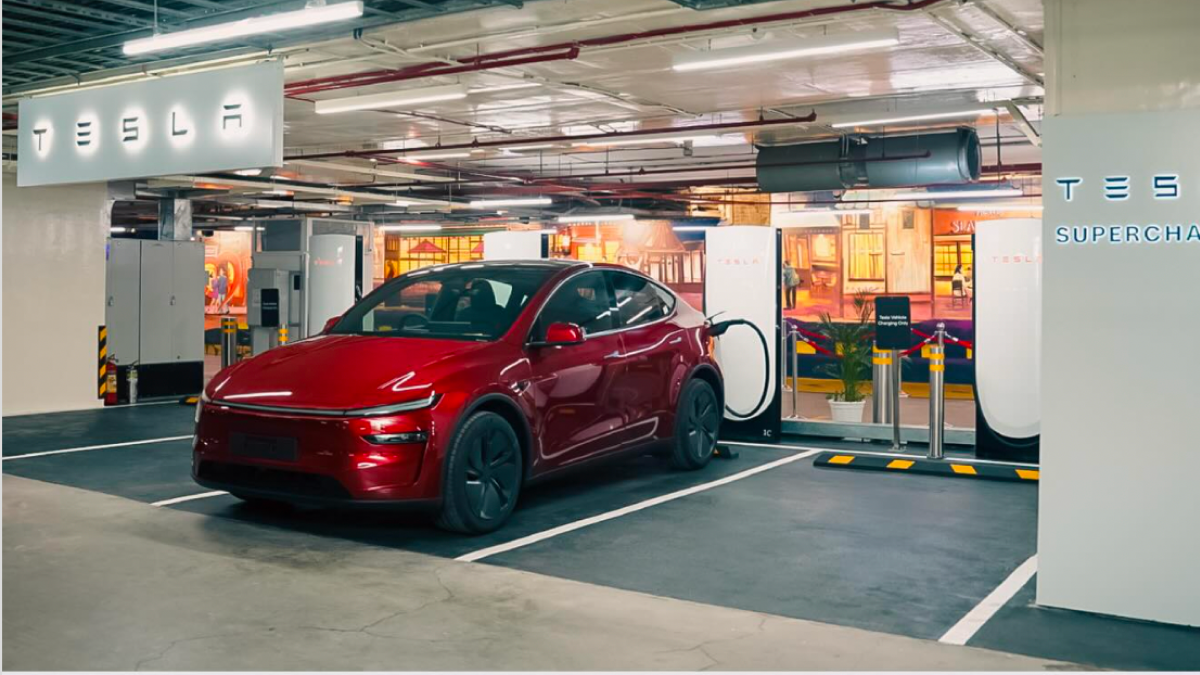
For years, the conversation around Tesla in India was binary: “When are they coming?” or “Are they too expensive?” But as of April 2026, the narrative has shifted to the ground game. Tesla isn’t just selling cars; they are aggressively laying the copper and concrete for an ecosystem that intends to make range anxiety a relic of the past.
By expanding into the “Tier-1.5” corridor—Hyderabad, Chennai, and Ahmedabad—Tesla is moving beyond the luxury bubbles of Delhi and Mumbai to capture the technical and industrial elite of India.
The Supercharger “Highway Spine”
The most critical pillar of this expansion is the highway network. Tesla’s strategy in India follows a “Spine and Rib” model. The “Spine” consists of ultra-high-speed corridors along the Golden Quadrilateral, while the “Ribs” connect these to weekend getaway destinations like Jaipur, Mahabaleshwar, and Pondicherry.
Technical Note: Tesla is deploying its V4 Supercharger architecture in these new locations. Unlike the older V3 units, V4 supports a 350kW peak rate and features longer cables, accommodating the unique parking challenges often found in Indian commercial hubs.
Infrastructure Beyond the Plug
Charging is only half the battle. To pass the “human” test for Indian buyers—who are notoriously service-conscious—Tesla is decentralizing its support structure.
The Metro Phase
2024 – 2025
Established flagship Experience Centers in Mumbai (BKC) and Gurgaon. Service was centralized, requiring “flatbedding” for major repairs outside these zones.
The Satellite Expansion
Early 2026
Opening of “Service Lite” centers in Chennai and Hyderabad. These focus on software diagnostics and high-turnover parts (tires, wipers, 12V batteries) to reduce downtime.
The Regional Hub Model
Late 2026 (Projected)
Ahmedabad and Pune to receive full-scale body shops and paint facilities, removing the need to ship vehicles back to Mumbai for structural repairs.
Why This Matters: The Ecosystem Lock-in
Tesla’s expansion into Hyderabad and Chennai isn’t just about sales volume; it’s about talent and data. These cities are the R&D backbones of India. By placing retail and service centers in the heart of these tech hubs, Tesla is marketing directly to the engineers and developers who are most likely to embrace the “Software Defined Vehicle” (SDV) philosophy.
Furthermore, by building a reliable proprietary network, Tesla creates a “walled garden.” While third-party chargers (like Tata Power or Zeon) are improving, the seamless “Plug-and-Charge” experience of a Tesla Supercharger remains the ultimate convenience feature. For a buyer in Ahmedabad looking to drive to Mumbai, that 15-minute reliable charge isn’t just a luxury—it’s the reason they buy the car.
The Verdict
Tesla is no longer testing the waters; they are building the pool. This infrastructure blitz addresses the #1 barrier to EV adoption in India: predictability. As the chargers go live and the service bays open, Tesla is successfully rebranding itself from a “Silicon Valley Import” to a “Local Infrastructure Partner.”
