


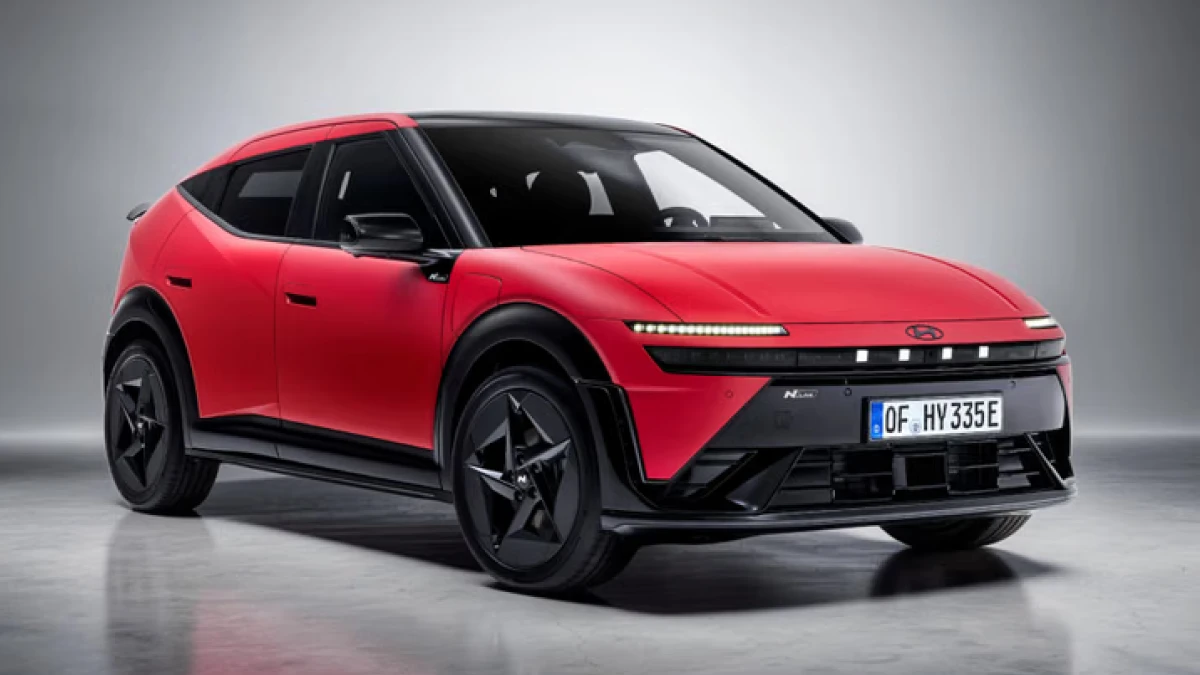
The Ioniq family has a new entry point, and it’s smaller than you might expect. On April 20, 2026, at Milan Design Week, Hyundai officially pulled the covers off the all-new Ioniq 3. Positioned as the electric successor to the spirit of the i20 and Bayon, this compact “Aero Hatch” is designed to bring the premium tech of the Ioniq 5 into a city-friendly footprint.
Measuring just 4,155mm to 4,170mm in length, the Ioniq 3 is built on a 400V version of the celebrated E-GMP architecture, making it one of the most efficient compact EVs ever produced.
1. Range & Efficiency: Beating the B-Segment
Despite its small size, the Ioniq 3 isn’t a “neighborhood electric vehicle.” It offers two distinct battery configurations:
- Standard Range (42.2 kWh): Delivers a WLTP-claimed 344 km, perfect for daily urban commutes.
- Long Range (61 kWh): Boasts a segment-leading 496 km (308 miles).
- Rapid Charging: Thanks to its optimized thermal management, it can charge from 10% to 80% in just 29 minutes at a DC fast charger, while an optional 22kW AC charger allows for significantly faster home charging than the industry standard.
2. Design: The “Art of Steel” Philosophy
The Ioniq 3 debuts Hyundai’s new “Art of Steel” design language, characterized by sharp, muscular creases that mimic the tension of raw metal.
- Pixel Signature: The front features a “layered” look with high-set pixel LED daytime running lamps and a unique “four-dot” LED signature (Morse code for “H”).
- Aero Efficiency: The sloping roofline and integrated rear spoiler result in a drag coefficient of just 0.263, aiding that impressive 496km range.
- The Megabox: While the total cargo capacity is 441 liters, the Ioniq 3 features a hidden 119-liter “Megabox” beneath the trunk floor—ideal for storing charging cables or muddy gear.
3. Interior: A 1970s-Inspired Digital Sanctuary
Inside, the Ioniq 3 feels significantly larger than its exterior suggests, thanks to a 2,680mm wheelbase and a completely flat floor.
- Pleos Connect Infotainment: This is the first Euro-spec Hyundai to run the Android Automotive-based Pleos Connect system, displayed on a massive 14.6-inch touchscreen in higher trims.
- Sustainable Style: The cabin materials are inspired by 1970s Italian furniture, utilizing bio-based textiles and recycled plastics that provide a “warm” tactile feel compared to cold plastics.
- N Line Sportiness: The N Line variant adds red contrast stitching, a sportier steering wheel, and 19-inch aero wheels.
2026 Hyundai Ioniq 3 Spec Comparison
| Feature | Standard Range | Long Range (N Line) |
| Battery Capacity | 42.2 kWh | 61.0 kWh |
| Max Power | 147 PS (107 kW) | 135 PS (99 kW) |
| Max Range (WLTP) | 344 km | 496 km |
| Infotainment | 12.9-inch Screen | 14.6-inch Screen |
The Verdict
With a target price in Europe of around €30,000 (£25,000), the Ioniq 3 is Hyundai’s gamble on “affordable luxury.” By offering nearly 500km of range in a car the size of a hatchback, Hyundai has set a high bar for the upcoming Kia EV2 and VW ID.2.
Does the 496km range and “Megabox” storage make the Ioniq 3 the ultimate city EV, or is it still too small for your family? Let us know in the comments!
