


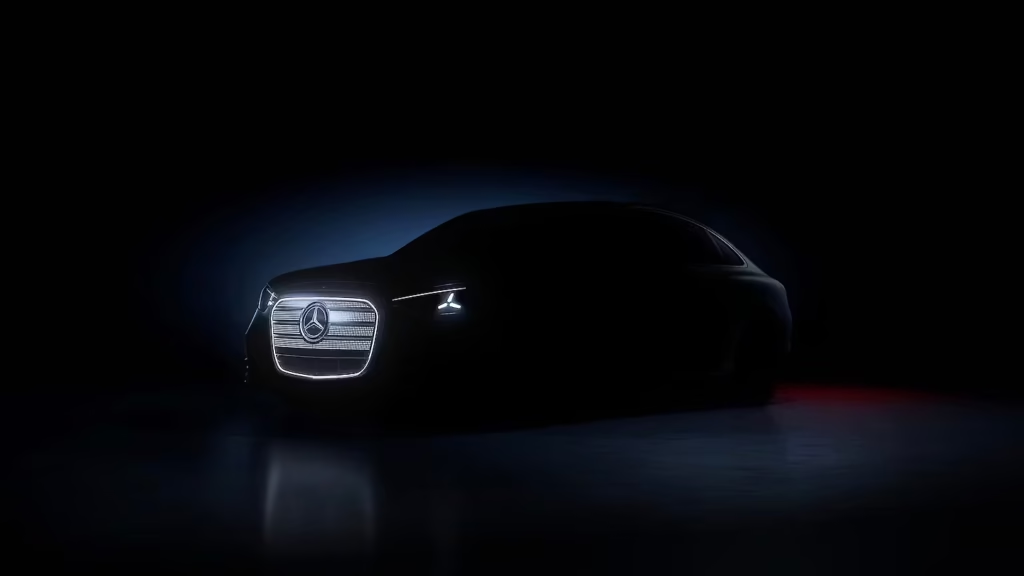
The wait for the “baby EQS” is almost over. On April 17, 2026, Mercedes-Benz pulled the curtains back on the interior of the upcoming C-Class EV (likely to be dubbed the EQC Sedan), just days before its full global debut in South Korea. While the exterior remains under wraps, the cabin reveals a vehicle designed to leapfrog the competition in the premium electric sedan segment.
Built on a dedicated MB.EA electric architecture, this new model sheds the cramped rear quarters of its petrol predecessor, offering a “limousine-like” sense of space in a compact footprint.
The Dashboard: 39 Inches of Glass
The focal point of the cabin is the optional MBUX Hyperscreen. Unlike the segmented units found in older models, this is a seamless 39.1-inch pillar-to-pillar display packed with close to 10 million pixels.
- Superscreen vs. Hyperscreen: The standard “Superscreen” setup features three distinct screens under one glass panel, while the flagship Hyperscreen merges the driver, central, and passenger displays into one continuous visual flow.
- Minimalist Command: Almost all physical buttons have been scrubbed from the dash. However, Mercedes has retained high-quality haptic toggles on the new steering wheel and a dedicated row of “quick-access” touch controls on the floating center console.

Sky Control: Sleeping Under 162 Stars
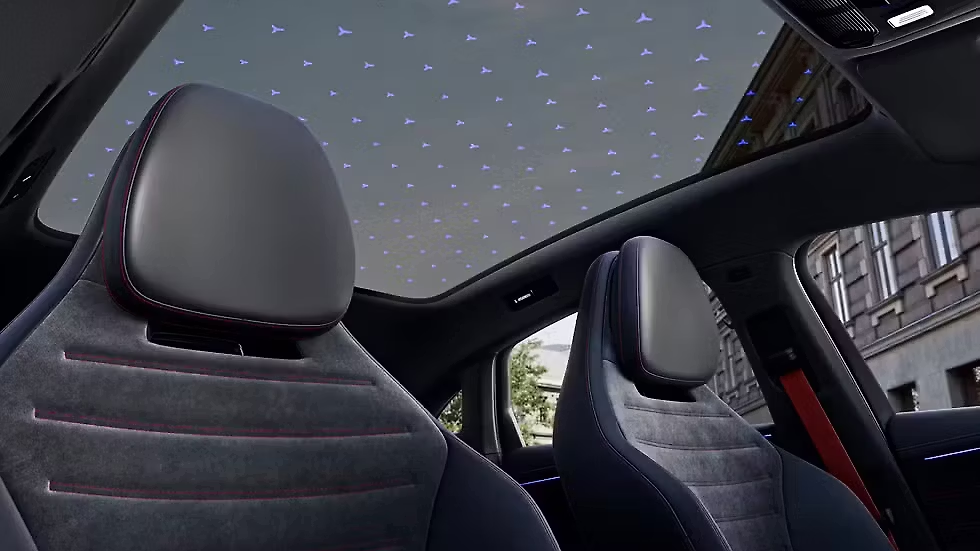
In a move to differentiate the C-Class from the larger EQS, Mercedes has introduced the Sky Control panoramic roof. This fixed glass panel features 162 individually illuminated stars embedded into the glass. These stars aren’t just static; they sync with the 64-color ambient lighting system, pulsing or changing hue based on your driving mode or the music playing through the 710-watt Burmester 4D sound system.
Engineering Comfort: Faster Heat, Less Noise
Beyond the glitz, there is significant “invisible” engineering at work.
- The Heat Pump Advantage: The 2026 C-Class EV debuts a new multi-source heat pump. Mercedes claims this system can heat the cabin twice as fast as a combustion-powered car while consuming 50% less energy, preserving vital range in winter.
- Acoustic Sealing: To combat the “hiss” of the road often found in EVs, the cabin uses laminated side glass and new decoupling elastomer mounts between the suspension and the body, making this the quietest C-Class ever produced.
Interior Comparison: Mercedes C-Class EV vs. BMW i3
| Feature | 2026 Mercedes C-Class EV | 2026 BMW i3 (Neue Klasse) |
| Main Display | 39.1-inch Hyperscreen | Panoramic Vision (Base of Windshield) |
| Roof Tech | Sky Control (162 Stars) | Full-Width Ambient Sky |
| Sustainability | Vegan Society Certified | Recycled Ocean Plastics |
| Audio Tech | 4D Sound (Seat Vibrations) | 3D Spatial Audio |
The Verdict
By moving the Hyperscreen into the C-Class segment and adding features like “Twisted Diamond” Nappa leather and vegan-certified interiors, Mercedes is clearly targeting a younger, tech-obsessed demographic. The full specifications—including the rumored 670 km WLTP range—will be confirmed on April 20.
Does a 39-inch screen make the C-Class EV a “must-buy,” or do you prefer BMW’s more restrained approach to interior tech? Let us know in the comments!
