


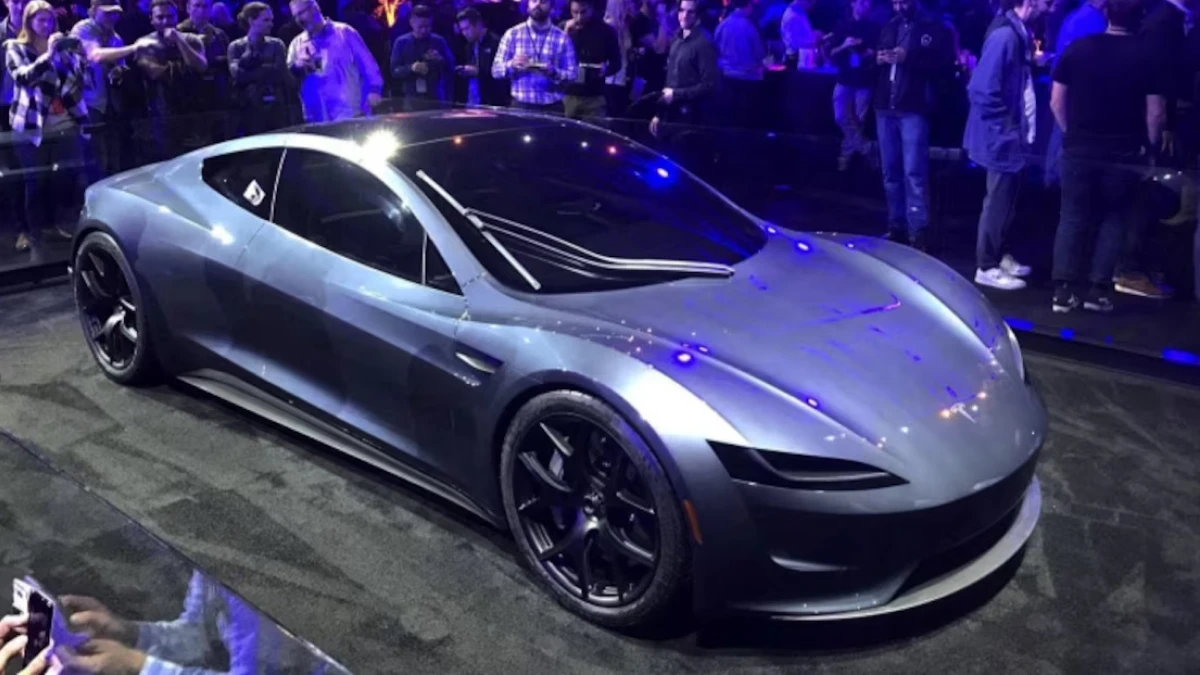
Nearly nine years after the second-generation Tesla Roadster concept was first presented in November 2017, the electric vehicle pioneer has officially locked in the global debut of its production-ready flagship sports car. Tesla has sent official invitations to reservation holders and media members for a launch event scheduled for October 1, 2026, in Waco, Texas.
The reveal ends years of continuous schedule shifts, design revisions, and technical challenges. With an RSVP deadline set for mid-September 2026, the Texas event is expected to showcase the final exterior and interior design, confirmed powertrain specifications, exact pricing tiers, and production start timelines.
Detailed Specifications: Concept Target vs. Expected Production Figures
When Tesla unveiled the original Roadster 2.0 concept, it made performance claims that challenged conventional automotive limits. The following data compares the original 2017 concept targets with the updated expectations for the production-spec vehicle.
| Specification Metric | Original 2017 Concept Target | Projected Production-Spec Figures | Industry Context & Benchmarks |
| 0–60 mph (0–97 km/h) Acceleration | 1.9 Seconds | Sub-1.9 Seconds (Standard) / ~1.1 Seconds (SpaceX Pack) | Outpaces current hypercars like Rimac Nevera and Pininfarina Battista. |
| Top Speed | Over 250 mph (402 km/h) | Over 250 mph (402 km/h) | Competes with internal combustion hypercars like the Bugatti Tourbillon. |
| EPA Certified Driving Range | 620 Miles (998 km) | 500–600 Miles (800–965 km) | Enabled by advanced high-density structural battery architecture. |
| Battery Pack Capacity | 200 kWh | 180–200 kWh (Structural Pack) | Nearly double the battery size of standard premium electric sedans. |
| Drivetrain Configuration | Tri-Motor All-Wheel Drive | Tri-Motor or Quad-Motor AWD | Torque vectoring across both front and rear axles. |
| Aerodynamic Package | Retractable Glass Roof | Active Wing & Thruster Ports | Designed for maximum high-speed downforce and low drag. |
| Base Price / Deposit | $200,000 Base / $250,000 Founder | $200,000 – $250,000+ | Reservation deposits reached $50,000 for standard models. |
Analysis of the Production Roadster Teaser
The official teaser image released by Tesla provides concrete visual confirmation that the production Roadster differs significantly from the 2017 prototype. Automotive design analysts have noted several striking exterior details from the rear-quarter silhouette:
- Full-Width LED Tail-Lamp Assembly: A sleek, horizontal light bar spans the entire rear section, replacing the traditional dual-housing taillight layout of the earlier concept.
- Active Rear Aerodynamic Wing: A substantial rear wing is positioned across the back, providing necessary downforce at velocities exceeding 200 mph.
- Four Rear Thruster Nozzles: Mounted horizontally below the rear fascia are four specialized nozzle openings. These nozzles appear directly linked to the long-rumored SpaceX Option Package.
- Extreme Low-Slung Proportions: Wide rear haunches, aggressive air diffusers, and an ultra-low ride height emphasize track-focused performance.
The SpaceX Package: Cold-Gas Thruster Integration
The most anticipated aspect of the production Roadster is the practical execution of the optional SpaceX package. First suggested by CEO Elon Musk shortly after the initial reveal, the system replaces the rear passenger seats with composite overwrapped pressure vessels (COPV) filled with compressed air.
- Core Pressure System: Uses high-pressure compressed air stored in onboard carbon-wrapped tanks, which are replenished automatically via dedicated regenerative air pumps.
- 10 Micro-Thrusters Around Chassis: High-pressure cold-gas nozzles are strategically arrayed around the car to assist launch acceleration (rear), lateral cornering stability (sides), and high-speed emergency braking or nose downforce (front).
- Performance Objective: By releasing thrust simultaneously with electric motor torque, the system aims to overcome traditional mechanical tire traction limits to achieve a 0–60 mph sprint in roughly 1.1 seconds.
Timeline of Development and Pushed Target Dates
The journey from the 2017 surprise unveiling to the 2026 production reveal involved nearly a decade of strategic delays, engineering pivots, and supply chain adjustments.
| Milestone Date | Event / Announcement | Impact on Production Schedule |
| November 2017 | Initial Global Concept Reveal | Announced with a target delivery date of 2020. |
| January 2020 | Engineering Focus Pivot | Development postponed to prioritize Model Y ramping and Gigafactory construction. |
| September 2021 | Supply Chain Adjustments | Launch pushed to 2023 due to global chip shortages and battery cell manufacturing constraints. |
| February 2024 | SpaceX Package Design Freeze | Revised design targets announced, promising launch demonstrations by late 2024. |
| November 2025 | Updated Delivery Timelines | Production target framed for 12 to 18 months following the final prototype demonstration. |
| September 2026 | Official Texas Event Invites | Invitations confirmed for the October 1, 2026 unveil in Waco, Texas. |
Strategic Significance for Tesla and the Hypercar Market
The October 1 unveil holds major strategic importance for Tesla’s global brand position:
- Technology Halo Effect: The Roadster serves as an engineering flagship, proving that electric powertrains can outperform top-tier internal combustion hypercars across acceleration, cornering, and aerodynamic efficiency.
- Next-Generation Battery Deployment: The production model is expected to utilize advanced structural battery pack designs, acting as a real-world testbed for future high-performance Tesla vehicles.
- Restoring Reservation Holder Confidence: Early adopters paid between $50,000 and $250,000 to reserve units almost nine years ago. Delivering a finished production vehicle fulfills long-standing commitments to Tesla’s most loyal customers.
Production Horizon: What Happens After October 1?
Unveiling the production-spec vehicle is the first step toward customer deliveries. While the event in Waco, Texas, will reveal final vehicle parameters, commercial manufacturing is expected to take place at Gigafactory Texas, with initial customer dispatches targeted between late 2027 and early 2028.
When the covers finally come off on October 1, 2026, the automotive world will learn whether Tesla’s vision of a rocket-assisted, sub-two-second hyper-EV translates successfully into a road-legal production car.
Image Source – Reuters
