




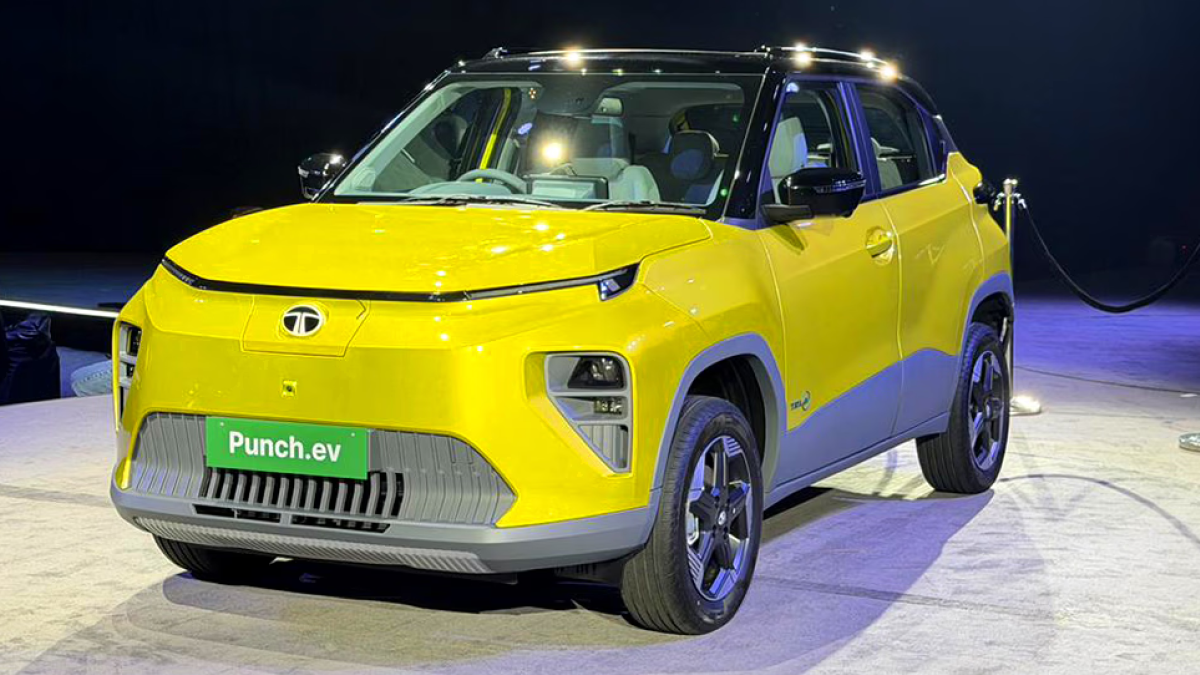
Tata Motors has increased the prices of the Punch and Punch EV in September 2026, making one of India’s most popular small SUVs more expensive across its entire powertrain portfolio. The electric Punch EV receives a ₹10,000 to ₹20,000 markup depending on the battery and variant, while the internal combustion (ICE) Punch has also seen its prices revised. This upward adjustment is part of a broader corporate price hike implemented by Tata Motors starting September 1, which pushes prices of selected passenger vehicles up by a maximum of ₹25,000 to offset inflationary pressures and escalating input costs.
Tata Punch Price Hike September 2026 – What’s Changed?
Both the ICE Punch and Punch EV are now more expensive. Tata’s September 2026 hike targets selected ICE and EV models across its portfolio. The automaker cited several macroeconomic factors driving the adjustment, including rising input costs, persistent commodity inflation, foreign-exchange volatility, higher employee separation costs, and fluctuating EV battery component prices.
It is important to note that the ₹25,000 figure represents the maximum ceiling for Tata’s portfolio-wide increase. It does not mean every ICE Punch variant went up by exactly that amount.
Tata Punch EV Price Hike – New Prices
| Punch EV Variant | Battery | New Price (Ex-Showroom) | Hike |
| Smart | 30kWh | ₹9.79 lakh | ₹10,000 |
| Smart+ | 30kWh | ₹10.39 lakh | ₹10,000 |
| Smart+ | 40kWh | ₹11.19 lakh | ₹20,000 |
| Adventure | 40kWh | ₹11.94 lakh | ₹20,000 |
| Empowered | 40kWh | ₹12.69 lakh | ₹20,000 |
| Empowered+ S | 40kWh | ₹12.99 lakh | ₹20,000 |
The Punch EV range now officially starts at ₹9.79 lakh and tops out at ₹12.99 lakh. The entire six-variant lineup is now costlier. The two 30kWh battery variants receive a ₹10,000 hike, while every trim equipped with the larger 40kWh battery commands a ₹20,000 premium.
Why Did Tata Punch EV Prices Increase?
Higher manufacturing costs drove this price revision. However, buyers need to understand that this price increase does not equal a product update. The higher sticker price brings zero additional features, performance gains, or battery improvements. You are paying more for the exact same Punch EV that was sitting in showrooms last month.
Tata Punch ICE Price Hike – New Price Range
For the standard combustion-engine Punch, current September pricing sits between ₹5.75 lakh and ₹11.14 lakh ex-showroom. This spans the entire lineup, covering different powertrains, variants, and transmission options. Because Tata implemented a maximum hike of ₹25,000 across affected models without initially disclosing a uniform variant-by-variant breakup, buyers should expect slight fluctuations at the dealership level rather than a flat, standardized increase across the board.
Tata Punch Petrol & CNG Prices
The standard Punch retains its massive advantage in powertrain flexibility. You can buy it with a naturally aspirated petrol engine, a factory-fitted CNG kit, a manual transmission, or a 5-speed AMT for easy city driving. Selected variants even get a turbo-petrol option. The base Smart Petrol MT continues to hold the entry line at approximately ₹5.75 lakh ex-showroom.
This broad portfolio is why the Punch remains a dominant seller:
- Petrol: Lowest acquisition cost.
- CNG: Lowest running cost for ICE buyers.
- AMT: Effortless urban commuting.
- EV: Zero tailpipe emissions and minimal per-kilometer running costs.
Tata Punch vs Punch EV – Which One Makes More Sense Now?
| Specification | Tata Punch | Tata Punch EV |
| Powertrain | Petrol / CNG | Electric |
| Starting Price | ~₹5.75 Lakh | ₹9.79 Lakh |
| Transmission | MT / AMT | Automatic |
| Best For | Flexible, all-purpose usage | Urban EV commuting |
| Fuel Cost | Petrol / CNG | Electricity |
| Long-Distance Convenience | High | Depends on charging infrastructure |
| Price Advantage | Lower upfront cost | Lower running cost |
The Punch EV currently demands roughly a ₹4 lakh premium over the base ICE Punch. While the equipment levels and driving dynamics differ vastly between the two, buyers must calculate their daily running to determine if the EV’s lower charging costs will eventually offset that massive initial price gap.
Punch EV 30kWh vs 40kWh – Which Battery Should You Buy?
30kWh Battery
Equipped with a 65kW (88PS) motor, this smaller battery delivers a certified range of 365–375km. It is the more affordable entry point and is best suited for buyers whose primary driving consists of predictable daily city commutes.
40kWh Battery
This pack pairs with a punchier 95kW (130PS) motor, stretching the certified range to 468km. It hits 100kph in around 9 seconds. If you plan on taking the EV on highway runs or intercity trips, the extra capacity is non-negotiable.
Using Tata’s own C75-based calculations, the real-world range expectations are:
- 30kWh: 260–275km
- 40kWh: 335–355km
Punch EV Charging Time
| Charging Method | Punch EV Specification |
| DC Fast Charging (65kW) | 20–80% in ~26 minutes |
| AC Charging | 3.3kW / 7.2kW |
| Regen Levels | 4 |
Both battery variants are capable of replenishing from 20% to 80% in approximately 26 minutes when plugged into a 65kW DC fast charger.
Tata Punch EV BaaS Price
Buyers searching for Punch EV pricing will likely encounter Tata’s Battery-as-a-Service (BaaS) option.
- Vehicle Price: ₹6.49 lakh
- Battery Usage Charge: ₹2.60/km
This is not a conventional ex-showroom price. The BaaS arrangement physically separates the battery cost from the vehicle shell, requiring you to pay a continuous, usage-linked subscription for the battery.
Punch EV Price Hike vs September Discounts
September presents an incredibly unusual purchasing dynamic. While the newly facelifted Punch EV has absorbed a price hike, Tata is actively pushing massive benefits on older, pre-facelift Punch EV stock.
Dealerships are currently offering benefits of up to ₹1.45 lakh on remaining pre-facelift stock. Specifically:
- 35kWh Long Range (Pre-facelift): Benefits up to ₹1.45 lakh
- 25kWh Medium Range (Pre-facelift): Benefits up to ₹1.25 lakh
- Base Smart (Pre-facelift): Benefits up to ₹95,000
The facelifted Punch EV receives none of these discounts. If you find a pre-facelift model sitting on a dealer lot, securing it with a massive discount makes significantly more financial sense than paying the inflated price for the mildly updated 2026 facelift.
What Has Not Changed on the Punch EV?
The September revision is exclusively financial. There are no reported mechanical changes, no new battery chemistry, no additional range, no higher power output, and absolutely no new features.
Tata Punch Remains India’s Best-Selling Small SUV
Tata’s pricing confidence stems directly from its sales dominance. In August 2026, the Punch and Punch EV recorded a combined volume of 21,320 units, posting a staggering 99.18% YoY growth compared to the previous year. This allowed the Punch family to comfortably retain the No. 1 position in India’s sub-4m SUV sales chart. Tata is increasing prices on a product that buyers are already lining up to purchase.
Should You Buy the Tata Punch After the Price Hike?
Buy the ICE Punch if:
You want the lowest possible purchase price. You aren’t ready to deal with charging cables, or you want the ultra-low running costs of a factory CNG kit. It remains the default choice for buyers who regularly travel beyond the reach of reliable charging infrastructure.
Buy the Punch EV if:
The vast majority of your driving is confined to the city, and you have access to a dedicated home or workplace charger. The silent, vibration-free ride is exceptional, and if you opt for the 40kWh battery, highway excursions are easily manageable.
Consider pre-facelift Punch EV stock if:
You can secure one of the massive ₹1.45 lakh dealer discounts. Given that the underlying mechanicals are nearly identical, a discounted pre-facelift model represents vastly superior value compared to the hiked 2026 version.
Tata Punch Price After September 2026 Hike – Quick Summary
| Model | Current Starting Price | Key Point |
| Punch Petrol | ~₹5.75 lakh | Lowest entry price |
| Punch CNG | ~₹7.23 lakh | Lowest running cost for ICE |
| Punch EV 30kWh | ₹9.79 lakh | ₹10k higher for the base model |
| Punch EV 40kWh | ₹11.19 lakh onwards | ₹20k higher on applicable variants |
| Punch EV Top-Spec | ₹12.99 lakh | ₹20k hike on Empowered+ S |
The September 2026 price hike makes the Tata Punch and Punch EV slightly less attractive on paper, but it does not fundamentally alter their market proposition. The most frustrating development is for Punch EV buyers, who must now pay ₹10,000 to ₹20,000 more for the exact same vehicle they could have bought last month. Savvy buyers considering the electric route should aggressively hunt for remaining pre-facelift stock; leveraging those heavy discounts will completely erase the sting of this recent price adjustment. For buyers prioritizing absolute affordability, the ICE Punch—specifically the CNG variant—remains the most logical, budget-friendly route.
FAQ
What is the new Tata Punch price in September 2026?
The Tata Punch petrol range currently starts at around ₹5.75 lakh ex-showroom, with the exact price varying by variant, location, and powertrain choice.
What is the new Tata Punch EV price?
Following the September 2026 price hike, the Punch EV now costs between ₹9.79 lakh and ₹12.99 lakh ex-showroom.
How much has the Tata Punch EV price increased?
The variants equipped with the 30kWh battery have increased by ₹10,000, while the applicable 40kWh long-range variants have increased by ₹20,000.
Has the Punch EV received any changes with the price hike?
No. There are absolutely no product updates, mechanical changes, or new features associated with the September price revision.
What is the Punch EV 40kWh range?
The 40kWh battery pack delivers a claimed certified range of 468km, which translates to a real-world C75 estimate of 335–355km.
Is Tata offering discounts on the Punch EV?
Tata is offering massive benefits on remaining pre-facelift Punch EV stock, reaching up to ₹1.45 lakh on selected variants. The newly facelifted Punch EV does not qualify for these September discounts.
What is better, Tata Punch or Punch EV?
The ICE Punch is superior for buyers prioritizing a low initial purchase price and refuelling flexibility on long road trips. The Punch EV makes far more sense for buyers with predictable daily urban commutes and reliable access to charging.

