



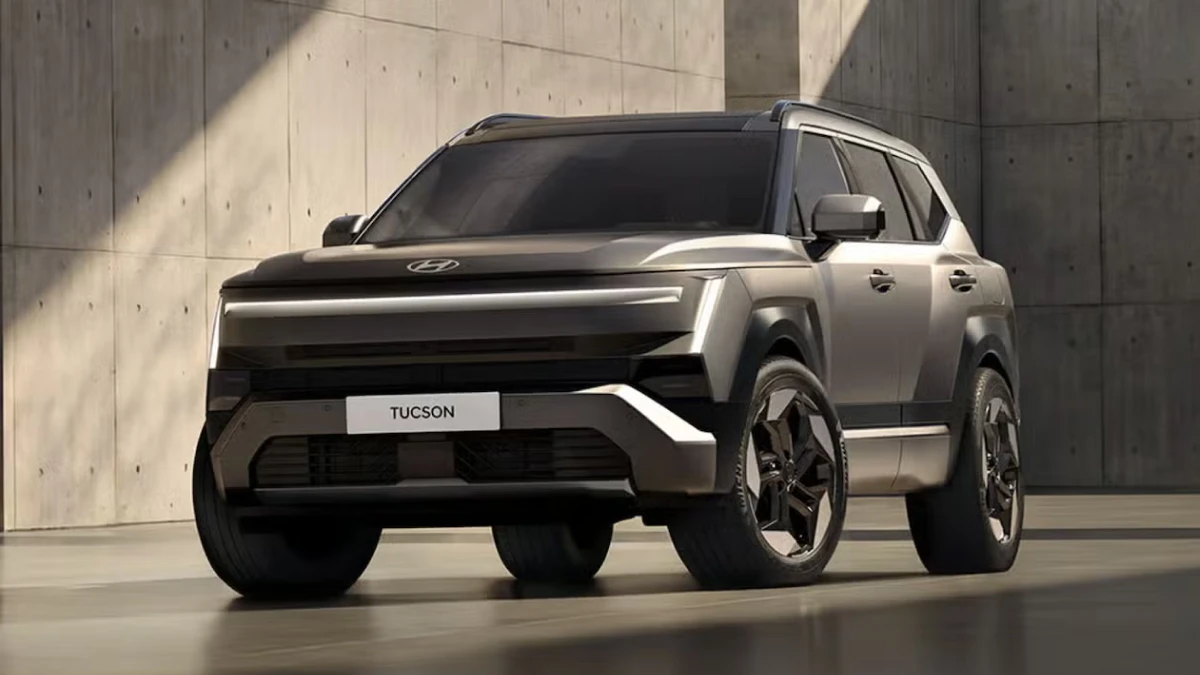
Hyundai has officially pulled the covers off the fifth-generation Tucson, delivering one of the most dramatic visual transformations in the model’s two-decade history. Leaving behind the highly sculpted, aggressively curved aesthetic of the outgoing version, the 2027 Hyundai Tucson adopts a significantly boxier, upright, and rugged design language.Taking clear inspiration from larger siblings like the new Santa Fe, it represents a fundamental shift in how Hyundai envisions its mainstream family SUVs.
The overhaul isn’t just skin deep. Inside the cabin, Hyundai has taken a massive leap forward with a cleaner dashboard architecture, expansive digital displays, and the debut of the company’s highly anticipated Pleos Connect infotainment system.
However, while the design is out in the open, Hyundai is deliberately keeping several critical details tightly under wraps. Powertrain specifications, final pricing, and the full breakdown of its hybrid capabilities have not yet been announced. Here is an in-depth look at everything we know so far about the all-new 2027 Hyundai Tucson.
New Hyundai Tucson Looks Completely Different
The biggest story surrounding the fifth-generation Tucson is undoubtedly its exterior design. The current, fourth-generation model is globally recognized for its sharp geometric styling, heavy body surfacing, and the distinctive “parametric jewel” grille with hidden lighting elements. It is a vehicle that looks more like an urban crossover than a traditional utility vehicle.
The new-generation model pivots entirely in the opposite direction. Hyundai has given the 2027 Tucson:
- Boxier, more commanding proportions
- A decidedly upright stance
- Squared-off wheel arches with prominent cladding
- Chunkier, robust bodywork
- Sharper, straighter character lines
- A far more muscular hood and pronounced front fenders
The result is a Tucson that proudly looks like a traditional, capable SUV rather than an oversized hatchback.
MotorFuturist Insight: Hyundai is deliberately making the Tucson look tougher at exactly the time when global and Indian SUV buyers are aggressively moving away from soft crossovers and toward rugged, imposing designs.
Santa Fe Influence Is Obvious
It is impossible to look at the new Tucson without seeing the shadow of the latest Hyundai Santa Fe. The visual DNA is shared across multiple elements, including the boxier body, the vertical front end, the squared wheel arches, and the strong horizontal lines that dictate the vehicle’s profile.
But Hyundai hasn’t just copy-pasted the design; they have successfully scaled the formula down for the highly competitive compact SUV segment. This creates a very clear visual hierarchy within the showroom:
- Santa Fe: The larger, more imposing flagship SUV.
- Tucson: A smaller, slightly more agile, and accessible version of the exact same design philosophy.
New Front-End Design
The front fascia undergoes the most radical transformation. Instead of hiding the daytime running lights inside a massive dark chrome grille, Hyundai has opted for a cleaner, wider, and more horizontal identity.
Key design elements at the front include:
- A slim, continuous horizontal LED light bar stretching across the width.
- Vertical lighting elements positioned at the extreme outer edges to emphasize width.
- A larger-looking, more traditional grille opening.
- A significantly beefier lower bumper with a contrasting skid plate.
- A flatter, more upright hood that increases the visual mass of the vehicle.
Side Profile Gets More Muscular
Walking around to the side, the squared-off theme continues to dominate. The sweeping, razor-sharp geometric creases of the old model have been replaced by stronger, flatter body surfacing.
Key changes to the side profile include chunkier wheel arches, a sharper and flatter shoulder line, and a much more upright greenhouse (the glass area). These updates return the vehicle to more conventional SUV proportions, making the Tucson visually aligned with the Santa Fe and other rugged utility vehicles in Hyundai’s global portfolio.

New Rear Design
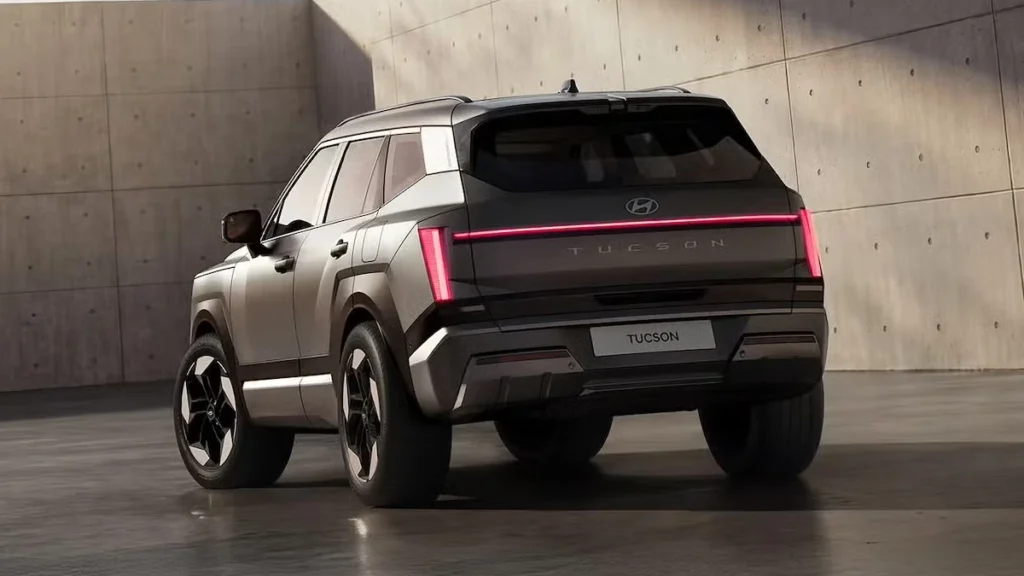
The rear of the 2027 Tucson beautifully mirrors the front by prioritizing a wide, horizontal theme. Gone are the aggressive, triangular “fang” tail-lamps of the current generation.
Instead, the new Tucson features slim, vertical tail-lamps connected by a clean horizontal light strip. The tailgate itself carries significantly less visual clutter, bordered by stronger shoulder lines. This combination gives the rear a much simpler, wider, and more mature appearance than the highly stylized outgoing model.
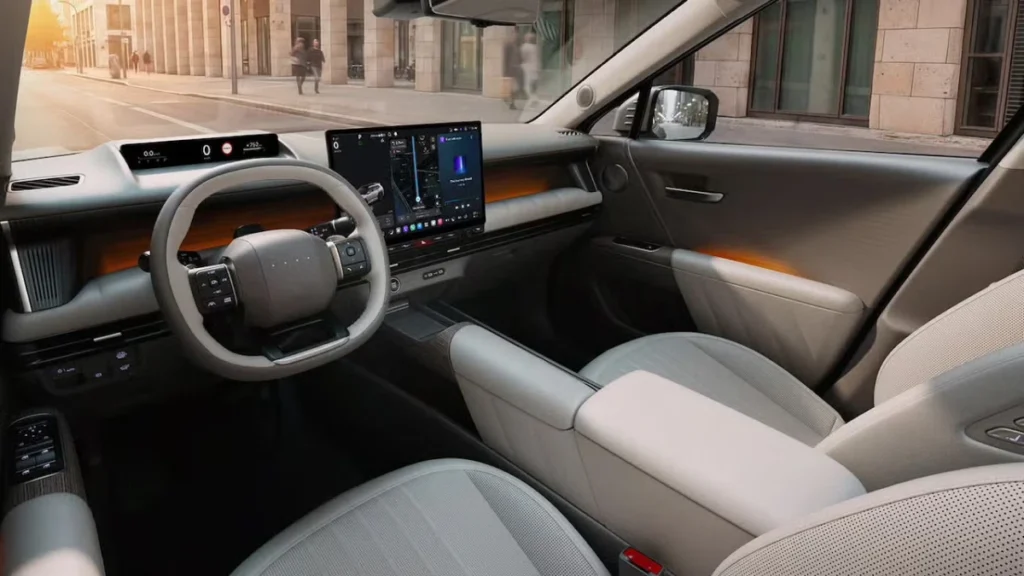
Interior Is a Major Upgrade
The dramatic changes aren’t restricted to the exterior. Hyundai has completely reworked the cabin architecture to elevate the Tucson’s premium appeal.
Stepping inside reveals a wide, horizontal dashboard that stretches across the entire cabin, designed to make the interior feel exceptionally spacious. The new interior features softer-looking materials, elegant wood-like trim elements, and a completely redesigned, cleaner floating center console that offers significantly more storage. The overall cabin ambience feels distinctly more upscale, pushing the Tucson closer to luxury territory even though it remains a compact mainstream SUV.
Hyundai Keeps Physical Controls
This is a detail that deserves special attention, especially considering how rapidly the wider automotive industry is abandoning physical buttons in favor of touchscreen-only interfaces.
Despite incorporating massive new digital displays, Hyundai has deliberately retained physical buttons, tactile rotary controls, and dedicated switchgear directly beneath the central screen.
The MotorFuturist Angle: This is a crucial industry trend worth watching. After several major manufacturers faced severe customer backlash for burying climate and volume functions deep inside touchscreen menus, Hyundai is taking a much smarter hybrid approach: massive digital screens seamlessly paired with safe, tactile physical controls.
Pleos Connect Comes to the Tucson
One of the most consequential technological upgrades is the introduction of Pleos Connect. Based on an Android Automotive foundation, this all-new infotainment architecture is designed around a highly intuitive, smartphone-like interface.
The wider Pleos software platform is expected to bring a robust native app ecosystem, advanced connected car services, AI-powered conversational voice interaction, deep vehicle personalization, and a much faster user experience. The 2027 Tucson serves as one of the first major production applications of this critical new software direction for Hyundai.
Large Infotainment Screen
To house the new Pleos software, the Tucson features a substantially redesigned digital interface.
Hyundai’s new Pleos system is expected to bring a large 17-inch central display and approximately 9.9-inch digital cluster, although final market-specific specifications remain to be confirmed. Regardless of the final measured inches in your specific market, the shift from integrated screens to a vast, floating, landscape-oriented digital command center represents a massive leap in interior modernization.
Powertrain Details Are Still Under Wraps
This is where expectations must be managed. While the design is public, Hyundai has not yet revealed the complete engine lineup for the fifth-generation Tucson.
The outgoing model is currently available internationally with a mix of petrol, traditional hybrid (HEV), and plug-in hybrid (PHEV) options. Previous reporting strongly indicates that Hyundai will retain a heavy focus on electrification for this new generation.
The Expected Direction:
- Hybrid (HEV): Highly expected to be the core volume driver.
- Plug-in Hybrid (PHEV): Expected for markets with strong EV infrastructure.
- Pure Petrol: Likely to continue, but highly market-dependent.
Why Hybrid Will Be Important
Compact SUVs are increasingly moving toward electrification, but they aren’t completely abandoning combustion engines just yet. The 2027 Tucson is an excellent example of this transition.
Instead of forcing buyers to make a harsh binary choice between a thirsty petrol engine or a pure Battery Electric Vehicle (BEV), Hyundai’s expected multi-powertrain strategy offers the perfect middle ground. By providing hybrid and PHEV options alongside conventional engines, Hyundai can cater to buyers based on their daily driving distances, access to home charging, local fuel prices, and long-distance travel requirements.
Hyundai Tucson vs Current Tucson – What’s Changed?
| Area | Current Tucson | New 2027 Tucson |
| Design | Curved, angular crossover | Boxier, rugged SUV |
| Front | Parametric hidden grille | Horizontal + vertical lighting |
| Body Surface | Heavily sculpted | Flatter, more upright |
| Wheel Arches | Sculpted & stylized | Chunkier, squared-off |
| Rear | Dramatic triangular lamps | Slim vertical lamps + horizontal strip |
| Dashboard | Waterfall integrated design | Completely redesigned, horizontal layout |
| Infotainment | Existing Hyundai interface | Pleos Connect (Android Automotive based) |
| Instrument Cluster | Existing digital screen | New digital interface setup |
| Physical Controls | Yes (mostly touch-capacitive) | Retained (rotary dials and buttons) |
| Powertrains | Petrol / HEV / PHEV | Details pending (Electrification expected) |
Is the New Tucson Bigger?
The official reveal confirms a visual change toward a much larger-looking SUV. The upright proportions, flattened hood, and squared-off bodywork give it immense road presence. However, Hyundai has not yet released the complete dimensional specifications in the initial global reveal.
Therefore, while the new Tucson looks significantly more substantial, final dimensions (exact length, width, and wheelbase) remain to be formally announced by the manufacturer.
What We Still Don’t Know
For a major vehicle reveal, there is still a substantial amount of information left on the table. Hyundai has not yet disclosed:
- Final internal-combustion engine specifications and power outputs.
- Hybrid system outputs and efficiency metrics.
- PHEV battery size and pure electric driving range.
- Official fuel economy numbers.
- Pricing and variant structures.
- Full safety and ADAS equipment lists.
- India launch timing and India-specific powertrain options.
Will the New Hyundai Tucson Come to India?
The current-generation Tucson serves as the flagship internal-combustion SUV for Hyundai in India, making the fifth-generation model naturally highly relevant to Indian buyers.
However, the new Tucson is expected to be relevant to Hyundai India’s premium SUV portfolio, but an India launch timeline has not yet been confirmed.
If and when Hyundai brings the new Tucson to India, the transition could be monumental. With a more premium cabin, rugged styling that appeals to local tastes, and the potential for a strong-hybrid powertrain, it could become a much more formidable competitor in the ₹30–40 lakh premium SUV bracket.
Read – Why Every Carmaker Is Chasing the ₹30–50 Lakh SUV Segment in India
What the New Tucson Says About Hyundai’s Future
The 2027 Tucson isn’t just a generational update; it is a clear preview of how Hyundai wants its mainstream vehicles to operate for the rest of the decade. It combines three massive industry trends:
- Rugged SUV Styling: Emulating the commanding proportions of the Santa Fe.
- Software-Defined Interiors: Utilizing Pleos Connect and massive digital real estate to create a smartphone-like environment.
- Electrification: Ensuring that hybrid and PHEV technology remains central to the product strategy.
The Bigger Trend — SUVs Are Becoming More Rugged
Look closely at Hyundai’s current design trajectory: The new Santa Fe went ultra-boxy. The upcoming Nexo hydrogen vehicle is adopting a more upright stance. Now, the Tucson is following suit.
This is not an accident. Global SUV buyers increasingly associate square proportions, a high stance, and chunky wheel arches with capability and durability—even if the vehicle spends 99% of its life on paved city roads. The Tucson is leaning directly into that psychological visual trend.
Read – Is India’s SUV Market Shifting Towards Off-Road Vehicles?
MotorFuturist Verdict
The fifth-generation 2027 Hyundai Tucson represents a massive, calculated reset for the brand. Rather than simply evolving the outgoing car’s controversial curves, Hyundai has completely redrawn the blueprint, delivering a compact SUV that is boxier, tougher, and instantly more recognizable as a traditional utility vehicle.
Yet, the most significant revolution might actually be inside. The new cabin masterfully combines sprawling digital interfaces with the common sense of tactile physical controls. Furthermore, the integration of Pleos Connect brings Hyundai significantly closer to a true software-defined vehicle architecture.
The primary remaining mystery is the powertrain. While full engine and hybrid specifications are pending, the company’s trajectory is clear: advanced electrification will be the cornerstone of the new Tucson. For the Indian market, the biggest unanswered question is not just when it will arrive, but whether Hyundai will finally introduce a strong-hybrid Tucson to battle the growing wave of Japanese hybrids. If they do, the premium SUV landscape is in for a major shakeup.
FAQ
Is the new Hyundai Tucson officially revealed?
Yes. Hyundai has officially revealed the fifth-generation Tucson, showcasing a substantially redesigned exterior and a brand-new interior architecture.
What is new about the 2027 Hyundai Tucson?
The most significant changes include the boxier, rugged SUV design, new vertical and horizontal lighting signatures, a completely redesigned cabin with a large central touchscreen, a digital instrument cluster, and the advanced Pleos Connect infotainment system.
Will the new Tucson be a hybrid?
While Hyundai has not yet released the complete powertrain lineup, hybrid and plug-in-hybrid (PHEV) versions are highly expected based on the model’s previous powertrain strategy and market demand.
Does the new Tucson have physical buttons?
Yes. Despite featuring a much larger touchscreen interface, the revealed interior practically retains physical buttons and rotary controls below the display for essential functions like climate and volume.
What is Pleos Connect?
Pleos Connect is Hyundai’s brand-new, Android Automotive-based infotainment platform. It is designed to provide a much faster, smartphone-like interface with broader connected-app functionality and AI integration.
Will the new Hyundai Tucson launch in India?
The new Tucson is expected to be relevant to Hyundai India’s premium SUV portfolio, but an India launch timeline has not yet been confirmed.

