



Volkswagen Group has secured global board approval for an all-new sub-four-metre compact SUV tailored specifically for the Indian market.Operating under an estimated project investment of 25 million euros (~₹275 crore), the upcoming vehicle represents Volkswagen’s official re-entry into India’s high-volume, entry-level crossover segment following the discontinuation of the Polo hatchback and Ameo compact sedan in 2022.
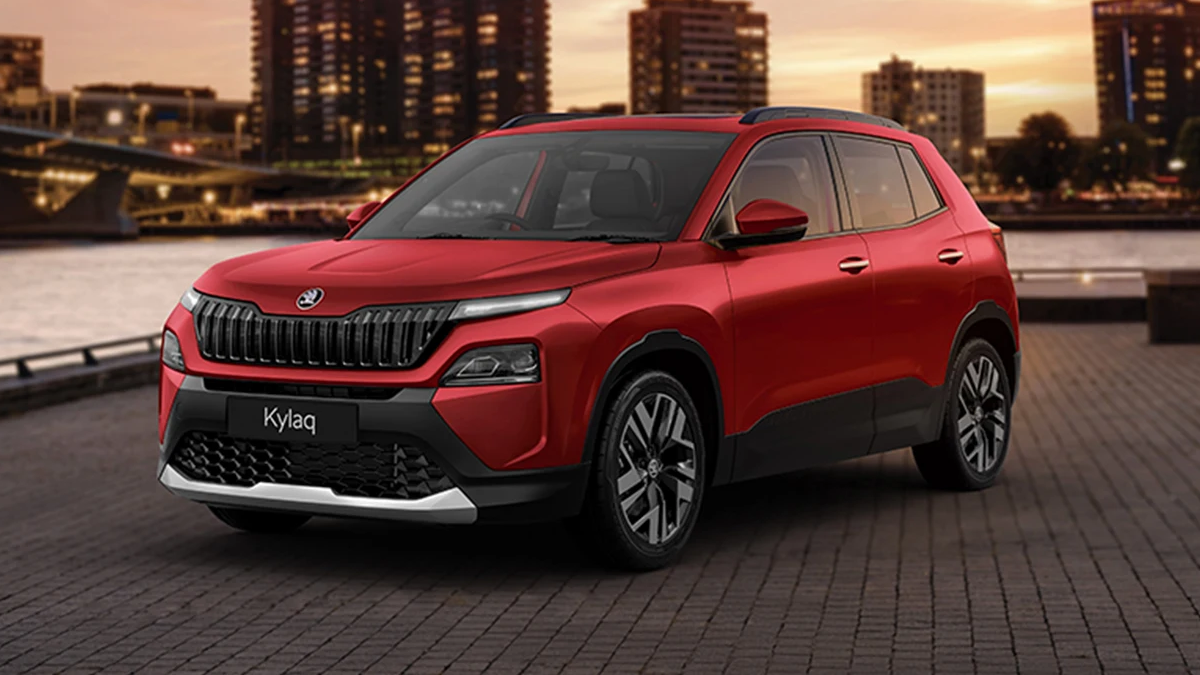
Underpinned by the heavily localized MQB-A0-IN platform—developed under the India 2.0 strategy led by Skoda Auto Volkswagen India—the new model will share its core floorpan, body structure, and hardpoints with the Skoda Kylaq. However, Volkswagen will distinguish its version through brand-specific exterior sheet metal, an overhauled front fascia, a redesigned digital cockpit layout, and an updated 8-speed torque converter automatic transmission.
1. Project Financials & Platform Sharing Architecture
The approval of the ₹275 crore investment allows Volkswagen India to expand local production capacity at its Chhatrapati Sambhaji Nagar (Aurangabad) and Chakan (Pune) manufacturing facilities.By leveraging the existing localization level (over 95%) achieved by the MQB-A0-IN platform architecture, Volkswagen reduces development lead times while achieving economies of scale alongside the Skoda Kylaq, Kushaq, Slavia, Volkswagen Taigun, and Virtus.
The sub-four-metre form factor is strategically critical: vehicles measuring under 4,000 mm in length with petrol engines displacing under 1,200 cc qualify for a lower 18% Goods and Services Tax (GST) rate in India, compared to the 28% GST rate plus applicable luxury cesses levied on larger SUVs like the Taigun.
The table below summarizes the key project parameters and structural details of Volkswagen’s upcoming compact SUV:
| Strategic Parameter / Head | Project Approval & Specification Details | Market & Manufacturing Impact |
| Global Project Investment | €25 Million (~₹275 Crore INR) | Dedicated tooling, soft-skin panels & localized chassis tuning |
| Underlying Architecture | MQB-A0-IN Modular Platform | Highly localized modular architecture optimized for Indian roads |
| Tax Classification Benefit | Sub-4m / Under 1.2L Engine Category | 18% GST Bracket (vs 28% GST + Cess on midsize SUVs) |
| Target Production Facility | Skoda Auto Volkswagen India Plant (Chakan) | Maximizes factory capacity utilization & lowers component costs |
| Estimated Price Positioning | ₹8.00 Lakh – ₹13.00 Lakh (Ex-Showroom) | Direct entry-level positioning below the Volkswagen Taigun |
| Expected Market Debut | First Half of 2027 (H1 2027) | Marks VW’s return to mass-volume sub-4m space after Polo |
2. Mechanical Deep-Dive: 1.0L TSI Engine & Debut of 8-Speed Automatic
Under the bonnet, the upcoming Volkswagen compact SUV will feature the proven 1.0-litre three-cylinder TSI (Turbocharged Stratified Injection) petrol engine.Generating 115 PS (113 bhp / 85 kW) of peak power and 178 Nm of torque, the direct-injection turbocharged motor delivers a balance between low-end responsiveness and highway cruising efficiency.
While a 6-speed manual gearbox will come standard on lower and mid-tier variants, Volkswagen plans to launch the SUV with an all-new 8-speed torque converter automatic transmission. Replacing the 6-speed AQ250 torque converter used in current MQB-A0-IN vehicles, the 8-speed automatic unit provides tighter gear ratios, smoother low-speed shift logic in city traffic, and improved highway fuel economy due to taller top-gear overdrive ratios. (The Skoda Kylaq is expected to adopt this same 8-speed automatic during its mid-cycle update).
The table below details the powertrain and gearbox specifications for the Volkswagen compact SUV:
| Powertrain Metric | 1.0L TSI Petrol (6-Speed Manual) | 1.0L TSI Petrol (8-Speed Automatic) |
| Engine Configuration | 999cc 3-Cylinder Turbocharged Direct Injection | 999cc 3-Cylinder Turbocharged Direct Injection |
| Peak Power Output | 115 PS (113 bhp) @ 5,000–5,500 rpm | 115 PS (113 bhp) @ 5,000–5,500 rpm |
| Peak Torque Output | 178 Nm @ 1,750–4,500 rpm | 178 Nm @ 1,750–4,500 rpm |
| Transmission Architecture | 6-Speed Synchronized Manual Gearbox | 8-Speed Planetary Torque Converter Automatic |
| 0–100 km/h Acceleration | ~10.5 Seconds | ~10.8 Seconds |
| Estimated Fuel Economy (ARAI) | 19.68 km/l | 19.05 km/l |
| Emissions Standards Compliance | BS6 Phase-2 / RDE & E20 Fuel Compatible | BS6 Phase-2 / RDE & E20 Fuel Compatible |
3. Styling & Differentiation: Volkswagen Tera Branding & Design Language
To prevent internal overlap with the Skoda Kylaq, Volkswagen’s design team in Germany and India has developed distinct exterior sheet metal and interior cabin treatments.
Speculation suggests the SUV may adopt the Volkswagen Tera nameplate—a badge recently introduced in Latin American markets for a closely related compact crossover built on the same global platform.
Key Visual & Interior Differentiators Expected:
- Front Fascia: Horizontal Volkswagen family grille flanked by sleek LED headlights and integrated daytime running light (DRL) signature strips, mirroring the Tiguan and Tayron design language.
- Side & Rear Profile: Clean, unadorned shoulder lines, redesigned C-pillar garnishes, and full-width connected LED taillamps incorporating an illuminated Volkswagen emblem.
- Cabin Layout: Digital cockpit layout featuring a 10.1-inch floating touchscreen infotainment display, a 2-spoke leatherette steering wheel with touch controls, and Volkswagen-specific upholstery themes.
- Structural Safety: Reinforced hot-formed steel safety cage engineered to target a 5-Star Global NCAP adult and child occupant protection rating.
The table below contrasts the design and equipment distribution between the Skoda Kylaq and Volkswagen’s version:
| Design & Feature Area | Skoda Kylaq (Current Production) | Volkswagen Compact SUV (Tera Spied) | Design Differentiation Benefit |
| Front Grille Theme | Signature Skoda Butterfly Grille | Horizontal Slatted VW Family Grille | Clean, minimalist European front styling |
| Lighting Architecture | Split Headlamp Setup with Upper DRLs | Single-Unit Swept-back LED Headlights | Classic Volkswagen lighting identity |
| Automatic Transmission | 6-Speed Torque Converter (Current) | 8-Speed Torque Converter (At Launch) | Smoother shifts & better efficiency |
| Dashboard Layout | Dual-Tone Olive / Black Cabin Theme | Dark Grey / Silver German Minimalist Theme | Premium ergonomics and tactile controls |
| Wheel Rim Styling | 17-Inch Dual-Tone Geometric Alloys | 17-Inch Multi-Spoke ‘Tiguan-Style’ Alloys | Sportier side profile stance |
4. Segment Scope & Market Context: The Sub-4m SUV Boom
Volkswagen’s decision to re-enter India’s sub-four-metre space stems from changing consumer preferences.The compact and micro-SUV category currently generates monthly sales of approximately 1,10,000 units, representing over 30% of India’s total passenger vehicle market and more than half of all utility vehicle volumes.
Since discontinuing the Polo in 2022, Volkswagen India has lacked an entry-level volume driver, relying entirely on the Taigun midsize SUV and Virtus sedan.Introducing a ₹8 Lakh to ₹13 Lakh compact SUV gives the brand an option for first-time car buyers and urban commuters upgrading from entry-level hatchbacks.
The table below details overall sales volumes and market share distribution across India’s sub-four-metre SUV segment:
| Segment Characteristic / Metric | Sub-4m Compact SUV Category Data | Commercial & Strategic Market Relevance |
| Monthly Overall Volume Sales | ~1,10,000 Units Per Month | Highest volume growth engine in Indian automotive industry |
| Share of India’s Passenger Vehicles | ~30.5% Total Market Share | 1 in every 3 new passenger cars sold belongs to this class |
| Utility Vehicle Market Contribution | >52% of Total Utility Vehicle Sales | Outpaces traditional mid-size SUVs and MPVs combined |
| Primary Segment Market Leaders | Tata Motors (Nexon/Punch), Maruti Suzuki (Brezza/Fronx) | High market demand supporting multi-brand entrants |
| GST Taxation Bracket Advantage | 18% Concessional GST Rate | Allows manufacturers to offer competitive price points |
5. Segment Comparison: Volkswagen SUV vs. Sub-4m Rivals
When launched, the Volkswagen compact SUV will enter a crowded market segment.It will compete against established bestsellers like the Tata Nexon, Maruti Suzuki Brezza, Hyundai Venue, Kia Sonet, Mahindra XUV 3XO, and its sibling, the Skoda Kylaq.
The table below benchmarks the upcoming Volkswagen compact SUV against key competitors in the segment:
| Feature / Metric Head | Volkswagen Compact SUV (Tera) | Skoda Kylaq | Tata Nexon | Hyundai Venue | Mahindra XUV 3XO |
| Engine Type & Tech | 1.0L Turbo-Petrol (TSI) | 1.0L Turbo-Petrol (TSI) | 1.2L Turbo-Petrol / Diesel | 1.2L NA / 1.0L Turbo / 1.5L Diesel | 1.2L Turbo Petrol / 1.5L Diesel |
| Max Power Output | 115 PS | 115 PS | 120 PS | 120 PS (1.0L Turbo) | 130 PS (mStallion TGDi) |
| Max Torque Output | 178 Nm | 178 Nm | 170 Nm | 172 Nm | 230 Nm |
| Automatic Transmission | 8-Speed Torque Converter | 6-Speed Torque Converter | 7-Speed DCA / 6-Speed AMT | 7-Speed DCT | 6-Speed Torque Converter |
| Safety NCAP Rating | 5-Star Rating Targeted | 5-Star Rating Tested | 5-Star Bharat NCAP | 3-Star Global NCAP | 5-Star Bharat NCAP |
| Est. Starting Price | ~₹8.00 Lakh | ₹7.89 Lakh | ₹8.00 Lakh | ₹7.94 Lakh | ₹7.49 Lakh |
Strategic Verdict: A Volume Anchor for Volkswagen India
The global approval of the 25 million euro (~₹275 crore) project provides Volkswagen India with a clear path forward.By introducing a Skoda Kylaq-based compact SUV equipped with a 1.0L TSI engine and an 8-speed automatic gearbox, Volkswagen targets an expanding segment of the Indian car market.
With an expected price range of ₹8 Lakh to ₹13 Lakh (ex-showroom), the new compact SUV gives Volkswagen an entry-level model to attract buyers, driving volume growth for the German automaker in India.

