




The Indian passenger vehicle market closed H1 2026 (January to June 2026) with strong hybrid electric vehicles (SHEVs) consolidating their position as a high-efficiency alternative to pure internal combustion engines (ICE) and battery electric vehicles (BEVs). Total strong-hybrid sales reached 57,885 units across eight primary offerings, with Toyota Kirloskar Motor and Maruti Suzuki India Limited accounting for over 98% of overall segment volume.
Driven by high fuel prices, absence of range anxiety, and ARAI-certified fuel efficiency ratings exceeding 27 km/l, Indian car buyers increasingly selected self-charging strong hybrids. Toyota led the segment, capturing 83.7% market share with 48,491 units sold, while Maruti Suzuki captured second place driven by the Urban Cruiser Hyryder’s twin, the Grand Vitara, alongside the newly launched Victoris Hybrid.
1. H1 2026 Strong Hybrid Market Landscape: Brand & Model Volumes
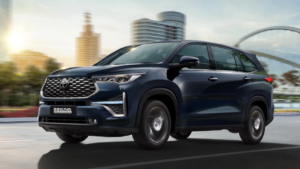
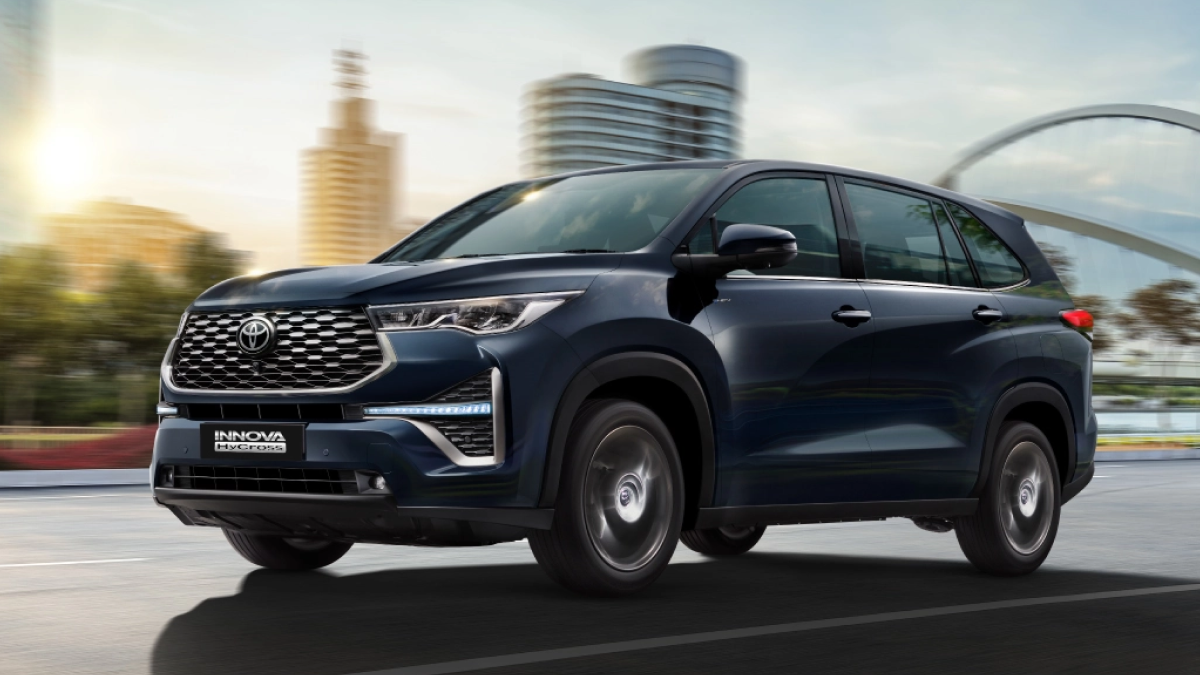
The first half of 2026 highlighted a heavy concentration of sales among utility vehicles (MPVs and mid-size SUVs), with the top two models—the Toyota Innova Hycross and Toyota Urban Cruiser Hyryder—together commanding 80% of total strong-hybrid vehicle sales in India.
The table below provides a comprehensive model-wise sales breakdown, year-on-year (YoY) growth, and market share for H1 2026:
| Rank | Strong Hybrid Vehicle Model | Manufacturer | H1 2026 Sales (Units) | H1 2025 Sales (Units) | YoY Growth (%) | H1 2026 Market Share (%) |
| 1 | Toyota Innova Hycross | Toyota Kirloskar | 27,812 | 29,652 | – 6.2% | 48.0% |
| 2 | Toyota Urban Cruiser Hyryder | Toyota Kirloskar | 18,577 | 15,058 | + 23.4% | 32.1% |
| 3 | Maruti Suzuki Grand Vitara | Maruti Suzuki | 4,086 | 8,909 | – 54.1% | 7.1% |
| 4 | Maruti Suzuki Victoris | Maruti Suzuki | 3,231 | New Launch | N/A | 5.6% |
| 5 | Maruti Suzuki Invicto | Maruti Suzuki | 1,418 | 1,918 | – 26.1% | 2.5% |
| 6 | Toyota Camry e:HEV | Toyota Kirloskar | 1,188 | 1,195 | – 0.6% | 2.1% |
| 7 | Toyota Vellfire Hybrid | Toyota Kirloskar | 914 | 573 | + 59.5% | 1.6% |
| 8 | Honda City e:HEV | Honda Cars India | 659 | 542 | + 21.6% | 1.1% |
| Total | All Strong Hybrids Combined | Segment Overall | 57,885 | 57,847 | + 0.1% | 100.0% |
2. Technical Architectural Breakdown: How Strong Hybrids Work
Unlike mild-hybrids (which use a small Integrated Starter Generator for low-rpm torque assist without full electric driving capability), strong hybrids feature high-voltage traction batteries (1.3 kWh to 1.8 kWh nickel-metal hydride or lithium-ion) paired with electric motors capable of driving the vehicle on pure electric power (EV mode) at low speeds and under light acceleration.
The two main strong-hybrid drivetrain architectures sold in India during H1 2026 differ fundamentally in operational engineering:
The table below outlines the core mechanical specifications, engine layouts, and fuel efficiency metrics of India’s leading strong hybrid powertrains:
| Technical Spec / Metric | 2.0L Toyota Hybrid System (TNGA 5th Gen) | 1.5L Toyota/Maruti Hybrid (THS-II) | 1.5L Honda e:HEV Dual-Motor System |
| Foundational Models | Toyota Innova Hycross / Maruti Invicto | Toyota Hyryder / Grand Vitara / Victoris | Honda City e:HEV Sedan |
| Engine Configuration | 1,987 cc 4-Cylinder Atkinson Cycle Petrol | 1,490 cc 3-Cylinder Atkinson Cycle Petrol | 1,498 cc 4-Cylinder Atkinson Cycle Petrol |
| Engine Output | 150 HP @ 6,000 rpm / 188 Nm Torque | 92 HP @ 5,500 rpm / 122 Nm Torque | 98 HP @ 5,600 rpm / 127 Nm Torque |
| Electric Motor Output | 111 HP / 206 Nm Torque | 79 HP / 141 Nm Torque | 109 HP / 253 Nm Torque |
| Combined Power Output | 186 HP (Total System Output) | 116 HP (Total System Output) | 126 HP (Total System Output) |
| Transmission Type | e-CVT (Planetary Gear Set) | e-CVT (Planetary Gear Set) | Direct-Drive Lock-up Clutch (Single-Speed) |
| Traction Battery Type | 1.68 kWh Ni-MH Battery Pack | 1.77 kWh Lithium-ion Battery Pack | 1.3 kWh Lithium-ion Battery Pack |
| ARAI Fuel Efficiency | 23.24 km/l (Innova Hycross MPV) | 27.90 km/l (Hyryder / Grand Vitara) | 27.13 km/l (City e:HEV) |
3. Variant Pricing & Ex-Showroom Slabs (August 2026)
Strong hybrid technology carries an initial price premium over conventional petrol models due to the dual-powertrain hardware, inverter units, and high-voltage traction batteries. However, competitive localized manufacturing by Toyota at its Bidadi plant in Karnataka has brought entry-level strong-hybrid crossover pricing down to ₹18.40 Lakh.
The table below lists the starting ex-showroom price range for strong-hybrid variants across major vehicle models in August 2026:
| Strong Hybrid Model | Base Hybrid Variant | Base Ex-Showroom Price | Top-Spec Hybrid Variant | Top Ex-Showroom Price |
| Toyota Urban Cruiser Hyryder | S Hybrid e-CVT | ₹16.66 Lakh | V Hybrid e-CVT | ₹19.99 Lakh |
| Maruti Suzuki Grand Vitara | Zeta+ Strong Hybrid | ₹18.43 Lakh | Alpha+ Strong Hybrid | ₹19.93 Lakh |
| Maruti Suzuki Victoris | Zeta+ Strong Hybrid | ₹18.40 Lakh | Alpha+ Strong Hybrid | ₹19.99 Lakh |
| Honda City e:HEV | V e:HEV Hybrid | ₹19.00 Lakh | ZX e:HEV Hybrid | ₹20.55 Lakh |
| Toyota Innova Hycross | VX Hybrid (7-Seater) | ₹25.97 Lakh | ZX (O) Hybrid (7-Seater) | ₹30.98 Lakh |
| Maruti Suzuki Invicto | Zeta+ (7-Seater) | ₹25.21 Lakh | Alpha+ (7-Seater) | ₹29.20 Lakh |
| Toyota Camry e:HEV | Elegance Hybrid | ₹46.17 Lakh | Luxury Hybrid | ₹48.00 Lakh |
4. Total Cost of Ownership (TCO) Analysis: Strong Hybrid vs. Turbo-Petrol vs. Diesel
To evaluate whether the price premium of a strong hybrid is financially justified for high-mileage users, we analyze a 3-year / 60,000 km ownership lifecycle comparing the Toyota Urban Cruiser Hyryder Strong Hybrid (27.9 km/l) against a typical 1.5L Turbo-Petrol Mid-Size SUV (16.0 km/l) and a 1.5L Diesel SUV (19.0 km/l).
The table below details total expenditure over 60,000 km, assuming petrol at ₹96/liter and diesel at ₹88/liter:
| Cost Head (3 Years / 60,000 km) | Strong Hybrid SUV (1.5L e-CVT) | Turbo-Petrol SUV (1.5L DCT) | Diesel SUV (1.5L Torque Converter) |
| Ex-Showroom Purchase Price | ₹18,5000 | ₹18,20,000 | ₹18,40,000 |
| Estimated On-Road Price | ₹21,10,000 | ₹20,70,000 | ₹21,20,000 |
| Fuel Required for 60,000 km | 2,150 Liters | 3,750 Liters | 3,158 Liters |
| Fuel Expenditure Total (₹) | ₹2,06,400 (@ ₹96/L) | ₹3,60,000 (@ ₹96/L) | ₹2,77,900 (@ ₹88/L) |
| Scheduled Maintenance (60k km) | ₹24,000 | ₹30,000 | ₹36,000 |
| Brake Pad & Wear Outlay | ₹8,000 (Regen braking reduces wear) | ₹16,000 | ₹16,000 |
| 3-Year Net Operating Outflow | ₹2,38,400 | ₹4,06,000 | ₹3,29,900 |
| Net Fuel & Maintenance Savings | Baseline Reference | Hybrid saves ₹1,67,600 | Hybrid saves ₹91,500 |
5. Market Trends Driving Hybrid Adoption in India
Primary Drivers Supporting Strong Hybrid Growth:
- Unmatched Real-World Fuel Economy: Unlike conventional ICE vehicles whose mileage drops sharply in heavy city traffic, strong hybrids achieve their highest efficiency during city commutes where the electric motor handles low-speed stop-and-go driving.
- Zero Charging Infrastructure Dependency: Unlike Battery Electric Vehicles (BEVs) that require residential chargers or public DC fast-charging networks, strong hybrids generate electricity internally through regenerative braking and engine-driven generators.
- Regenerative Braking and Component Longevity: Deceleration kinetic energy is captured by the electric motor generator to recharge the lithium-ion/Ni-MH battery pack. This reduces wear on mechanical brake pads and discs.
- State-Level Taxation Policy Shifts: States such as Uttar Pradesh have previously introduced partial or full road-tax waivers for hybrid vehicles, lowering the on-road price gap between strong hybrids and standard ICE models.
Industry Outlook: What Lies Ahead for H2 2026?
The H1 2026 strong hybrid vehicle sales data confirms that while the overall category volume remained steady at ~57,800 units, consumer preference within the segment is evolving.Demand is shifting toward feature-rich crossover options like the Toyota Hyryder (+23.4% YoY) and the newly introduced Maruti Suzuki Victoris.
With domestic automakers evaluating localized hybrid assembly to lower production costs, strong hybrids remain a key technology bridge in India’s transition toward lower-emissions mobility.

